

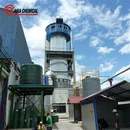
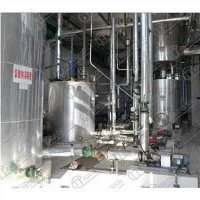


Phosphoric acid production equipment is a superior product of Hangzhou Asia Pacific Chemical Engineering Co., Ltd. It is an advanced industrial facility used to produce phosphoric acid, an important industrial chemical widely used in fertilizer, metallurgy, food and other industries. Phosphoric acid production equipment mainly includes the following four categories: mining and mineral processing equipment, sulfuric acid equipment, phosphoric acid equipment and phosphate fertilizer equipment.
Mining and mineral processing equipment is used to mine and process phosphate rock, a raw material for phosphoric acid production. Mining equipment includes excavators, crushers, conveyors, etc., used to excavate and transport phosphate rock from the mine to the mineral processing plant. Mineral processing equipment includes mills, flotation machines, magnetic separators, filters, etc., which are used to separate phosphate ore from impurities such as clay, sand, iron, aluminum, etc.
Sulfuric acid equipment is used to produce sulfuric acid, the main reagent for phosphoric acid production. Sulfuric acid equipment includes sulfur melting and purification units, sulfur burners, gas purification units, waste heat recovery units, acid coolers and storage tanks, etc. Sulfuric acid equipment can use different technologies, such as wet sulfuric acid process, double contact double absorption process or single contact single absorption process.
Phosphoric acid equipment is used to produce phosphoric acid by reacting sulfuric acid with phosphate rock. Phosphoric acid equipment includes reactors, filters, evaporators, concentrators, crystallizers, storage tanks, etc. Phosphoric acid plants can use different technologies such as dihydrate process, hemihydrate process or anhydrous process.
Phosphate fertilizer equipment is used to produce phosphate fertilizers, such as diammonium (DAP), monoammonium (MAP) or compound fertilizer (NPK), by reacting phosphoric acid with ammonia or other nutrients. Phosphate fertilizer equipment includes granulators, dryers, coolers, screening machines, coating units and packaging units, etc. Phosphate fertilizer plants can use different technologies, such as the tubular reactor process, drum granulation process or spray granulation process.
Hangzhou Asia Pacific Chemical Engineering Co., Ltd. is an engineering company specializing in the development of new technologies and equipment in the field of daily chemicals and inorganic chemicals. It has many years of design and construction experience and provides customers with high-quality products and services. The purpose of Hangzhou Asia Pacific Chemical Engineering Co., Ltd. is innovation and sustainable development, and is committed to providing customers with efficient, energy-saving, and environmentally friendly solutions.

A phosphoric acid pilot plant can also be used to test different methods of recovering uranium from the phosphoric acid solution, as uranium is a valuable by-product of the process. Uranium can be extracted by solvent extraction, ion exchange, or precipitation techniques.

Potassium Sulphate is a widely used chemical compound in various industries, from agriculture to pharmaceuticals. Its high solubility and low salt index make it an ideal choice for fertilizers, feed supplements, and other applications.

Phosphoric acid is one of the most important basic chemicals in the chemical industry. It is widely used in the production of fertilizers, detergents, food processing, and pharmaceuticals.

It is used in the production of fertilizers, detergents, food additives, and even soft drinks. The demand for high-quality phosphoric acid is constantly increasing as a result of the growing population and expanding agriculture industry.

In the production of phosphorus chemical industry, the science and rationality of the selection and maintenance of its process equipment directly affect the smooth progress and economic benefits of the entire production process. Production is very important.

This production line is a vital component of the phosphoric acid manufacturing process, allowing for the concentration and purification of the acid to meet specific industry standards and application requirements.
FAQ:
1. What is Innovative Phosphoric Acid Production Equipment?
Innovative Phosphoric Acid Production Equipment refers to advanced machinery and systems designed for the efficient and sustainable manufacturing of phosphoric acid.
2. How does Innovative Phosphoric Acid Production Equipment differ from traditional methods?
It incorporates state-of-the-art technologies and processes to enhance efficiency, reduce environmental impact, and improve product quality, setting it apart from conventional production methods.
3. What are the key features of this equipment?
Innovative Phosphoric Acid Production Equipment is known for its energy efficiency, precise control over chemical reactions, and environmental sustainability, aligning with modern industry demands.
4. How does this equipment contribute to sustainable production practices?
It focuses on minimizing waste, optimizing resource utilization, and reducing emissions, ensuring a more sustainable and eco-friendly phosphoric acid production process.
5. What is the role of automation in this equipment?
Automation streamlines production, offering real-time monitoring, precise control, and data analytics to enhance efficiency and product consistency.
6. How is safety ensured in the operation of this equipment?
Safety features are integrated into the equipment's design, and comprehensive training ensures safe operation and maintenance practices.
7. What are the primary applications of phosphoric acid produced using this equipment?
The phosphoric acid can be used in the manufacturing of fertilizers, food additives, detergents, and as a key component in various chemical processes.
8. Can this equipment be customized to suit different production scales and requirements?
Yes, it can be tailored to accommodate various production capacities and specific industrial demands, ensuring versatility.
9. What role does research and development play in enhancing this equipment?
Ongoing research and development efforts lead to continuous improvements, fostering innovation, energy savings, and environmental performance.
10. How does Innovative Phosphoric Acid Production Equipment contribute to a more sustainable and eco-conscious chemical industry?
It sets a benchmark for cleaner and greener production processes, showcasing a commitment to environmental responsibility and a reduced carbon footprint in the chemical industry.


