

For overseas buyers planning to establish or expand a detergent powder manufacturing operation, production line design should start with the formulation, required capacity, and production process rather than individual machines. Raw material characteristics, powder particle size, bulk density, liquid additive content, packaging format, and operating schedule all affect the equipment configuration.
A small plant using dry blending or simple agglomeration can use a relatively straightforward process, while a high-capacity detergent powder plant may require integrated systems for raw material handling, mixing, granulation or spray drying, screening, post-blending, conveying, dust collection, packaging, and process control.
For importers, distributors, private-label manufacturers, and industrial project buyers, the key is to define the production requirements first and then select equipment that corresponds to the intended manufacturing workflow.
Define the Formulation and Production Process
The formulation is the starting point for detergent powder production line design. Basic formulations may contain sodium carbonate, sodium sulfate, surfactants, STPP, fragrance, and other additives. These materials can have different particle sizes, bulk densities, moisture characteristics, and physical states, which affect feeding and mixing.
For a smaller operation, dry blending can provide a comparatively simple process route:
When the target product requires specific particle characteristics or higher production capacity, the process can incorporate agglomeration, granulation, spray drying, cooling, screening, and post-blending. The selected route should therefore be based on the formulation and required powder properties rather than equipment availability alone.
Design Raw Material Handling and Mixing Together
Raw material handling should be planned before selecting the main mixing equipment. The system may include storage, feeding, screening, weighing, dosing, and conveying, depending on the number and type of ingredients.
| Production Section | Main Function | Key Design Factor |
|---|---|---|
| Raw Material Storage | Hold powder and liquid ingredients | Storage volume and material characteristics |
| Screening | Remove lumps and oversized particles | Required particle range |
| Feeding | Transfer materials to processing equipment | Feed rate |
| Dosing | Control ingredient quantities | Formulation requirements |
| Mixing | Combine base materials and additives | Batch size, mixing time, and liquid addition |
| Conveying | Transfer powder between stages | Distance, elevation, and powder properties |
For a basic dry-blending line, a mixer or ribbon-type blender can combine base powders and fillers. Liquid surfactants or other liquid components can be added gradually during mixing where required.
For larger plants, the mixing system can be integrated with automatic feeding, dosing, conveying, and process control, allowing multiple production stages to operate as one coordinated system.
Control Liquid Addition, Drying, and Powder Size
Liquid addition needs to be coordinated with the mixing process. Uneven distribution can produce localized wet areas or agglomerates, so the addition method should be selected according to the liquid ingredient, dosage, addition point, and mixing conditions.
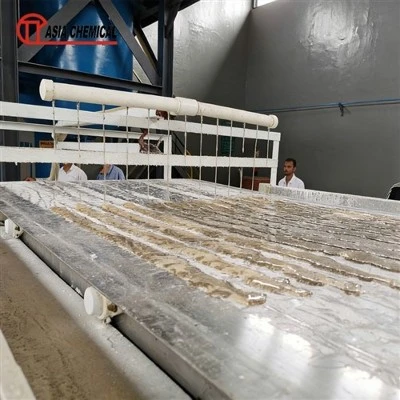
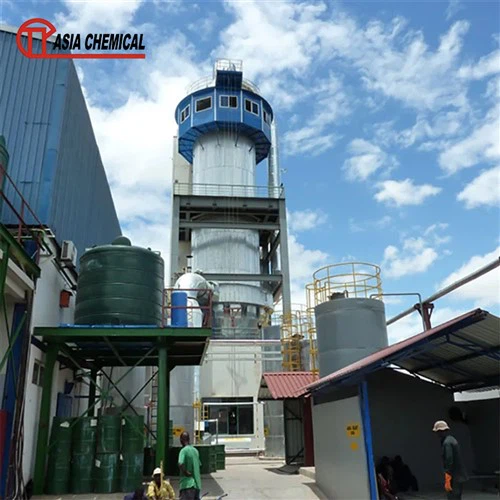
Depending on the selected process, drying or conditioning may follow liquid addition or other processing stages. In larger detergent powder plants, spray drying can be used as part of a slurry-based production route, while dry blending and agglomeration follow different process configurations.
After drying or granulation, screening and classification can separate powder according to the required particle range. Where necessary, oversized material can be directed back into the process for further treatment. This makes screening part of the overall powder-flow design rather than an isolated machine.
Match Equipment Configuration to Production Capacity
Capacity should be defined before equipment selection. A small detergent powder operation does not require the same material-handling, automation, and packaging configuration as a continuous high-output plant.
According to the relevant project information from Asia Chemical Engineering Co., Ltd., its large-scale detergent powder manufacturing plant configurations cover 10,000–50,000 kg/h, while its high-capacity detergent powder processing line configurations cover 8,000–45,000 kg/h, depending on the project configuration.
These are different project configurations rather than one universal production-line specification. When requesting a quotation, buyers should provide the target output, operating schedule, formulation, process route, and required product characteristics so that the supplier can determine the appropriate equipment combination.
For procurement, buyers should distinguish between rated equipment capacity and actual production requirements. A production line should be sized around the required operating output rather than simply selecting the largest available machine.
Integrate Conveying, Dust Collection, and Packaging
Powder conveying should be designed around the physical layout of the plant. Transfer distances, elevation changes, powder characteristics, equipment arrangement, and required throughput all influence the conveying system.
Dust collection should also be considered during the initial layout stage. Mixing, screening, powder transfer, and packaging can generate airborne powder, making extraction and dust-control provisions relevant to the overall plant design.
Packaging equipment should be matched to the intended sales format. Depending on the market and distribution model, detergent powder can be supplied in 25 kg bags, 50 kg bags, or bulk packaging. Automatic weighing, filling, and sealing can be incorporated according to the required production rate and packaging specification.
Plan Automation and Factory Layout
Automation requirements generally increase with production capacity and process complexity. A small dry-blending plant may use a simpler control system, while a large production line can integrate automated feeding, dosing, conveying, processing, monitoring, and packaging.
For large-scale detergent powder production, PLC and SCADA control can be incorporated into the plant configuration. Buyers should clarify which stages are automated, which operations require manual intervention, how formulation parameters are managed, and whether future equipment can be integrated into the control system.
The factory layout should provide space for equipment maintenance, inspection, operator access, material handling, utilities, electrical systems, instrumentation, dust collection, and potential capacity expansion.
What Should B2B Buyers Prepare Before Requesting a Quotation?
A supplier cannot accurately configure a detergent powder production line from a capacity figure alone. Overseas buyers should prepare a technical project brief covering the following information:
- Target production capacity
- Detergent powder formulation
- Main raw materials and physical characteristics
- Preferred production process
- Target particle size
- Bulk density requirements
- Liquid ingredient dosage
- Packaging format and bag size
- Required automation level
- Factory floor area
- Electrical power and utility conditions
- Raw material storage requirements
- Finished-product handling method
- Expected operating schedule
- Future expansion requirements
Providing these parameters allows the supplier to evaluate the process route, equipment combination, material flow, control system, and factory layout as an integrated project instead of quoting individual machines separately.
Asia Chemical Engineering Co., Ltd. for Detergent Powder Plant Projects
Asia Chemical Engineering Co., Ltd. provides engineering and plant solutions for detergent powder production, covering both processing-line configurations and broader factory construction requirements. Its project scope can extend from process engineering and equipment supply to installation, electrical and instrumentation integration, commissioning, and production start-up.
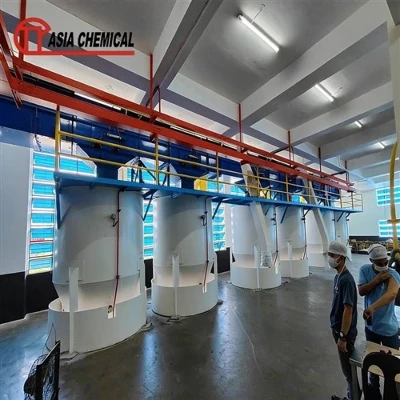
For detergent powder projects, the company can configure systems around different production requirements, including raw material handling, mixing and blending, granulation or spray drying, screening, post-blending, additive dosing, powder conveying, dust collection, and packaging.
The plant configuration can be developed according to the required capacity, formulation, production process, factory conditions, and automation level. For buyers planning a new detergent powder plant, the project can therefore cover equipment integration and factory development rather than the purchase of individual machines alone.
This project-oriented approach allows process equipment, material flow, control systems, utilities, and production areas to be considered together during plant development.