

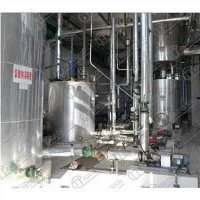


Sodium chlorite (NaClO₂) is an inorganic compound with strong oxidizing properties. It is typically supplied as a solid chemical and has a molecular formula of NaClO₂ and a molecular weight of 90.44. Its oxidizing characteristics and chemical reactivity are important considerations for production, storage, transportation, and handling.
A key function of sodium chlorite is serving as a chemical source for chlorine dioxide (ClO₂) generation. Through a controlled chemical reaction, it can be converted into chlorine dioxide for subsequent treatment processes. This makes it an important intermediate in chemical systems that require on-site or controlled chlorine dioxide generation. Its concentration, storage conditions, chemical compatibility, and handling requirements need to be considered when establishing a production plant.

Industry Applications and Demand
The chemical is mainly associated with applications based on chlorine dioxide generation. In municipal and industrial water treatment, chlorine dioxide generated from sodium chlorite can be used for oxidation and disinfection. Other application areas include industrial wastewater treatment, pulp and paper bleaching, textile processing, food-industry disinfection, and laboratory applications. The specific downstream process determines the required concentration, supply form, handling method, and consumption pattern.
Production Technology: Key Selection Factors
Technology selection is a key engineering decision for a Sodium Chlorite Plant because the process route determines raw materials, reaction and absorption systems, equipment configuration, utilities, controls, and product-forming stages. Buyers should evaluate the complete process scheme against the target product specification, capacity, and site conditions rather than focusing only on nominal capacity or equipment lists.
The production route should be evaluated based on the selected technology package and its defined process scheme. Key considerations include raw material requirements, reaction and separation stages, material balance, equipment configuration, product concentration control, utilities, safety systems, waste treatment, and process control. For a new plant, buyers should also clarify the scope of technical documentation, process know-how, commissioning support, and operator training provided by the technology provider. NaClO₂ and NaClO₃ are different chemical compounds with different production processes and applications, so the selected technology should be reviewed specifically against the required NaClO₂ product specification.
Core Process Design Considerations for Sodium Chlorite Plants
1.Reaction and Chlorine Dioxide Handling
Reaction and chlorine dioxide handling systems require careful process control because chlorine dioxide is a reactive oxidizing gas. Plant design should control the interfaces between chemical reaction, gas generation, absorption, and downstream processing. Monitoring and automatic control should be incorporated into the process design so that abnormal operating conditions can be detected and handled without relying solely on manual intervention.
2.Absorption and Reduction System
The absorption system connects chlorine dioxide generation with the subsequent chemical conversion stage. Its design should consider gas-liquid contact, liquid circulation, process containment, material compatibility, instrumentation, and the required product concentration. The reduction stage must likewise be integrated with upstream and downstream material balances rather than designed as an isolated equipment package.
3.Materials and Corrosion Control
Material selection is a major procurement consideration because process media can impose chemical compatibility requirements on tanks, piping, valves, pumps, seals, and other wetted components. The appropriate material should be selected according to the actual chemical composition, concentration, temperature, pressure, and operating conditions of each process stream. Using a single material throughout the plant without considering individual process conditions can create avoidable corrosion or maintenance problems.
4.Concentration and Product Formation
Product concentration and final product formation should be considered during the initial process design rather than after the main process equipment has been selected. The required product specification determines the relevant concentration, separation, crystallization, drying, handling, and storage requirements. For projects targeting a solid Sodium Chlorite product, the product-forming section also needs to be evaluated together with packaging, storage segregation, transportation, and handling conditions.
5.Tail Gas and Wastewater Treatment
Waste streams should be incorporated into the plant design from the beginning. Tail-gas collection and treatment need to correspond with the gases generated by the selected process, while wastewater treatment should address the chemical composition and flow characteristics of the relevant liquid streams. The treatment system should be designed according to applicable local discharge requirements and the actual process material balance.
6.PLC and Safety Interlocks
Automation is not limited to production control. A Sodium Chlorite Plant requires monitoring and interlocks for process conditions that can affect safety or product quality. The control system should define operating limits, alarm conditions, shutdown logic, and emergency responses for relevant process equipment. The PLC architecture, field instrumentation, valves, sensors, and emergency systems should be considered as an integrated control package.
.
Plant Safety and Environmental Compliance Design
Safety engineering should be integrated into the plant layout from the beginning rather than added after process design. For areas involving oxidizing chemicals and chlorine dioxide-related operations, the engineering package should address:
- Controlled access and chemical segregation for areas handling oxidizing chemicals and reactive materials.
- Ventilation and gas monitoring to control potential chlorine dioxide releases and maintain appropriate operating conditions.
- Equipment classification and material selection based on the process hazards, operating conditions, and applicable regulations.
- Emergency procedures and protection systems for abnormal operating conditions, equipment failure, and uncontrolled releases.
Chlorine dioxide gas management requires particular attention where the gas is generated, absorbed, or handled. Equipment and piping should be arranged to minimize uncontrolled releases and provide defined collection or treatment routes. Emergency systems should be established through the process hazard analysis (PHA), with the required safeguards determined by the identified operating scenarios.
Environmental engineering should cover the complete plant rather than only the main production process. Key systems include:
- Tail-gas treatment and emission control
- Wastewater collection and treatment
- Chemical storage and waste management
- Environmental monitoring systems
For an overseas project, applicable Saudi Arabian regulations should be reviewed together with relevant international standards specified by the project owner. The engineering basis should clearly define the standards governing process equipment, electrical systems, instrumentation, emissions, waste treatment, and plant construction.
For an EPC project, coordination between process engineering, equipment procurement, electrical systems, instrumentation, and construction is essential. Safety and environmental requirements can directly affect equipment placement, piping routes, control systems, and utility systems. Resolving these interfaces during engineering can reduce design changes during construction and commissioning.
EPC Contractor Selection Criteria For The Projects
Selecting an EPC contractor for a new chemical plant requires a broader review than comparing equipment prices. Buyers should verify whether the contractor can manage the interfaces between process technology, plant engineering, equipment procurement, automation, construction, commissioning, and technical support.
| Evaluation Factor | What Buyers Should Verify |
|---|---|
| Process Engineering | Ability to convert the selected process technology into plant engineering documents |
| Process Technology | Defined technology ownership, licensing scope, or cooperation with the technology provider |
| Equipment Supply | Equipment specifications, fabrication, procurement, inspection, and documentation |
| Materials Engineering | Compatibility of tanks, piping, valves, pumps, seals, and other wetted components |
| Electrical & Instrumentation | PLC, monitoring, control, alarm, and safety-interlock integration |
| Safety Engineering | Chlorine dioxide handling, chemical segregation, ventilation, and emergency systems |
| Environmental Engineering | Tail-gas, wastewater, waste-management, and applicable emission controls |
| Construction Coordination | Installation planning, site coordination, and interface management |
| Commissioning | Equipment testing, system commissioning, start-up assistance, and troubleshooting |
| Training | Operator training, operating documentation, and maintenance information |
| Long-Term Support | Technical assistance, troubleshooting, maintenance guidance, and engineering support |
| EPC Scope | Clear division of responsibility for engineering, procurement, construction, commissioning, and handover |
When evaluating EPC projects for this type of chemical plant, the applicable project scope must be assessed against the confirmed production technology, plant capacity, product specifications, and contractual requirements. Prior experience in chlorine-series chemicals such as sodium hydroxide, chlorine, and sodium hypochlorite cannot be directly assumed to fully cover the required process and engineering scope. If the technology provider and EPC contractor are separate entities, contracts should clearly allocate responsibilities for process design packages, detailed engineering, equipment specification and procurement, site construction, commissioning, performance guarantees, operator training, and ongoing technical support, with interfaces between the technology licensor and EPC team finalized in the early project phase.
Asia Chemical Engineering Co., Ltd. delivers integrated chemical engineering services including process design, equipment fabrication & procurement, electrical and instrumentation work, and full turnkey plant solutions, with proven engineering experience across sodium hydroxide, chlorine, sodium hypochlorite and related chemical production systems.
Common Risks and Engineering Optimization
Engineering risks in the plant are often interconnected. A process problem can affect equipment selection, while an equipment problem can affect production stability, emissions, or safety. Reviewing these risks as part of the overall process and plant design is therefore more useful than treating each problem separately.
| Project Risk | Possible Engineering Cause | Optimization Direction |
|---|---|---|
| Low product yield | Inadequate control of reaction or absorption conditions | Review process design, material balance, and control requirements |
| Equipment corrosion | Incorrect material selection for process media | Match wetted materials with chemical composition and operating conditions |
| Excessive emissions | Inadequate collection or treatment capacity | Integrate tail-gas collection and treatment with the process design |
| Safety interlock gaps | Incomplete hazard analysis or control logic | Define alarm, shutdown, and emergency conditions during control-system design |
| High energy consumption | Poor integration of process and utility requirements | Review utility demand and process energy balance during engineering |
| Unstable product quality | Insufficient concentration or product-forming control | Connect product specifications with separation and concentration design |
| Commissioning delays | Incomplete interface management | Define engineering, procurement, installation, and commissioning responsibilities early |
For overseas projects, these risks can become more significant when equipment, technology, construction, and commissioning are supplied by different parties. A coordinated engineering approach can help identify interface requirements before procurement and construction begin. This is particularly relevant to projects requiring technology transfer, equipment supply, local construction, operator training, and long-term technical support.
.
About Asia Chemical Engineering Co., Ltd.

Asia Chemical Engineering Co., Ltd. is a chemical engineering company providing process design, equipment fabrication and procurement, electrical and instrumentation engineering, and turnkey plant solutions. Its project scope covers chemical engineering applications including sodium hydroxide, chlorine, sodium hypochlorite, household and basic chemical production, as well as selected petroleum and gas-related engineering projects.
For overseas chemical plant projects, We provide an integrated engineering scope covering process design, equipment fabrication and procurement, electrical and instrumentation systems, and turnkey plant solutions. These capabilities connect the process requirements with equipment selection, plant configuration, control systems, and project execution, providing a coordinated engineering basis for deploying chemical production facilities. The company's engineering scope covers sodium chlorite, sodium hydroxide, chlorine, sodium hypochlorite, household and basic chemical production systems, as well as selected petroleum and gas projects, supporting the development and deployment of chemical production facilities through process engineering, equipment integration, electrical and instrumentation systems, and turnkey project execution.


