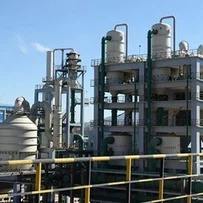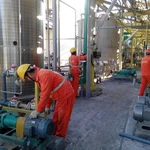
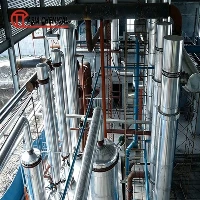

Asia Chemical Engineering Co., Ltd. is one of the most reliable manufacturers and suppliers of phosphoric acid plant equipment in China. Please rest assured to wholesale cost-efficient phosphoric acid plant equipment from our factory. Good service and reasonable price are available.
Asia Chemical has rich industry experience, professional technical team, strict quality management, sophisticated machinery and equipment, and complete supporting services to provide global customers with standardized, high-quality and efficient engineering services.
Asia Chemical provides one-stop service to provide you with the most worry-free turnkey projects. Service design management, engineering, technology, capital and other aspects.
Introduction of Phosphorus Chemical Industry
1. Phosphorus, phosphate fertilizer, phosphate industry
Phosphorus is a widely used chemical raw material product and occupies an important position in the national economy. Yellow phosphorus has lively properties and strong chemical properties, and can produce a variety of products. At present, more than half of the yellow phosphorus in the world is mainly used to make phosphoric acid and phosphate, which are used in the fertilizer industry, detergent, food industry, pharmaceutical industry, pesticides and phosphates. Industries such as the electronics industry, textiles, glass, metallurgy and ceramics also have an increasing demand for phosphates. In addition, yellow phosphorus compounds can be made into incendiary bombs and smoke bombs, etc., and occupy a certain position in national defense.
2. The production process of phosphoric acid
2.1 Thermal phosphoric acid production
The production process of thermal phosphoric acid can be simplified as follows: the production of phosphorous yellow phosphorus in an electric furnace, combustion, absorption and hydrolysis of phosphoric acid.
2.1.1 Complete combustion method: (one-step method)
The furnace gas containing elemental phosphorus from the electric furnace is directly burned, and the CO in the furnace gas is also burned together
This method is not used in industry due to poor heat utilization (phosphoric anhydride is strongly corroded, and a large amount of reaction heat cannot be used).
2.1.2 Liquid phosphorus combustion method (two-step method)
Common industrial processes, the first: yellow phosphorus burning phosphorus pentoxide to cool and absorb phosphoric acid, also known as water cooling process; the second: yellow phosphorus burning phosphorus pentoxide to cool phosphoric acid, absorb phosphoric acid, also known as acid cooling process.
Thermal phosphoric acid generally contains >85% phosphoric acid with high concentration and pure quality. It is the main raw material of phosphoric acid for food and pharmaceutical industries. Thermal phosphoric acid is produced with elemental phosphorus. 1 ton of elemental phosphorus (1.38 tons of 100% phosphoric acid can be produced) requires power consumption of 12500-15000KWH, which is a high energy consumption industry.
2.2 Wet phosphoric acid production
It is obtained by decomposing phosphate rock with inorganic acid: commonly used nitric acid, hydrochloric acid, sulfuric acid and fluosilicic acid. Since calcium sulfate has a small solubility and is easy to separate from phosphoric acid, wet-process phosphoric acid actually refers to phosphoric acid obtained by decomposing phosphate rock with sulfuric acid. Depending on the slurry temperature, phosphoric acid concentration, sulfuric acid dosage and other conditions, calcium sulfate hydrate has three forms:
The production process is as follows:
2.2.1 Dihydrate material process: multi-slot or single-slot process, no back-slurry process and back-slurry process, vacuum cooling and air cooling process. The product generally contains 28~32% P2O5, and the total phosphorus recovery rate: 93%~97%. Widely used in various countries.
2.2.2 Hemihydrate-dihydrate process: CaSO4 is first formed into hemihydrate crystallization, and then hydrated and recrystallized into dihydrate. Total phosphorus recovery rate: 98%~98.5%.
2.2.3 Dihydrate-semihydrate process: Phosphorus total recovery rate: about 99%.
2.2.4 Hemihydrate process: high concentration phosphoric acid 40%~50%P2O5 can be obtained, ammonium phosphate or heavy calcium can be directly produced, and a large factory of 1300T/dP2O5 has been built.
3. Production process of other phosphates
Figure 1 and Figure 2 show the production flow charts of sodium tripolyphosphate and calcium hydrogen phosphate, respectively.
2. Equipment selection in phosphorus chemical production
1. Selection of phosphoric acid slurry pump
1.1 Pump structure selection
According to the characteristics of the medium and the stirring conditions in the reaction tank, the material and reasonable structure of the pump flow parts with wear resistance and corrosion resistance should be selected. Under the condition that the solid content of phosphoric acid medium is less than 3%, the corrosion resistance of ultra-low carbon molybdenum tri-titanium and aluminum di-titanium is excellent, but under the condition that the solid content of phosphoric acid slurry is 25% to 35%, the wear resistance Not high, the service life is shortened. Therefore, special attention should be paid to the medium and working conditions when selecting the material of the pump flow parts.
1.2 The choice of speed
When the pump speed is high, it will accelerate the wear and corrosion of the flow components such as the volute and impeller. Most of the rotational speeds of pumps used in phosphoric acid plants in my country and those used in foreign ammonium phosphate plants are 1460 r/min and 970 r/min. Therefore, on the premise of satisfying the head and flow, the pump with low speed should be selected as much as possible.
1.3 Selection of vertical pump and horizontal pump
Compared with vertical pumps, horizontal pumps have the following advantages:
1.3.1 The price is lower, usually 1/2 to 1/3 of the vertical pump under the same head and flow conditions, or even up to 1/4.
1.3.2 The length of the cantilever shaft under the vertical pump support frame is limited, and it is usually troublesome to control the liquid level in production.
1.3.3 If the vertical pump cannot be directly installed on a large tank, the vertical pump must be set up, and the medium is placed on the small tank of the vertical pump by opening the side of the lower part of the large tank, which will increase investment and waste manpower and material resources. .
1.4 Selection of pump impeller type
Since ammonium phosphate slurry, slurry and phosphoric acid usually contain solid particles, when the temperature drops, the solubility decreases and precipitates out, and it is easy to form a hard scale layer on the impeller of the pump, especially the volute. Therefore, in the ammonium phosphate phosphate In the device, the open impeller is generally used, especially in the reaction tank of the phosphoric acid plant and the phosphoric acid filtration system, the open impeller must be selected; the ammonium phosphate slurry pump should also use the open impeller.
2. Selection of wet-process phosphoric acid sludge separation equipment
The solid impurities that settle out during the storage of wet phosphoric acid are called sludge, which can block equipment, pipelines and transportation tools, and affect product quality. Therefore, sludge separation must be carried out in the production of wet phosphoric acid.
The principles of equipment selection should generally be satisfied: less investment, high efficiency, small footprint, simple operation, relatively complete sludge separation, and low liquid content in the filter cake. Due to the relatively small driving force of the vacuum filtration equipment, when the fine crystalline particles block the filter cloth, the operation will not be able to proceed, which cannot meet the needs of phosphoric acid sludge separation. Therefore, according to the process requirements, the equipment selects a pressurized filter. After research and analysis, the following three types of pressure filters can be considered.
Related ProductsRelated Products

A phosphoric acid pilot plant can also be used to test different methods of recovering uranium from the phosphoric acid solution, as uranium is a valuable by-product of the process. Uranium can be extracted by solvent extraction, ion exchange, or precipitation techniques.

Phosphoric acid is one of the most important basic chemicals in the chemical industry. It is widely used in the production of fertilizers, detergents, food processing, and pharmaceuticals.

We use the advanced membrane filtration, replace the traditional solvent extraction, greatly reducing the waste discharge, which can make all kinds of industrial grade phosphoric acid.
Phosphoric acid plant equipment is the machinery and devices used to produce phosphoric acid, an important industrial chemical used as an intermediate in the fertilizer industry, for metal surface treatment in the metallurgical industry, and as an additive in the food industry. Phosphoric acid plant equipment can be divided into four main categories: mining and beneficiation equipment, sulfuric acid equipment, phosphoric acid equipment, and phosphate fertilizer equipment.
Mining and beneficiation equipment is used to extract and process phosphate rock, the raw material for phosphoric acid production. Mining equipment includes excavators, crushers, conveyors, and other machines that dig and transport the phosphate rock from the mine to the beneficiation plant. Beneficiation equipment includes grinding mills, flotation cells, magnetic separators, filters, and other machines that separate the phosphate rock from impurities such as clay, sand, iron, and aluminum.
Sulfuric acid equipment is used to produce sulfuric acid, the main reagent for phosphoric acid production. Sulfuric acid equipment includes sulfur melting and purification units, sulfur burners, gas cleaning units, heat recovery units, acid coolers, and storage tanks. Sulfuric acid equipment can use different technologies such as wet sulfuric acid process, double contact double absorption process, or single contact single absorption process.
Phosphoric acid equipment is used to produce phosphoric acid by reacting sulfuric acid with phosphate rock. Phosphoric acid equipment includes reactors, filters, evaporators, concentrators, crystallizers, and storage tanks. Phosphoric acid equipment can use different technologies such as dihydrate process, hemihydrate process, or anhydrite process.
Phosphate fertilizer equipment is used to produce phosphate fertilizers such as diammonium phosphate (DAP), monoammonium phosphate (MAP), or compound fertilizers (NPK) by reacting phosphoric acid with ammonia or other nutrients. Phosphate fertilizer equipment includes granulators, dryers, coolers, screens, coating units, and bagging units. Phosphate fertilizer equipment can use different technologies such as pipe reactor process, drum granulation process, or prilling process.
Phosphoric acid production equipment is of paramount significance to industrial production due to its crucial role in various industries. It enables the efficient manufacturing of phosphoric acid, a versatile chemical compound essential in agriculture for fertilizers, in the food and beverage industry as an acidulant and pH regulator, in detergents for cleaning, and in pharmaceuticals for various processes. The equipment's reliable and efficient operation ensures a stable supply of high-quality phosphoric acid, which, in turn, supports industrial processes, crop growth, and numerous products vital to our daily lives. Without this equipment, many key industrial processes and products would be severely impacted.
Products Description


FAQ
What is Phosphoric Acid Plant Equipment?
What is the primary raw material for phosphoric acid production in such plants?
What is the significance of phosphoric acid in various industries?
How does Phosphoric Acid Plant Equipment work?
What are the key components of this equipment?
What are the safety considerations for operating a Phosphoric Acid Plant?
What is the environmental impact of phosphoric acid production, and how is it mitigated?
What industries rely heavily on phosphoric acid for their processes?
What role does automation play in Phosphoric Acid Plant Equipment?
Can you explain the phosphoric acid concentration process in these plants?
What is the shelf life of phosphoric acid produced with this equipment?
How does maintenance of the equipment impact production efficiency?
Are there any environmental regulations governing phosphoric acid plant operations?
What is the role of quality control in phosphoric acid production?
Can Phosphoric Acid Plant Equipment be customized for specific production requirements?
What are the advantages of on-site phosphoric acid production compared to importing it?
What are the safety precautions for handling phosphoric acid in these plants?
How is the waste generated during production managed?
How does Phosphoric Acid Plant Equipment contribute to sustainable agriculture?
What is the outlook for the future of Phosphoric Acid Plant Equipment in meeting growing industrial demands?
1. What is Phosphoric Acid Plant Equipment?
Phosphoric Acid Plant Equipment refers to the machinery and systems used in the production of phosphoric acid from phosphate rock.
2. What is the primary raw material for phosphoric acid production in such plants?
The primary raw material is phosphate rock, which is rich in phosphorus.
3. What is the significance of phosphoric acid in various industries?
Phosphoric acid plays a vital role in various industries. It is essential for fertilizer production, food and beverage processing, detergents, and pharmaceuticals. It serves as a key ingredient in these sectors, enabling crop growth, acidity regulation, and food preservation.
4. How does Phosphoric Acid Plant Equipment work?
The equipment processes phosphate rock with sulfuric acid through various chemical reactions, resulting in phosphoric acid.
5. What are the key components of this equipment?
Key components include reactors, evaporators, heat exchangers, pumps, and various control systems.
6. What are the safety considerations for operating a Phosphoric Acid Plant?
Safety measures include proper ventilation, chemical handling protocols, and emergency response plans.
7. What is the environmental impact of phosphoric acid production, and how is it mitigated?
Phosphoric acid production can generate waste and emissions. Mitigation measures include wastewater treatment and air pollution control.
8. What industries rely heavily on phosphoric acid for their processes?
Agriculture, food and beverage, detergents, and pharmaceuticals are among the industries that rely on phosphoric acid.
9. What role does automation play in Phosphoric Acid Plant Equipment?
Automation improves efficiency, accuracy, and safety in the production process.
10. Can you explain the phosphoric acid concentration process in these plants?
Certainly. The phosphoric acid concentration process involves multiple evaporative stages. Initially, raw phosphoric acid is diluted and heated. As it evaporates, water content decreases, increasing acid concentration. This concentrated acid is typically used in various industrial applications. The process may include cooling and crystallization stages to further refine the product. It's a crucial step to achieve the desired acid strength and purity for specific end-use applications, such as fertilizers or food production. Proper control of temperature, pressure, and separation processes ensures the production of high-quality phosphoric acid.
11. What is the shelf life of phosphoric acid produced with this equipment?
Properly stored, phosphoric acid can have a long shelf life, typically several years.
12. How does maintenance of the equipment impact production efficiency?
Regular maintenance ensures the equipment functions optimally, reducing downtime and maintaining product quality.
13. Are there any environmental regulations governing phosphoric acid plant operations?
Yes, there are regulations related to emissions, waste disposal, and water management to ensure environmental protection.
14. What is the role of quality control in phosphoric acid production?
The role of quality control in phosphoric acid production is pivotal. It ensures that the final product meets industry standards and customer requirements. Quality control encompasses rigorous testing and monitoring of key parameters such as acid concentration, purity, and chemical impurities. Any deviations from the specified standards are promptly addressed to maintain product consistency and reliability. Quality control in phosphoric acid production is essential to meet the stringent demands of various industries, including agriculture, food, and pharmaceuticals, where the purity and quality of phosphoric acid are critical to the end product's performance and safety.
15. Can Phosphoric Acid Plant Equipment be customized for specific production requirements?
Yes, equipment can be tailored to suit the scale and specific needs of the plant.
16. What are the advantages of on-site phosphoric acid production compared to importing it?
On-site production of phosphoric acid provides cost savings, supply chain control, reduced transportation expenses, and increased production efficiency.
17. What are the safety precautions for handling phosphoric acid in these plants?
Safety precautions include using protective gear, proper handling procedures, and emergency response training.
18. How is the waste generated during production managed?
Waste management includes neutralization and treatment to minimize environmental impact.
19. How does Phosphoric Acid Plant Equipment contribute to sustainable agriculture?
Phosphoric acid production equipment can reduce the mining and consumption of phosphate rock, improve the utilization rate and quality of phosphoric acid, and reduce pollution and impact on the environment.
20. What is the outlook for the future of Phosphoric Acid Plant Equipment in meeting growing industrial demands?
The future prospects of phosphoric acid production equipment are optimistic because phosphoric acid is an important industrial chemical widely used in fertilizer, metallurgy, food and other industries. As these industries develop and demand increases, phosphoric acid production equipment also needs to be constantly improved and innovated to improve production efficiency, quality and environmental performance. At present, phosphoric acid production equipment has adopted a variety of advanced technologies and materials, such as wet phosphoric acid process, dihydrate process, anhydrous process, Xerofil process, etc. In the future, phosphoric acid production equipment will continue to explore new technologies and materials, such as dry phosphoric acid process, solvent extraction process, high temperature and high pressure process, corrosion-resistant materials, etc.
Hot Tags: phosphoric acid plant equipment, China, manufacturers, suppliers, factory, wholesale, price, profession, cost, Phosphoric Acid Production Plants, thermal process phosphoric acid equipment manufacturers, wet process phosphoric acid equipment factory, Thermal Phosphoric Acid Production Line H3PO4 Plant, Low Production Cost Production Line Wet Process For Phosphoric Acid, Acid Plant Production Line Phosphoric Acid Concentration Plant