



Sulphonic acid refers to a class of organosulfur compounds containing the sulfonic acid group, generally represented as RSO3H. Because the organic group can vary considerably, it is not a single chemical product with one universal manufacturing route. The selected process depends on the molecular structure, feedstock, required product form, production scale, and intended application.
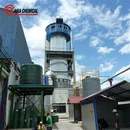
In industrial manufacturing, sulfonated compounds are used in detergents and surfactants, dyes, catalysts, specialty chemicals, and other chemical intermediates. For high-volume surfactant production, continuous SO3 sulphonation is an important industrial route. A complete production line can integrate sulfur handling, SO3 generation, falling-film reaction, neutralization, product collection, and exhaust-gas treatment. For plant buyers, the relationship between these process stages is therefore as important as the specifications of an individual reactor.
How Is Sulphonic Acid Produced?
The production route is selected according to the chemical structure of the target product. Aromatic compounds, long-chain organic feedstocks, alcohols, and specialty chemical intermediates can require different sulfonating agents and reaction systems. This is why an industrial project should begin with the target product and feedstock rather than selecting equipment first.
SO3 is generated from sulfur through combustion and catalytic oxidation before entering a falling-film reactor. Organic materials such as LAB, DDB, fatty alcohols, lauryl ether, and α-olefins can be processed in suitable systems. This configuration is particularly relevant to continuous production of surfactant intermediates.
Aromatic compounds can be sulfonated using concentrated sulfuric acid or sulfur trioxide-containing oleum. Depending on the required commercial form, the reaction product can subsequently undergo neutralization with sodium hydroxide or sodium carbonate to produce a corresponding salt.
Specialty products may use other chemical routes, including chlorosulfonic acid-based reactions or routes involving oxidation and substitution of organosulfur compounds. Methanesulfonic acid and trifluoromethanesulfonic acid, for example, belong to specialty chemical fields where their production chemistry differs from large-scale detergent surfactant manufacturing.
How Does an Industrial SO3 Sulphonation Plant Work?
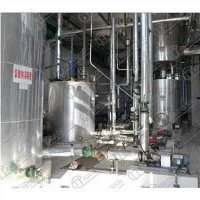
A sulfur-based continuous system connects several process stages into one production sequence. The main engineering objective is to maintain controlled gas composition, temperature, flow, reaction conditions, and downstream treatment from sulfur preparation through final product collection.
- Air drying: Process air is dried before entering the sulfur combustion and SO2 conversion system. Controlled air quality supports stable downstream gas conditions.
- Sulfur melting and dosing: Solid sulfur is melted in heated equipment and maintained at a suitable temperature before controlled pumping and dosing into the combustion system.
- Sulfur combustion: Molten sulfur reacts with oxygen to produce SO2 and release heat. The combustion section therefore requires appropriate temperature management and heat recovery.
- Catalytic conversion: SO2-containing gas passes through catalytic stages where it is oxidized to SO3. Gas cooling between stages helps maintain suitable operating conditions.
- Falling-film sulphonation: SO3 is brought into controlled contact with the organic feedstock in a falling-film reactor to form the required sulfonated product.
- Product and exhaust treatment: The product is collected for downstream processing or storage while remaining gases and entrained material pass through separation and scrubbing systems.
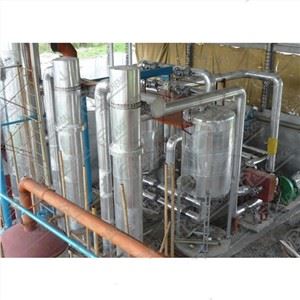
The falling-film section is particularly important because the gas-liquid reaction must be controlled while maintaining suitable heat and mass transfer. Downstream, an electrostatic separation stage can remove entrained sulfonated droplets before the gas enters the scrubber. This reduces the risk of foaming and helps protect the operating stability of the exhaust-gas treatment system.
Why Heat Recovery and Gas Control Matter
Sulfur combustion and catalytic oxidation generate substantial heat. Industrial process design can recover part of this heat while cooling the process gas, with recovered energy potentially used to generate steam or support other plant utilities. The exact arrangement depends on the plant configuration, gas conditions, utility requirements, and production scale.
SO2-to-SO3 conversion also affects the downstream process. Catalyst selection, gas temperature, oxygen availability, conversion-stage configuration, and inter-stage cooling all influence the operating conditions. Higher conversion can reduce the amount of residual sulfur dioxide entering the final scrubbing stage, helping control the load on the exhaust-gas treatment system.
What Is Sulphonic Acid Used For?
Sulfonic compounds are used across several chemical sectors because the sulfonic acid group can significantly influence water solubility and chemical behavior. The specific application depends on the organic structure and whether the material is supplied as a free acid, salt, or another derivative.
| Industrial Sector | Typical Application |
|---|---|
| Detergents & Surfactants | Sulfonated intermediates are used to produce anionic surfactants for household and industrial cleaning formulations. |
| Dyes & Textile Chemicals | Selected sulfonated compounds improve water solubility and serve as intermediates in dye production. |
| Catalysts | Free sulfonic acids and selected derivatives can function as acid catalysts or catalyst components. |
| Petrochemical & Oilfield Chemicals | Selected sulfonated materials are used in specialty formulations and process chemicals. |
| Specialty Chemicals | Specialty acids and sulfonated intermediates are used in organic synthesis, pharmaceuticals, catalysis, and other chemical processes. |
From High-Volume Surfactants to Specialty Chemicals
Detergent and surfactant production is one of the clearest examples of where continuous sulphonation can be integrated into a large-scale manufacturing system. Feedstocks such as linear alkylbenzene and selected fatty alcohol derivatives can be converted into sulfonated intermediates before downstream neutralization and formulation. These plants generally require stable continuous throughput, controlled reaction conditions, and consistent product quality.
Other applications require substantially different process arrangements. Aromatic sulfonic acids can be used as synthetic intermediates, while specialty acids such as methanesulfonic acid and trifluoromethanesulfonic acid have applications in organic synthesis and catalysis. Consequently, a production line designed for high-volume surfactants should not automatically be treated as suitable for every specialty sulfonation project.
What Determines Sulphonation Plant Capacity?
Nominal capacity describes the designed processing capability, but actual throughput depends on operating conditions and the characteristics of the feedstock. Asia Chemical's published capacity analysis identifies feedstock properties, reactor configuration, process conditions, and equipment condition as important factors affecting sustained production.
- Feedstock properties: Purity, moisture, viscosity, fluidity, and impurities can affect pumping, heat transfer, and reaction stability.
- Reactor configuration: Multi-tube falling-film reactors can support continuous processing and parallel scale-up for suitable feedstocks.
- SO3 conditions: Gas concentration, molar ratio, temperature, pressure, and gas-liquid contact influence reaction performance.
- Heat transfer: Fouling and changes in heat-transfer performance can limit stable operation.
- Instrumentation: Flow measurement, temperature control, and process monitoring influence operating consistency.
- Maintenance: Reactor condition, deposits, instrument accuracy, and equipment availability affect actual production output.
Different reactor concepts may also suit different production requirements. Asia Chemical's published analysis discusses multi-tube falling-film reactors for industrial continuous production, while microreactors and CSTR configurations may be considered for selected smaller-scale or specialty applications. The appropriate configuration should therefore be determined from product requirements, feedstock characteristics, production volume, and process flexibility.
How Should Buyers Plan a Sulphonation Production Line?
For an overseas B2B project, the inquiry should start with the product and production target rather than a request for a particular machine. The engineering supplier needs sufficient information to determine the appropriate process route, reactor configuration, utilities, automation, and environmental controls.
- Target product and required quality specifications
- Required capacity in kg/h or tons/day
- Feedstock composition, purity, moisture, and viscosity
- Required process route and downstream neutralization requirements
- Automation level and process monitoring requirements
- Environmental requirements, utilities, installation, and commissioning scope
This information allows the supplier to evaluate the production system as a complete process rather than comparing isolated equipment specifications. It also helps identify requirements for equipment procurement, installation, commissioning, operator training, and technical support at an early project stage.


