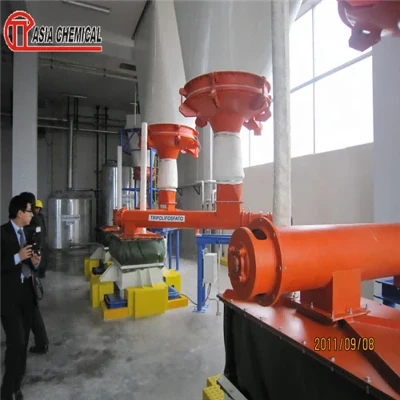
Sodium hypochlorite is used for water disinfection in municipal water treatment, wastewater treatment, swimming pools, and other applications requiring controlled chlorine dosing. On-site generation allows sodium hypochlorite solution to be produced from salt, water, and electricity, reducing dependence on transported commercial hypochlorite and allowing production to follow actual disinfection demand. Asia Chemical's HCCL series uses diaphragm-free electrolysis of dilute brine to generate low-concentration sodium hypochlorite solution on site.
For an operating facility, optimization is not limited to the electrolytic cell itself. Salt consumption, brine quality, electrical power, cooling, electrode condition, product concentration, hydrogen handling, and control accuracy can all influence operating performance. A systematic strategy should therefore connect brine preparation, electrolysis, product generation, storage, and dosing rather than treating each unit independently.
Core Cost Structure of a Sodium Hypochlorite Generator System
The main operating inputs of an electrolysis-based system are industrial salt, water, and electricity. Electricity is directly associated with electrolysis, while water and salt consumption depend on brine concentration, production capacity, operating conditions, and system configuration. Product concentration also affects the required electrical and material input for a given output target.
| Cost Area | Main Cost Drivers | Optimization Focus |
|---|---|---|
| Salt | Salt purity, dissolution losses, brine concentration | Brine preparation and salt utilization |
| Electricity | Cell voltage, current, operating hours | Electrolysis efficiency and power control |
| Water | Brine preparation, dilution, cooling and cleaning | Water balance and reuse where applicable |
| Electrodes | Operating condition, deposits and service life | Monitoring and maintenance |
| Maintenance | Pumps, electrolytic cell, valves and instruments | Preventive inspection |
| Product losses | Overproduction, decomposition and dosing variation | Production-demand matching |
This cost structure shifts the optimization focus toward electrochemical performance and operating control. Improving brine consistency or reducing unnecessary electrical demand can affect the production process continuously, while accurate production scheduling can prevent the system from producing more solution than the treatment process actually requires.
Brine Preparation and Electrolysis Efficiency
Brine preparation is the first major control point. Industrial salt is dissolved in water and supplied to the electrolytic section at the required concentration. Impurities such as suspended solids and hardness-forming components can interfere with cell operation, so water quality and brine preparation should be controlled before the solution enters the electrolyzer. Asia Chemical describes its on-site systems as using industrial salt, softened or clean water, and electrical power as the primary inputs.
The electrolytic cell then converts chloride ions and water into the products required for sodium hypochlorite generation. In diaphragm-free systems, cell operating conditions directly influence output, power consumption, and product stability. Maintaining a consistent brine feed, appropriate electrical conditions, and suitable temperature can help keep the cell within its intended operating range.
Optimization sequence
Salt quality → Brine preparation → Stable feed → Controlled electrolysis → Product concentration control → Storage or direct dosing
Increasing current or operating time is not necessarily the correct optimization approach. Excessive loading can increase heat generation or contribute to unwanted reactions, while insufficient loading can reduce production capacity. The appropriate operating window should therefore be established according to the actual cell design and required output.
Electricity and Utility Management
Electricity is a central operating input because the production process depends on electrolysis. Power consumption should therefore be monitored against actual sodium hypochlorite output rather than evaluated only as total plant electricity use. Changes in cell voltage, current, operating temperature, or electrode condition can alter the relationship between electrical input and effective chlorine production.
Cooling and water systems should also be included in the utility balance. The required cooling capacity depends on production output, operating conditions, equipment design, and ambient conditions. For larger installations, utility monitoring can help identify abnormal changes that may indicate fouling, reduced heat transfer, or equipment deterioration.
- Monitor electricity consumption per unit of effective chlorine output.
- Track cell voltage and current during normal operation.
- Identify gradual changes in electrical demand rather than waiting for a major fault.
- Match production schedules with actual water-treatment demand.
- Evaluate cooling-water consumption together with electrolysis performance.
Automation and Process Control
Automation provides a means of coordinating brine preparation, electrolysis, product concentration, storage, and dosing. Online monitoring can be used for parameters such as flow, temperature, electrical conditions, brine concentration, and product concentration. Asia Chemical also describes systems with centralized control and automatic shutdown functions for process protection.
A suitable PLC or DCS configuration can connect process measurements with equipment control and alarm management. This is particularly important when the generator supplies a water-treatment process where chlorine demand changes over time. Production can then be adjusted according to actual demand instead of maintaining a fixed output regardless of downstream requirements.
Track critical process variables continuously.
Adjust output according to treatment demand.
Identify changes in equipment performance.
Support controlled responses to abnormal conditions.
Safety functions should be integrated into the control architecture because electrolysis produces hydrogen as a by-product and sodium hypochlorite requires controlled chemical handling. Alarms, automatic shutdown, ventilation, gas handling, and electrical protection should be designed according to the specific system and applicable safety requirements.
Electrode Condition and Preventive Maintenance
The electrolytic cell is one of the main maintenance points because electrode condition directly affects electrochemical performance. Deposits, contamination, mechanical damage, or gradual degradation can change electrical resistance and production behavior. Regular inspection and cleaning should therefore form part of the operating schedule.
Maintenance should also extend beyond the cell. Brine pumps, dosing pumps, valves, pipelines, sensors, power supplies, cooling components, and storage tanks can all influence system availability. A preventive maintenance program can use operating data to identify changes before they develop into production interruptions.
| Maintenance Point | What to Monitor | Possible Action |
|---|---|---|
| Electrodes | Voltage, current and output changes | Inspection and cleaning |
| Brine system | Flow, concentration and filtration | Adjust preparation and filtration |
| Pumps | Flow stability and abnormal operation | Inspection or replacement |
| Sensors | Measurement drift | Calibration |
| Cooling system | Temperature and heat-transfer performance | Cleaning and inspection |
| Control system | Alarms and shutdown events | Parameter review |
Product Stability and Storage Management
Sodium hypochlorite solution can undergo decomposition during storage, with stability influenced by factors such as concentration, temperature, light exposure, impurities, and storage conditions. For this reason, process optimization should include the downstream storage system rather than focusing exclusively on the generator.
Where the application allows direct or near-direct dosing, production can be coordinated more closely with consumption. For systems requiring storage, tank capacity, material compatibility, temperature control, and turnover should be considered together. Avoiding unnecessary long-term storage can help reduce product degradation and support more consistent available chlorine levels.
Storage considerations
- Required solution concentration
- Storage duration
- Tank material compatibility
- Temperature conditions
- Ventilation requirements
- Actual downstream dosing demand
Plant Layout and Integration with Water Treatment
An on-site generation system should be integrated with the water-treatment process from the beginning of the project. The layout needs to account for salt storage, brine preparation, electrolysis, hydrogen handling, sodium hypochlorite storage, dosing, electrical systems, ventilation, and operator access.
The relationship between generator capacity and downstream chlorine demand is particularly important. A system that is oversized for the actual treatment load may operate at low utilization, while insufficient capacity can limit peak dosing requirements. Project specifications should therefore define treatment capacity, required available chlorine, operating hours, target solution concentration, and dosing requirements before equipment sizing.
Project inputs for system sizing
Water-treatment capacity · Chlorine demand · Required solution concentration · Daily operating hours · Peak dosing requirement · Available salt and water conditions · Power supply · Site constraints
Environmental and Safety Considerations
On-site production changes the material-handling profile because sodium hypochlorite is generated where it is consumed instead of relying entirely on transported commercial solution. Asia Chemical positions its on-site generator systems for water-treatment applications and describes salt, water, and electricity as the principal inputs.
Safety design should address both the electrolysis process and the generated solution. Hydrogen produced during electrolysis requires controlled discharge and ventilation, while sodium hypochlorite requires appropriate storage and handling. Electrical protection, automatic shutdown, ventilation, chemical compatibility, and maintenance access should be incorporated into the overall system design.
Design principle: Safety and environmental controls should be incorporated into the generator, storage, ventilation, electrical, and dosing systems during engineering rather than added as separate measures after installation.
Optimization Roadmap
Optimization can be implemented progressively rather than requiring a complete system replacement. Existing installations can first establish baseline data for salt consumption, electricity use, production output, product concentration, operating temperature, and maintenance frequency. These measurements provide a basis for identifying the largest operating deviations.
| Stage | Priority Actions | Main Objective |
|---|---|---|
| Short Term | Brine adjustment, operating-data collection, sensor calibration, cleaning and production scheduling | Stabilize operation |
| Medium Term | Control-system upgrades, electrode-condition monitoring, utility optimization and dosing integration | Improve process control |
| Long Term | Cell optimization, system integration, energy management and capacity expansion planning | Improve lifecycle performance |
The appropriate optimization route depends on the generator configuration, required production capacity, target sodium hypochlorite concentration, water quality, electricity conditions, and downstream treatment requirements. A project assessment should therefore begin with actual operating data and treatment demand before selecting specific equipment or process modifications.
Asia Chemical Engineering Co., Ltd. for Integrated Project Solutions
Asia Chemical Engineering Co., Ltd. provides engineering solutions for chemical production and water-treatment projects, covering process design, equipment manufacturing and procurement, electrical and instrumentation systems, installation, commissioning, and technical support. For a Sodium Hypochlorite Generator, the company can develop the system configuration around production capacity, salt and water conditions, electricity supply, product concentration, dosing requirements, site conditions, and safety considerations.
By coordinating brine preparation, electrolysis, control, product handling, and installation, Asia Chemical can provide a complete Sodium Hypochlorite Generator solution rather than treating the electrolytic unit as an isolated piece of equipment. Its current product range includes on-site and water-plant sodium hypochlorite generation systems based on diaphragm-free dilute-brine electrolysis.