

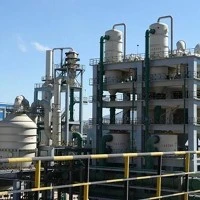


What Is Phosphoric Acid
Phosphoric acid (H₃PO₄) is an inorganic acid used in fertilizer manufacturing, food processing, metal surface treatment, water treatment and the production of phosphate chemicals. Its industrial value comes from its ability to supply phosphate, adjust acidity and react with selected metal oxides and other compounds.
For plant developers and industrial buyers, selecting a production route requires more than identifying the final chemical. The required grade, raw-material source, impurity profile, downstream application, separation requirements and environmental controls all influence the process design. These factors also determine the major equipment configuration, materials of construction, utility demand and quality-control procedures.
Key Properties and Industrial Applications
The compound has the molecular formula H₃PO₄ and a molecular weight of approximately 98 g/mol. It is a triprotic acid, meaning that its three ionizable hydrogen atoms can dissociate in stages. Its behavior in solution depends on concentration, temperature and the chemical environment. These properties make it useful in processes that require controlled acidity or the formation of phosphate compounds.
| Application | Industrial Function | Key Requirement |
|---|---|---|
| Fertilizer manufacturing | Supplies phosphate for the manufacture of products such as monoammonium phosphate (MAP) and diammonium phosphate (DAP). | Phosphate availability, impurity control, concentration and compatibility with the downstream reaction process. |
| Food and beverage processing | Acts as an acidity regulator or acidulant in specified formulations. | Food-grade material, applicable regulatory compliance, traceability and control of relevant impurities. |
| Metal treatment | Supports selected cleaning, rust-removal and surface-treatment operations. | Substrate compatibility, treatment conditions, rinsing requirements and management of spent solutions. |
| Water treatment | Can be used in selected pH-adjustment and corrosion-control applications. | Water chemistry, dosing control, compatibility with treatment equipment and applicable discharge requirements. |
| Phosphate chemicals | Serves as a feedstock for selected phosphate salts and phosphorus-containing chemical products. | Reaction stoichiometry, feed purity, conversion requirements and downstream separation. |
Application distinction: Industrial, technical and food-grade products are not interchangeable by default. A material suitable for fertilizer or metal treatment may not meet food-use requirements. The intended application must determine the required specification and quality-control plan.
Production Routes: Wet Process and Thermal Process
Two established industrial routes are the wet process and the thermal process. They differ in feedstock, reaction sequence, impurity profile and downstream purification requirements. The appropriate route depends on product specifications, available raw materials, economics, environmental obligations and the intended market.
Wet-Process Production
The wet process generally reacts phosphate rock with sulfuric acid. The reaction releases phosphoric acid into a liquid phase and forms calcium sulfate-containing solids. The resulting slurry is separated by filtration, while washing can recover additional soluble phosphate from the solid residue. The recovered acid may then undergo clarification, purification or concentration, depending on the required product grade.
The principal engineering challenges include phosphate-rock variability, reaction control, slurry handling, filtration performance, washing efficiency and the management of gypsum-containing residues. Fluoride-bearing compounds and other impurities associated with the raw material may also affect gas treatment, wastewater management and product quality.
Typical wet-process sequence
Phosphate rock preparation → acidulation and reaction → slurry conditioning → solid-liquid separation → washing and recovery → clarification or purification → concentration where required → product storage.
Thermal-Process Production
The thermal route starts with elemental phosphorus. The phosphorus is oxidized to phosphorus oxide, which is then hydrated or absorbed into water to form the acid. Subsequent concentration or finishing steps depend on the target specification and the condition of the product stream.
Because the route uses elemental phosphorus rather than phosphate-rock acidulation, its feedstock and impurity profile differ from those of the wet process. However, phosphorus handling, oxidation, heat removal, absorption, containment and off-gas management require careful engineering. The route should be evaluated against the required purity and the cost and availability of suitable feedstock.
Typical wet-process sequence
Elemental phosphorus supply and handling → controlled oxidation → phosphorus oxide transfer → hydration or absorption → concentration or finishing where required → quality testing and storage.
Raw Materials and Core Equipment Configuration
Equipment selection should follow the process route and product specification. A process flow diagram and material balance help establish the required unit operations before individual equipment items are sized. Feedstock composition, operating conditions, slurry properties, corrosion exposure and the target production rate all affect the final configuration.
| Process area | Typical equipment or system | Engineering focus |
|---|---|---|
| Raw-material preparation | Feed handling, storage, conveying and preparation equipment appropriate to the selected feedstock. | Feed consistency, dust or spill control, handling safety and continuity of supply. |
| Reaction or oxidation | Reaction vessels and associated feed, heat-management and process-control systems, selected according to the route. | Reaction control, residence time, heat transfer, containment and materials compatibility. |
| Solid-liquid separation | Filters, washing systems, slurry-transfer equipment and associated tanks where required by the wet process. | Solids loading, filtration rate, cake washing, recovery and waste handling. |
| Purification and concentration | Clarification, purification or concentration equipment as dictated by the product specification. | Impurity limits, heat duty, scaling or deposition risk, and final concentration. |
| Product storage and transfer | Compatible storage tanks, pumps, pipelines, valves and loading arrangements. | Chemical compatibility, containment, maintenance access and transfer reliability. |
The table describes common equipment categories, not a fixed package applicable to every facility. A wet-process plant may require substantial filtration and residue-management systems, while a thermal-process plant places different demands on phosphorus handling, oxidation, absorption and gas containment. Final equipment sizing requires project-specific process data.
Materials of Construction, Utilities and Process Control
Material selection must account for acid concentration, temperature, impurities, flow conditions and the presence of suspended solids. Corrosion resistance cannot be assessed from the chemical name alone. Materials suitable for one process location may not be suitable for another, particularly where concentration changes, abrasion, deposits or elevated temperatures occur.
Materials Compatibility
Equipment suppliers and plant designers should review the chemical composition and operating envelope for each wetted component. Tank linings, metallic materials, seals, pump components, valve internals and pipeline materials require application-specific evaluation. The review should consider corrosion rates, erosion, thermal cycling, mechanical stress and maintenance access rather than relying on a generic material recommendation.
Utilities and Instrumentation
Depending on the process route, utility requirements may include electrical power, process water, cooling, heating or steam, compressed air and wastewater-treatment services. The actual demand should be calculated from the process design and equipment duty rather than estimated from a generic plant description.
Instrumentation should support the critical variables of the selected process. These may include temperature, pressure, liquid level, flow, concentration-related measurements and equipment operating status. Interlocks, alarms and shutdown functions should be defined through process hazard review and control-system design. Measurement methods must also be suitable for the chemical environment and the expected operating range.
Design review priorities
- Confirm chemical compatibility for all wetted materials and seals.
- Establish heat and mass balances before finalizing utility loads.
- Identify critical process variables, alarms, interlocks and safe operating limits.
- Provide access for inspection, cleaning, maintenance and safe isolation.
Quality Control, Storage and Handling
A product specification should define the quality attributes that matter to the intended application. Depending on the grade and customer requirements, these may include concentration, phosphate content, impurity limits, suspended solids, color and other relevant analytical characteristics. Sampling methods and test procedures should be consistent across production, storage and shipment.
For wet-process material, feedstock impurities can carry through the process and influence the treatment steps required to achieve the target grade. Where food or other tightly controlled applications are intended, purification, traceability and quality assurance requirements may be more demanding than those for general industrial use. A product should not be classified as suitable for a regulated application solely because its concentration meets a specified value.
Storage and Transfer Considerations
Storage systems should be designed around the actual concentration, temperature range, delivery method and expected inventory. Tank materials, venting arrangements, secondary containment, pump selection, valve design and loading connections should be assessed together. Concentrated solutions can exhibit temperature-dependent changes in physical behavior, including crystallization under certain conditions, so storage and transfer conditions should be checked against the product specification.
Handling procedures should address corrosive-liquid exposure, splash protection, spill containment, emergency response, safe transfer and personnel training. The plant layout should separate incompatible materials and provide suitable access to emergency equipment. Wastewater, wash water and process residues must be evaluated according to their composition and applicable environmental requirements.
Procurement Checks Before Ordering a Production Line
A production-line quotation should be assessed against a defined process scope rather than a headline capacity alone. Before comparing suppliers, the buyer should prepare a design basis that describes the feedstock, target product, quality limits, operating schedule, site conditions, utilities and environmental obligations.
| Procurement topic | Questions to resolve |
|---|---|
| Product specification | What concentration, impurity limits, physical properties and application-specific requirements must the finished product meet? |
| Feedstock basis | What are the expected feedstock composition, variability, supply conditions and quality-control requirements? |
| Process scope | Which preparation, reaction, separation, purification, concentration, storage and transfer systems are included or excluded? |
| Environmental controls | How will wastewater, process residues, dust, fluoride-bearing streams or other route-specific emissions be collected and treated? |
| Utilities and layout | What utility loads, building conditions, equipment access, storage capacity and site interfaces are required? |
| Delivery and commissioning | What engineering documents, inspection points, installation responsibilities, commissioning activities, training and technical support are included in the contract? |
The quotation should identify the battery limits, equipment list, design assumptions, applicable standards, scope exclusions and purchaser-supplied items. It should also distinguish guaranteed performance criteria from indicative design information. This makes competing proposals easier to compare and reduces the risk of missing utility, environmental or auxiliary systems.
For Phosphoric Acid Plant, ASIA Chemical provides process design, equipment procurement, electrical and instrumentation, installation supervision and commissioning services to support project planning and equipment selection.
Evaluating the Complete Plant
A chemical production plant is an integrated system. Reaction equipment cannot be evaluated independently of feed preparation, separation, storage, utilities, environmental treatment and product dispatch. For example, increasing reaction throughput may place additional demands on filtration, cooling, downstream concentration or residue handling. The limiting unit operation can therefore determine the practical capacity of the entire line.
Engineering review should trace the complete material flow from raw-material receipt to finished-product storage and waste treatment. The review should confirm that process balances, equipment duties, control philosophy and environmental systems are mutually consistent. Maintenance access, operator workload, cleaning requirements, spare parts and future operating flexibility also affect the long-term suitability of the design.
A practical plant-review sequence
- Define the target product grade and the design feedstock.
- Select the production route and establish the process flow diagram.
- Complete material and energy balances for the major unit operations.
- Verify equipment sizing, materials compatibility and utility requirements.
- Review process safety, emissions, wastewater and solid-residue management.
- Define inspection, commissioning, performance testing and operating documentation.
This sequence provides a structured basis for technical evaluation before commercial terms are finalized. It also helps distinguish a complete engineering scope from a list of major equipment items that may leave important plant interfaces unresolved.
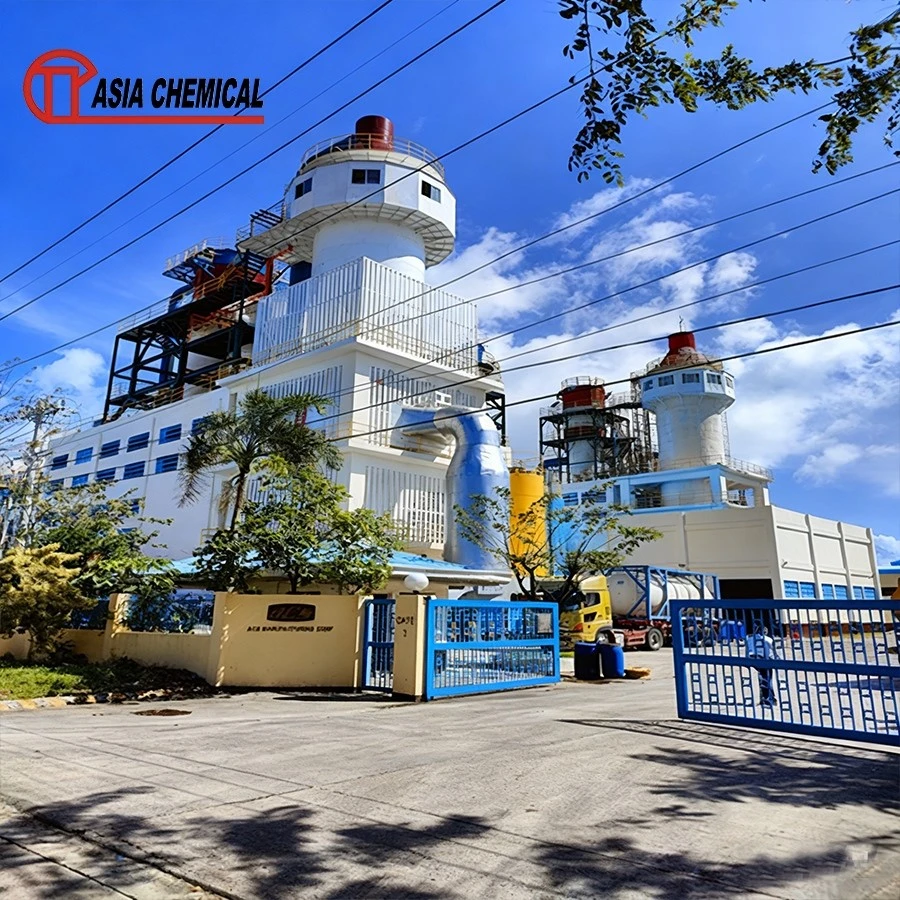
Asia Chemical Engineering Co., Ltd. provides chemical engineering and equipment-related services covering technical consultation, process and engineering design, equipment fabrication and procurement, electrical and instrumentation work, installation supervision, commissioning, operator training and technical support. Its recorded project and equipment scope includes several basic chemical production systems, including phosphoric acid-related production facilities, as well as sulfuric acid, sodium silicate, sodium sulfate, sodium carbonate, sodium hypochlorite and other chemical process lines.
For a proposed plant, the engineering scope should be established from the intended product specification, raw-material conditions, required production capacity, site utilities and environmental constraints. Process selection, equipment configuration, materials of construction and commissioning requirements should be evaluated against the specific project rather than assumed to be identical across different chemical production routes.


