

When it comes to chemical reactions, few are as fundamental and widely applicable as the reaction between caustic soda and acids. As a trusted caustic soda supplier, I've witnessed firsthand the remarkable outcomes of these reactions and their far - reaching implications across various industries. In this blog, we'll explore what happens when caustic soda reacts with acids, the science behind it, and the practical applications of these reactions.
Understanding Caustic Soda and Acids
Caustic soda, also known as sodium hydroxide (NaOH), is a highly caustic and versatile inorganic compound. It is a white, solid substance that readily dissolves in water, releasing a significant amount of heat in the process. Caustic soda is a strong base, which means it has a high pH value and can accept protons (H⁺ ions) in a chemical reaction.
On the other hand, acids are substances that donate protons (H⁺ ions) in a chemical reaction. They have a low pH value and can range from weak acids like acetic acid (found in vinegar) to strong acids like hydrochloric acid (HCl) and sulfuric acid (H₂SO₄).
The Chemical Reaction: Neutralization
The reaction between caustic soda and acids is a classic example of a neutralization reaction. In a neutralization reaction, an acid and a base react to form a salt and water. The general equation for the reaction between an acid (HA) and caustic soda (NaOH) can be written as:


HA + NaOH → NaA+ H₂O
Let's break down this reaction step by step using hydrochloric acid (HCl) as an example:
-
Dissociation of the acid and the base:
- When hydrochloric acid (HCl) is dissolved in water, it dissociates into hydrogen ions (H⁺) and chloride ions (Cl⁻): HCl → H⁺+ Cl⁻
- Similarly, when caustic soda (NaOH) is dissolved in water, it dissociates into sodium ions (Na⁺) and hydroxide ions (OH⁻): NaOH → Na⁺+ OH⁻
-
Reaction between the ions:
- The hydrogen ions (H⁺) from the acid react with the hydroxide ions (OH⁻) from the base to form water (H₂O): H⁺+ OH⁻→ H₂O
- The sodium ions (Na⁺) from the base and the chloride ions (Cl⁻) from the acid combine to form sodium chloride (NaCl), which is a common salt: Na⁺+ Cl⁻→ NaCl
The overall reaction between hydrochloric acid and caustic soda can be written as:
HCl + NaOH → NaCl+ H₂O
This reaction is exothermic, which means it releases heat. The heat released can be significant, especially when dealing with concentrated solutions of acids and caustic soda.
Practical Applications of the Reaction
The reaction between caustic soda and acids has numerous practical applications in various industries:
1. Water Treatment
In water treatment plants, caustic soda is often used to neutralize acidic water. Acidic water can be corrosive to pipes and equipment, and it can also have a negative impact on aquatic life. By adding caustic soda to acidic water, the pH of the water can be adjusted to a more neutral level, reducing the corrosiveness of the water and making it safer for consumption and industrial use.
2. Chemical Manufacturing
Caustic soda is a key ingredient in the production of many chemicals. For example, it is used in the production of sodium salts, which are used in a wide range of applications, including detergents, paper manufacturing, and textile processing. The reaction between caustic soda and acids is used to produce these sodium salts in a controlled and efficient manner.
3. Food Processing
In the food industry, caustic soda is used for various purposes, such as peeling fruits and vegetables, adjusting the pH of food products, and cleaning equipment. The reaction between caustic soda and acids can be used to neutralize any excess acid in food products, ensuring that they have the desired taste and texture.
4. Petroleum Refining
In the petroleum industry, caustic soda is used to remove acidic impurities from crude oil and petroleum products. The reaction between caustic soda and acids helps to neutralize these impurities, making the petroleum products more stable and less corrosive.
Safety Considerations
While the reaction between caustic soda and acids is a useful and important chemical process, it is also important to handle these substances with care. Caustic soda is a highly caustic substance that can cause severe burns and damage to the skin, eyes, and respiratory system. Acids, especially strong acids, can also be corrosive and dangerous.
When working with caustic soda and acids, it is essential to wear appropriate personal protective equipment (PPE), such as gloves, goggles, and a lab coat. The reaction should be carried out in a well - ventilated area to prevent the buildup of toxic fumes. It is also important to follow proper procedures for storing, handling, and disposing of these substances.
Our Caustic Soda Supply
As a leading caustic soda supplier, we are committed to providing high - quality caustic soda products to meet the diverse needs of our customers. We offer a range of caustic soda products, including solid caustic soda and liquid caustic soda solutions of different concentrations.
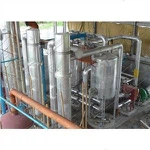
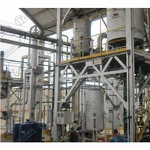
Our Sodium Hydroxide Plant Production Line is designed to produce caustic soda in a safe and efficient manner. We use advanced technology and strict quality control measures to ensure that our caustic soda products meet the highest standards of purity and quality.
If you are looking for a reliable source of caustic soda for your industrial or commercial needs, we also offer Modular Caustic Soda Plant and Small Scale Caustic Soda Plant solutions. These plants are designed to be cost - effective and easy to operate, making them suitable for small and medium - sized enterprises.
Conclusion
The reaction between caustic soda and acids is a fundamental chemical process with numerous practical applications. Whether it's in water treatment, chemical manufacturing, food processing, or petroleum refining, this reaction plays a crucial role in many industries.
If you are interested in learning more about our caustic soda products or have any questions about the reaction between caustic soda and acids, please feel free to contact us. We would be happy to discuss your specific needs and provide you with the best solutions for your business.
References
- Atkins, P. W., & de Paula, J. (2014). Physical Chemistry. Oxford University Press.
- Brown, T. L., LeMay, H. E., Bursten, B. E., Murphy, C. J., Woodward, P. M., & Stoltzfus, M. W. (2017). Chemistry: The Central Science. Pearson.
- Ebbing, D. D., & Gammon, S. D. (2016). General Chemistry. Cengage Learning.