

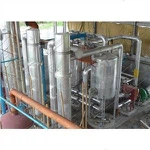
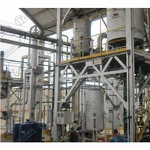
As a supplier of a Na2CO3 plant, also known as a soda ash plant, understanding the production efficiency indicators is crucial for both the plant operators and the customers. These indicators not only reflect the performance of the plant but also have a significant impact on the overall cost - effectiveness and competitiveness in the market. In this blog post, we will delve into the key production efficiency indicators of a Na2CO3 plant.
1. Yield
Yield is one of the most fundamental production efficiency indicators in a Na2CO3 plant. It measures the amount of sodium carbonate (Na2CO3) produced relative to the amount of raw materials input. A high - yield plant is more efficient because it can convert a larger proportion of the raw materials into the desired product.
The yield is calculated using the following formula:
Yield (%) = (Actual mass of Na2CO3 produced / Theoretical mass of Na2CO3 that could be produced) × 100
The theoretical mass of Na2CO3 is determined by the stoichiometry of the chemical reactions involved in the production process. For example, in the Solvay process, which is a common method for soda ash production, the reaction between sodium chloride (NaCl), ammonia (NH3), carbon dioxide (CO2), and water (H2O) is used to produce Na2CO3. Any inefficiencies in the reaction, such as incomplete reactions or side - reactions, can reduce the yield.
A high - yield plant can reduce the cost of raw materials per unit of product. If a plant has a low yield, it means that a significant amount of raw materials are wasted, which increases the production cost. As a supplier of Soda Ash Processing Plant, we focus on providing plants that are designed to achieve high yields through optimized reaction conditions and advanced process control systems.
2. Energy Consumption
Energy consumption is another critical production efficiency indicator. The production of Na2CO3 requires a substantial amount of energy, mainly for heating, cooling, and operating pumps and compressors. Reducing energy consumption not only lowers the production cost but also has environmental benefits.
The energy consumption of a Na2CO3 plant can be measured in several ways. One common measure is the specific energy consumption, which is the amount of energy used per unit mass of Na2CO3 produced. It is usually expressed in kilojoules per kilogram (kJ/kg) or kilowatt - hours per ton (kWh/ton).
There are several factors that can affect the energy consumption of a Na2CO3 plant. The choice of production process is one of the most important factors. For example, some modern production processes are more energy - efficient than traditional methods. In addition, the efficiency of the equipment used in the plant, such as heat exchangers and boilers, also has a significant impact on energy consumption.
As a provider of Soda Ash Production Process Machinery, we offer energy - efficient machinery that can help reduce the overall energy consumption of the plant. This includes high - efficiency heat exchangers, advanced compressors, and energy - saving pumps.


3. Production Capacity Utilization
Production capacity utilization measures the extent to which a Na2CO3 plant is operating at its maximum production capacity. It is calculated as the ratio of the actual production output to the designed production capacity.
Production Capacity Utilization (%) = (Actual production output / Designed production capacity) × 100
A high production capacity utilization rate indicates that the plant is being used efficiently. If a plant has a low utilization rate, it may mean that there are issues such as equipment breakdowns, maintenance problems, or insufficient demand for the product.
On the other hand, operating a plant at 100% capacity all the time is not always the best strategy. It can lead to increased wear and tear on the equipment and may require more frequent maintenance. Therefore, an optimal production capacity utilization rate needs to be achieved to balance the production efficiency and equipment reliability.
We, as a supplier of Design - build Soda Ash Plant, take into account the expected production capacity utilization rate during the design phase. We design the plant to be flexible enough to adjust the production capacity according to the market demand while maintaining high efficiency.
4. Product Quality
Product quality is an indirect but important production efficiency indicator. High - quality Na2CO3 products can command a higher price in the market, which can increase the overall profitability of the plant.
The quality of Na2CO3 is usually measured by its purity, particle size distribution, and chemical composition. For example, in some applications, such as the glass manufacturing industry, a high - purity Na2CO3 is required. Any impurities in the product can affect the quality of the final glass product.
To ensure high product quality, a Na2CO3 plant needs to have a strict quality control system in place. This includes regular testing of the raw materials, in - process samples, and the final product. Any deviations from the quality standards need to be corrected immediately to avoid producing sub - standard products.
5. Equipment Reliability
Equipment reliability is closely related to production efficiency. In a Na2CO3 plant, any breakdown of the equipment can lead to production stoppages, which can cause significant losses.
The reliability of the equipment can be measured by several metrics, such as the mean time between failures (MTBF) and the mean time to repair (MTTR). A high MTBF indicates that the equipment is less likely to break down, while a low MTTR means that the equipment can be repaired quickly when it does break down.
As a supplier, we provide high - quality equipment that is designed for long - term reliability. We also offer maintenance and after - sales services to ensure that the equipment is always in good working condition.
6. Labor Productivity
Labor productivity measures the amount of Na2CO3 produced per unit of labor input. It is an important indicator of the overall efficiency of the plant.
To improve labor productivity, a Na2CO3 plant can adopt several strategies. One strategy is to automate the production process as much as possible. Automation can reduce the need for manual labor and increase the production speed and accuracy. Another strategy is to provide training and development opportunities for the workers to improve their skills and knowledge.
In conclusion, the production efficiency of a Na2CO3 plant is determined by a combination of factors, including yield, energy consumption, production capacity utilization, product quality, equipment reliability, and labor productivity. As a supplier of Na2CO3 plants, we are committed to providing high - quality plants and equipment that can help our customers achieve high production efficiency. If you are interested in purchasing a Na2CO3 plant or upgrading your existing plant, please feel free to contact us for a detailed discussion on how we can meet your specific needs.
References
- Smith, J. D. (2018). Chemical Engineering Principles in Soda Ash Production. New York: Chemical Press.
- Johnson, A. R. (2020). Energy - Efficient Processes in Industrial Chemical Production. London: Green Energy Publications.
- Brown, C. M. (2019). Quality Control in Sodium Carbonate Manufacturing. Tokyo: Industrial Quality Press.