

Hey there! I'm a supplier from a NaOH factory, and today I wanna chat about how we ensure the top - notch quality of our sodium hydroxide (NaOH) products.
Raw Material Selection
First things first, the quality of NaOH starts with the raw materials. We're super picky when it comes to choosing what goes into our production process. The main raw material for making NaOH is salt, usually sodium chloride (NaCl). We source our salt from reliable suppliers who can guarantee high - purity salt. Before we even think about using it, we conduct a series of tests. We check for impurities like calcium, magnesium, and sulfate ions. These impurities can mess up the electrolysis process and affect the quality of the final NaOH product.
We also make sure that the salt has the right particle size. If the particles are too big, they won't dissolve properly in the brine solution, which is a key step in the production. On the other hand, if they're too small, it can cause problems with the filtration process later on. By getting the raw materials right from the start, we set a solid foundation for producing high - quality NaOH.
Production Process Control
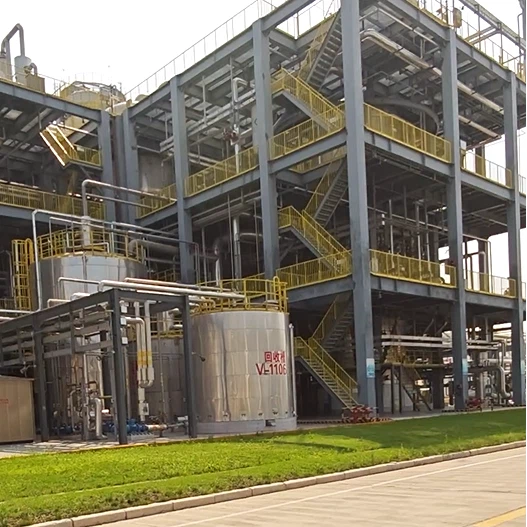
The production of NaOH mainly happens in a Chlor Alkali Plant For Caustic Soda. There are different methods to produce NaOH, but the most common one is the electrolysis of brine. In our Caustic Soda Electrolysis Plant, we closely monitor every step of the electrolysis process.

Electrolysis Conditions
The electrolysis process involves passing an electric current through a brine solution. We need to control the temperature, voltage, and current density very carefully. If the temperature is too high, it can lead to side reactions and increase the energy consumption. If it's too low, the reaction rate will be slow, and the production efficiency will drop.
The voltage and current density also play crucial roles. A proper balance between them ensures that the electrolysis reaction proceeds smoothly and that we get the right concentration of NaOH in the solution. We use advanced sensors and control systems to constantly monitor these parameters and make real - time adjustments.
Membrane Technology
We use membrane cells in our Chlor Alkali Production Plant. These membranes are designed to separate the anode and cathode compartments in the electrolysis cell. They allow only certain ions to pass through, which helps in producing high - purity NaOH. The membranes need to be maintained properly. We regularly check their integrity and performance. If there are any signs of damage or degradation, we replace them immediately to prevent contamination of the NaOH product.
Quality Testing
Once the NaOH is produced, we don't just send it out the door. We have a comprehensive quality testing program in place.
In - house Testing
Our in - house laboratory is equipped with state - of - the - art testing equipment. We test the NaOH for its concentration, purity, and the presence of any impurities. For concentration testing, we use titration methods. This is a simple yet accurate way to determine how much NaOH is actually in the solution.
To check for purity, we use techniques like high - performance liquid chromatography (HPLC) and atomic absorption spectroscopy (AAS). These methods can detect even trace amounts of impurities. If the product doesn't meet our strict quality standards, it goes through a re - processing or purification step until it does.
Third - party Verification
In addition to our in - house testing, we also send samples to third - party laboratories for verification. These independent labs have no stake in our business, so their results are objective and reliable. Their reports give our customers an extra level of confidence in the quality of our NaOH products.
Employee Training
Our employees are the backbone of our quality control system. We provide regular training to all our staff members involved in the production and quality control processes.
Technical Training
We train our production workers on the proper operation of the equipment in the Chlor Alkali Plant For Caustic Soda. They learn how to handle the raw materials safely, how to set up and adjust the electrolysis cells, and how to troubleshoot common problems.
Our quality control personnel receive in - depth training on the latest testing methods and equipment. They are taught how to accurately interpret the test results and make decisions based on them.
Safety Training
Safety is also a big part of our training. Working with NaOH can be dangerous, so we make sure that all our employees know how to handle it safely. This includes wearing the right protective gear, following proper handling procedures, and knowing what to do in case of an emergency.
Storage and Packaging
Even after the NaOH has passed all the quality tests, we still need to take care of it during storage and packaging.
Storage
We store our NaOH in specially designed tanks. These tanks are made of materials that are resistant to corrosion from NaOH. We also have a proper ventilation system in the storage area to prevent the buildup of any harmful gases. The storage temperature and humidity are carefully controlled to ensure that the quality of the NaOH doesn't degrade over time.
Packaging
We use high - quality packaging materials for our NaOH products. For liquid NaOH, we use drums or tanks that are sealed tightly to prevent leaks. For solid NaOH, we use bags made of materials that can protect it from moisture and other environmental factors. The packaging is also labeled clearly with all the necessary information, such as the product name, concentration, and safety instructions.
Continuous Improvement
We're always looking for ways to improve our product quality. We collect feedback from our customers regularly. If they have any issues or suggestions, we take them seriously and use them to make changes in our production process or quality control measures.
We also keep an eye on the latest industry trends and technologies. If there are new methods or equipment that can help us produce better - quality NaOH, we're willing to invest in them.
In conclusion, ensuring the quality of NaOH products is a multi - step process that involves everything from raw material selection to storage and packaging. At our factory, we're committed to providing the highest - quality NaOH to our customers. If you're in the market for NaOH and are looking for a reliable supplier, feel free to reach out for a procurement discussion. We're confident that our products will meet your needs.
References
- Kirk - Othmer Encyclopedia of Chemical Technology
- Handbook of Industrial Chemistry and Biotechnology