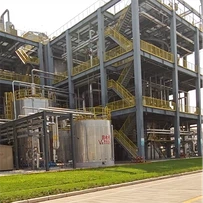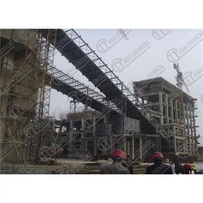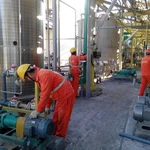
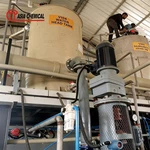
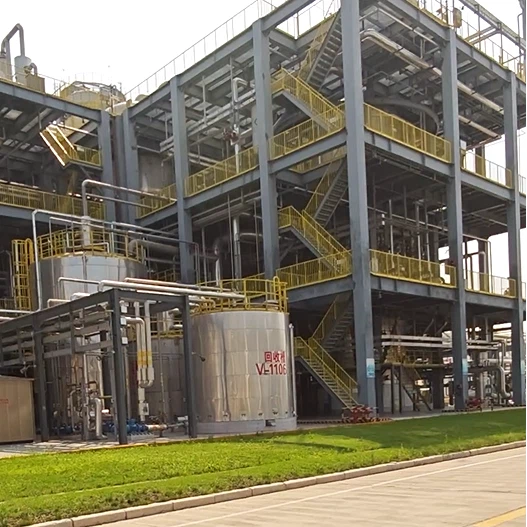
Asia Chemical Engineering Co., Ltd. is one of the most reliable manufacturers and suppliers of chlor alkali production plant in China. Please rest assured to wholesale cost-efficient chlor alkali production plant from our factory. Good service and reasonable price are available.
The core of a chlor-alkali plant (using the mainstream ion-exchange membrane process as an example) is to produce chlorine, alkali, and hydrogen through electrolysis using refined salt water. The process can be summarized into four key steps, each focusing on key actions:
1. Raw material pretreatment: Converting crude salt into "clean salt water"
Crude salt (industrial salt) is dissolved in fresh water to form crude brine, which is first filtered to remove sediment;
Chemical reagents (such as sodium carbonate and sodium hydroxide) are added to remove impurities such as calcium, magnesium, and sulfate from the brine to prevent clogging of the electrolytic membrane;
Finally, the "refined brine" is filtered and preheated to an appropriate temperature for use.
2. Core Electrolysis: Electricity is applied to separate the brine.
The refined brine is fed into an ion-exchange membrane electrolysis cell, where direct current is applied.
Anode: Chloride ions are converted to chlorine gas (discharged), and the remaining "brine" is recycled for reuse.
Cathode: Water molecules are converted to hydrogen gas (discharged), while a "crude caustic soda solution" containing sodium hydroxide is generated (discharged).
The ion-exchange membrane's function is to allow only sodium ions to migrate from the anode to the cathode, preventing the reaction of chlorine and caustic soda and the explosion of hydrogen and chlorine gas mixtures.
3. Product Purification: Converting the "crude product" into a qualified product.
Chlorine: Water and mist are first removed, then dried with concentrated sulfuric acid for direct use or liquefied storage.
Hydrogen: Residual caustic soda is washed away and, after drying, can be used as fuel, used to produce hydrochloric acid, or purified to a high purity for external supply.
Caustic soda: The crude caustic soda solution is concentrated (to remove excess water and residual salt) to produce a 48%-50% liquid caustic soda solution, which can then be further processed into solid flakes with a purity exceeding 99%. 4. Recycling and Environmental Protection: Reducing Losses and Pollution
The "brine water" remaining after electrolysis is dechlorinated and returned to the "raw material pretreatment" stage for re-salting.
Wastewater generated during production (such as wash water) is partially recycled after neutralization and treatment, with the remainder meeting discharge standards.
Impurity precipitates (such as salt sludge) are dehydrated and sent to specialized disposal facilities.
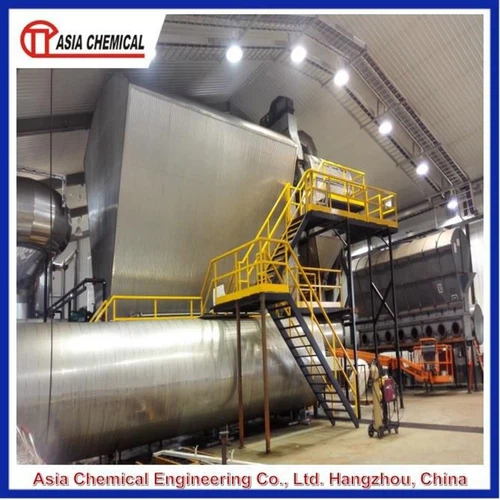
Production equipment
Environmental Sustainability
Waste Management
Wastewater Treatment: Chlor-alkali plants employ advanced systems like vacuum dechlorination and biochemical oxidation to treat process water. For example, PVC centrifugal mother liquor is recycled using ozone disinfection and activated carbon filtration, achieving COD reduction rates >85% .
Byproduct Utilization: Salt sludge from brine purification is repurposed for cement production, while hydrogen is captured for energy generation .
Energy Efficiency
Renewable Integration: Solar and wind power are increasingly used to offset electricity demands, aligning with global decarbonization goals .
Heat Recovery: Waste heat from electrolysis is recycled for brine preheating, reducing overall energy consumption
FAQ
How do chlor-alkali plants ensure safe production during the production process?
1. High-Hazard Material Control: Risk Prevention Based on the Characteristics of Chlorine, Hydrogen, and Alkali
Chlorine: Store in pressure-resistant tanks/cylinders equipped with leak detectors and alkaline solution spray absorption devices (to neutralize leaks). Personnel must wear positive-pressure respirators.
Hydrogen: Pipelines/tanks must be grounded for static electricity and explosion-proof fans must be installed (to prevent explosions caused by accumulation). Air must be replaced with nitrogen (oxygen content <0.5%) before use.
Caustic Soda: Store in corrosion-resistant tanks/warehouses. Personnel must wear corrosion-resistant clothing and goggles when handling. Skin contact must be immediately rinsed with water and applied with boric acid.
2. Equipment and Process Safety: Full-Cycle Fault Prevention
Core Equipment: Electrolyzers must undergo regular inspections for ion-exchange membrane integrity (to prevent crosstalk between chlorine and hydrogen). Compressors must be oil-free with overpressure protection. Special equipment must undergo annual inspections.
Process Design: Install a DCS system for real-time parameter monitoring (with alarms for exceeding limits). An emergency stop (ESD) button must be installed. Chlorine and hydrogen pipelines must not cross or be mixed.
3. Personnel Management: Standardized Operations + Enhanced Training
New employees must pass the "Three-Level Safety Education" assessment before taking up their posts. Existing employees must learn safety procedures quarterly and practice emergency response procedures (such as handling chlorine leaks) annually.
Standardized work procedures (such as shutting off the power and draining the electrolytic cell before membrane replacement) are established. Safety supervisors are assigned to monitor violations and encourage reporting of potential hazards.
4. Emergency Preparedness: Rapidly Respond to Emergencies
Specialized emergency plans (for chlorine leaks, hydrogen explosions, etc.) are in place, clearly defining evacuation, leak plugging, and neutralization procedures, and coordinating with local emergency/firefighting/hospital personnel.
Workshops are equipped with eyewash stations and emergency kits. A wind vane is located in the chlorine gas area. Leak plugging tools and neutralizing agents are stocked, and emergency equipment is regularly inspected for integrity.
5. Environment and Monitoring: Real-Time Risk Control
Gas detectors (chlorine and hydrogen) are installed at key locations throughout the plant, with data connected to the central control room. Monitoring points are located downwind of the plant to prevent contamination of the surrounding area.
Wastewater is treated to meet standards for discharge/recycling. Hazardous waste, such as salt sludge and waste membranes, is disposed of by qualified entities and is not disposed of in isolation.
Hot Tags: chlor alkali production plant, China, manufacturers, suppliers, factory, wholesale, price, profession, cost, calcium chloride production line CaCl2, caustic soda machinery, caustic soda production line, caustic soda profession, modular caustic soda plant, sodium hydroxide