

Hey there! As a supplier of Na₂SiO₄, I often get asked about the price of reagent - grade Na₂SiO₄. It's a question that doesn't have a one - size - fits - all answer, and in this blog, I'll break down the factors that influence its price and give you a better understanding of what you can expect.
First off, let's talk about what reagent - grade Na₂SiO₄ is. Reagent - grade chemicals are of high purity and are used in laboratory settings, research, and various analytical applications. They need to meet strict quality standards to ensure accurate and reliable results. Na₂SiO₄, or sodium silicate, is a compound that has a wide range of uses, from detergents to construction materials. But when it comes to the reagent - grade version, it's all about precision and purity.
One of the main factors that affect the price of reagent - grade Na₂SiO₄ is the purity level. Higher purity means more refined production processes, which in turn require more resources and time. For instance, a 99% pure reagent - grade Na₂SiO₄ will cost more than a 95% pure one. The purification process involves removing impurities such as heavy metals, other salts, and organic contaminants. This is done through a series of chemical reactions, filtration, and distillation steps, all of which add to the production cost.
Another significant factor is the production volume. Small - scale production of reagent - grade Na₂SiO₄ is often more expensive per unit compared to large - scale production. When we produce in large quantities, we can take advantage of economies of scale. We can negotiate better prices for raw materials, spread the fixed costs (like equipment and labor) over more units, and optimize the production process. So, if you're looking for a lower price, ordering in bulk might be a good idea.
The cost of raw materials also plays a crucial role. The main raw materials for Na₂SiO₄ production are silica sand and sodium hydroxide. Fluctuations in the prices of these raw materials can directly impact the price of the final product. For example, if there's a shortage of silica sand due to mining restrictions or increased demand in other industries, the price of silica sand will go up, and so will the price of Na₂SiO₄.
Market demand and competition also influence the price. If there's a high demand for reagent - grade Na₂SiO₄ in a particular industry, such as the pharmaceutical or electronics industry, the price is likely to increase. On the other hand, if there are many suppliers in the market offering similar products, competition can drive the prices down as suppliers try to attract more customers.
Now, let's talk about the production process. There are different methods to produce sodium silicate, and each method has its own cost implications. One common method is the fusion process, where silica sand and sodium carbonate are heated together at high temperatures. This process requires a lot of energy, which adds to the production cost. Another method is the wet process, which is generally less energy - intensive but might require more complex purification steps.
When it comes to the specific price range, it can vary widely. As of now, the price of reagent - grade Na₂SiO₄ can range from around $X per kilogram for lower - purity grades to $Y per kilogram for high - purity grades. But these prices are subject to change based on the factors I mentioned earlier.
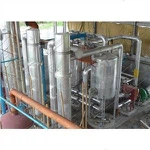
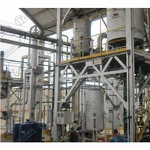
If you're in the business of setting up a sodium silicate plant, you might be interested in our Turn Key Project Service For Sodium Silicate Plants. We offer comprehensive solutions that cover everything from plant design and equipment installation to commissioning and after - sales support. This can save you a lot of time and effort in setting up your own production facility.
For those looking for the machinery to produce liquid sodium silicate, we have Liquid Sodium Silicate Plant Machinery. Our machinery is designed to be efficient, reliable, and easy to operate. It can help you produce high - quality liquid sodium silicate at a competitive cost.


And if you're interested in solid sodium silicate production, our Solid Sodium Silicate Production Line is a great option. It's a complete production line that can handle the entire process from raw material input to the final solid product.
In conclusion, the price of reagent - grade Na₂SiO₄ is determined by multiple factors, including purity, production volume, raw material costs, production process, market demand, and competition. If you're in the market for reagent - grade Na₂SiO₄ or are considering setting up a sodium silicate plant, we're here to help. We can provide you with detailed price quotes based on your specific requirements. Whether you need a small quantity for laboratory use or are planning a large - scale production, we can offer competitive prices and high - quality products.
If you have any questions or want to discuss your procurement needs further, don't hesitate to reach out. We're always happy to have a chat and find the best solution for you.
References
- "Handbook of Industrial Chemistry and Biotechnology"
- "Chemical Engineering Principles"
- Industry reports on sodium silicate production and market trends