

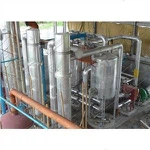
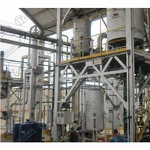
As a supplier of Na2CO3 plants, I am excited to delve into the intricacies of production technology transfer in a Na2CO3 plant. Sodium carbonate, commonly known as soda ash, is a vital industrial chemical with a wide range of applications, including glass manufacturing, detergents, and water treatment. In this blog post, I will explore the various aspects of technology transfer in a Na2CO3 plant, from the key processes involved to the benefits and challenges associated with it.
Key Processes in Na2CO3 Production
Before discussing technology transfer, it is essential to understand the key processes involved in Na2CO3 production. There are two main methods for producing soda ash: the Solvay process and the Hou's process.
The Solvay process, also known as the ammonia-soda process, is the most widely used method for large-scale soda ash production. It involves several steps, including brine purification, ammonia absorption, carbonation, filtration, calcination, and ammonia recovery. The process starts with the purification of brine to remove impurities such as calcium and magnesium ions. The purified brine is then saturated with ammonia gas, followed by the introduction of carbon dioxide gas to form sodium bicarbonate precipitate. The sodium bicarbonate is then filtered, washed, and calcined to produce sodium carbonate. The ammonia used in the process is recovered and recycled, making the Solvay process a relatively efficient and cost-effective method.
The Hou's process, developed by Chinese chemist Hou Debang, is a modification of the Solvay process. It aims to overcome some of the limitations of the Solvay process, such as the production of large amounts of calcium chloride waste. The Hou's process combines the production of soda ash with the production of ammonium chloride, a valuable fertilizer. It involves the reaction of sodium chloride, ammonia, and carbon dioxide to form sodium bicarbonate and ammonium chloride. The sodium bicarbonate is then calcined to produce sodium carbonate, while the ammonium chloride is recovered as a by-product.
Technology Transfer in Na2CO3 Plants
Technology transfer in a Na2CO3 plant refers to the process of transferring the knowledge, skills, and technology required for soda ash production from one party to another. This can involve the transfer of process technology, equipment, and operational know-how. Technology transfer can occur between different companies, countries, or research institutions.
There are several reasons why a company may choose to engage in technology transfer in a Na2CO3 plant. One of the main reasons is to access advanced technology and expertise that may not be available locally. By partnering with a technology provider, a company can benefit from the latest advancements in soda ash production technology, such as improved process efficiency, higher product quality, and reduced environmental impact. Technology transfer can also help a company to enter new markets or expand its existing production capacity.
Another reason for technology transfer is to reduce costs. By adopting proven technology and processes, a company can avoid the time and cost associated with developing its own technology. Technology transfer can also help a company to optimize its production processes, reduce energy consumption, and minimize waste generation, resulting in significant cost savings.
Benefits of Technology Transfer in Na2CO3 Plants
There are several benefits associated with technology transfer in a Na2CO3 plant. One of the main benefits is the access to advanced technology and expertise. By partnering with a technology provider, a company can gain access to the latest research and development in soda ash production technology, which can help to improve the efficiency and competitiveness of its operations. Technology transfer can also help a company to stay ahead of the curve in terms of environmental regulations and sustainability requirements.
Another benefit of technology transfer is the reduction of risks. Developing new technology and processes can be a risky and expensive endeavor. By adopting proven technology and processes, a company can reduce the risks associated with research and development, such as technical failures, cost overruns, and delays. Technology transfer can also help a company to avoid the legal and regulatory challenges associated with developing new technology.
Technology transfer can also help a company to improve its product quality. By adopting advanced technology and processes, a company can produce soda ash with higher purity and better quality, which can meet the demanding requirements of its customers. Improved product quality can also help a company to differentiate itself from its competitors and gain a competitive edge in the market.
Challenges of Technology Transfer in Na2CO3 Plants
While technology transfer in a Na2CO3 plant offers many benefits, it also presents several challenges. One of the main challenges is the protection of intellectual property rights. Technology providers may be reluctant to transfer their technology to other companies due to concerns about the protection of their intellectual property. To address this challenge, companies need to establish clear agreements and contracts that protect the intellectual property rights of both parties.
Another challenge of technology transfer is the adaptation of the technology to local conditions. The technology and processes used in a Na2CO3 plant may need to be adapted to the specific requirements of the local market, such as the availability of raw materials, the quality of water, and the environmental regulations. This requires a thorough understanding of the local conditions and the ability to make the necessary adjustments to the technology and processes.


Technology transfer also requires a significant investment of time and resources. The process of transferring technology and knowledge from one party to another can be complex and time-consuming. It requires the involvement of experts from both parties, as well as the training of local staff. Companies need to be prepared to invest the necessary time and resources to ensure the successful transfer of technology.
Conclusion
In conclusion, technology transfer in a Na2CO3 plant is a complex and challenging process that offers many benefits. By partnering with a technology provider, a company can access advanced technology and expertise, reduce risks, improve product quality, and gain a competitive edge in the market. However, technology transfer also presents several challenges, such as the protection of intellectual property rights, the adaptation of the technology to local conditions, and the investment of time and resources. Companies need to carefully consider these factors and develop a comprehensive strategy for technology transfer to ensure its success.
If you are interested in learning more about our Soda Ash Production Plant or Soda Ash Manufacturing Plant, or if you have any questions about our Process Equipment For Chemical Productions, please feel free to contact us. We are always happy to discuss your specific needs and provide you with the best solutions for your Na2CO3 plant.
References
- "Sodium Carbonate (Soda Ash) Production." Kirk-Othmer Encyclopedia of Chemical Technology.
- "The Solvay Process for the Production of Sodium Carbonate." Chemical Engineering Journal.
- "Hou's Process for the Production of Sodium Carbonate." Journal of Chemical Education.