

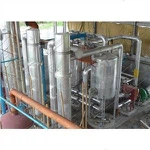
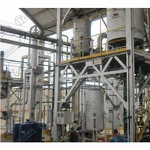
Hey there! As a supplier in the LNG machinery game, I've seen firsthand the crucial role heat exchangers play in this industry. Heat exchangers are like the unsung heroes of LNG machinery, quietly doing their job to transfer heat efficiently and keep the whole process running smoothly. In this blog, I'm gonna break down the different types of heat exchangers used in LNG machinery.
Shell and Tube Heat Exchangers
Let's start with the shell and tube heat exchangers. These bad boys are one of the most common types out there. They're pretty straightforward in design. You've got a shell, which is like a big container, and inside it, there are a bunch of tubes. One fluid flows through the tubes, and the other flows around the tubes in the shell.
The great thing about shell and tube heat exchangers is their versatility. They can handle a wide range of pressures and temperatures, which is super important in LNG applications. For example, in an LNG Production Plant, they can be used to cool down the natural gas during the liquefaction process. The hot natural gas flows through the tubes, and a coolant flows around the tubes in the shell, taking away the heat.
Another advantage is that they're relatively easy to maintain. If a tube gets damaged, you can just replace that one tube instead of the whole heat exchanger. However, they do take up a fair amount of space, so you need to have enough room in your LNG machinery setup.
Plate Heat Exchangers
Next up are plate heat exchangers. These are made up of a series of thin plates stacked on top of each other. The fluids flow between the plates, and heat is transferred through the plates.
Plate heat exchangers are known for their high efficiency. The large surface area of the plates allows for a lot of heat transfer in a relatively small space. This makes them a great choice for applications where space is limited, like in some Reliquefaction Plant setups.
They're also easy to clean. You can just open up the plates and give them a good scrub. But they're not as good at handling high pressures as shell and tube heat exchangers. So, if you're dealing with high-pressure fluids in your LNG machinery, you might need to think twice before using a plate heat exchanger.
Spiral Heat Exchangers
Spiral heat exchangers are a bit different. They consist of two long, flat plates that are coiled around each other to form two spiral channels. One fluid flows through one channel, and the other fluid flows through the other channel.
These heat exchangers are great for handling dirty or viscous fluids. The spiral design helps to keep the fluids moving in a turbulent flow, which prevents fouling and improves heat transfer. In an LNG context, they can be used in situations where the fluids might contain some impurities.
However, they're not as widely used as shell and tube or plate heat exchangers. They can be more expensive to manufacture, and they're not as easy to modify or expand if you need to change your LNG machinery setup.
Finned Tube Heat Exchangers
Finned tube heat exchangers are basically shell and tube heat exchangers with fins added to the tubes. These fins increase the surface area of the tubes, which improves heat transfer.
They're commonly used in applications where the heat transfer coefficient of one of the fluids is low. For example, in an LNG Liquefaction Plant, if you're using air as a coolant, a finned tube heat exchanger can help to increase the heat transfer between the air and the natural gas.
The fins can be made of different materials, like aluminum or copper, depending on the specific requirements of your LNG machinery. But they do add some complexity to the design and can make the heat exchanger a bit more difficult to clean.
Microchannel Heat Exchangers
Microchannel heat exchangers are a relatively new type of heat exchanger. They have very small channels, usually on the order of millimeters or even micrometers.
These heat exchangers are extremely compact and have a very high heat transfer efficiency. They're well-suited for applications where space is at a premium and high heat transfer rates are required. In the LNG industry, they could potentially be used in small-scale LNG machinery or in portable LNG equipment.
However, they're still quite expensive to manufacture, and the small channels can be easily blocked by impurities in the fluids. So, you need to have a good filtration system in place if you're going to use microchannel heat exchangers in your LNG machinery.
Brazed Plate Heat Exchangers
Brazed plate heat exchangers are similar to plate heat exchangers, but the plates are brazed together instead of being held together by gaskets.
This makes them more compact and able to handle higher pressures and temperatures than regular plate heat exchangers. They're also more resistant to leakage. In an LNG setup, they can be used in situations where you need a reliable and efficient heat exchanger that can withstand harsh conditions.
But like other plate heat exchangers, they're not as good at handling high-viscosity fluids. And if a plate gets damaged, it can be more difficult to repair compared to a gasketed plate heat exchanger.
Choosing the Right Heat Exchanger for Your LNG Machinery
So, how do you choose the right heat exchanger for your LNG machinery? Well, there are a few things you need to consider.
First, think about the operating conditions. What are the pressures and temperatures of the fluids? If you're dealing with high pressures and temperatures, shell and tube or brazed plate heat exchangers might be a good choice. If space is limited and the pressures are relatively low, plate or microchannel heat exchangers could be better.


Next, consider the properties of the fluids. Are they dirty, viscous, or clean? If they're dirty or viscous, spiral or finned tube heat exchangers might be more suitable.
You also need to think about cost. Some heat exchangers, like microchannel heat exchangers, are more expensive to manufacture. You need to balance the cost with the performance and the specific requirements of your LNG machinery.
Finally, maintenance is important. You want a heat exchanger that's easy to clean and repair. Otherwise, you could end up spending a lot of time and money on maintenance.
Conclusion
In conclusion, there are several types of heat exchangers used in LNG machinery, each with its own advantages and disadvantages. As a supplier, I can help you choose the right heat exchanger for your specific needs. Whether you're setting up an LNG Production Plant, a Reliquefaction Plant, or a Liquefaction Plant, we've got the expertise to make sure you get the best heat exchanger for your LNG machinery.
If you're interested in learning more or if you're looking to purchase heat exchangers for your LNG project, don't hesitate to reach out. We're here to help you with all your LNG machinery needs.
References
- Incropera, F. P., DeWitt, D. P., Bergman, T. L., & Lavine, A. S. (2007). Fundamentals of Heat and Mass Transfer. Wiley.
- Kakac, S., & Liu, H. (2002). Heat Exchangers: Selection, Rating, and Thermal Design. CRC Press.