

As a supplier of Na₂CO₃, also known as sodium carbonate or soda ash, I often get asked about how this versatile compound reacts with metals. Sodium carbonate is a white, water - soluble salt that has been used in various industries for centuries, from glassmaking to water treatment. In this blog post, I'll explore the different ways Na₂CO₃ interacts with metals, the underlying chemical principles, and the practical applications of these reactions.
General Reactivity of Na₂CO₃ with Metals
The reactivity of Na₂CO₃ with metals is largely determined by the chemical properties of the metal itself. In general, sodium carbonate is a weak base, and its reaction with metals can be influenced by factors such as the metal's oxidation state, reactivity series, and the reaction conditions (temperature, presence of water, etc.).


When Na₂CO₃ is dissolved in water, it dissociates into sodium ions (Na⁺) and carbonate ions (CO₃²⁻). The carbonate ions can act as ligands or react with metal ions to form various compounds. For some metals, the reaction may involve the formation of metal carbonates, while for others, it could lead to the precipitation of metal hydroxides or the formation of complex ions.
Reaction with Precious Metals
Gold and Silver
Gold and silver are relatively inert metals. However, in the presence of certain oxidizing agents and under specific conditions, Na₂CO₃ can play a role in the extraction and purification processes of these precious metals. For example, in the cyanide - free extraction of gold, sodium carbonate can be used to adjust the pH of the solution. The carbonate ions can help to buffer the solution and prevent the formation of unwanted by - products. In the case of silver, Na₂CO₃ can be used in the refining process. When silver compounds are treated with sodium carbonate in a molten state, it can react with impurities and help to separate pure silver.
Platinum Group Metals
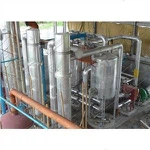
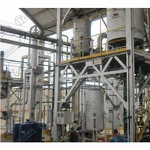
Platinum, palladium, and other platinum - group metals are also highly resistant to corrosion. But in some chemical processing steps, sodium carbonate can be used as a flux in the smelting and refining of these metals. A flux is a substance that helps to remove impurities by forming a slag. The carbonate ions in Na₂CO₃ can react with metal oxides and other impurities to form more easily removable compounds. You can learn more about the production processes related to these applications from our Soda Ash Production Plant.
Reaction with Transition Metals
Iron
When sodium carbonate reacts with iron salts in an aqueous solution, it can lead to the precipitation of iron carbonate (FeCO₃). The reaction is as follows:
Fe²⁺ + Na₂CO₃ → FeCO₃↓+ 2Na⁺
This reaction is important in water treatment processes. Iron is a common impurity in water, and by adding sodium carbonate, the iron can be removed as a precipitate. In addition, in the corrosion of iron, sodium carbonate can have a dual effect. In some cases, it can act as a passivating agent, forming a protective layer on the iron surface. However, in the presence of oxygen and water, it can also accelerate the corrosion process under certain conditions.
Copper
Copper reacts with sodium carbonate in a more complex way. In an aqueous solution, copper(II) ions can react with carbonate ions to form a basic copper carbonate, such as malachite (Cu₂CO₃(OH)₂) or azurite (Cu₃(CO₃)₂(OH)₂). The reactions are:
2Cu²⁺ + 2Na₂CO₃+ H₂O → Cu₂CO₃(OH)₂↓ + 4Na⁺+ CO₂↑
3Cu²⁺ + 3Na₂CO₃+ 2H₂O → Cu₃(CO₃)₂(OH)₂↓+ 6Na⁺ + CO₂↑
These basic copper carbonates have been used as pigments in the past. The production of such compounds can be optimized with the right machinery, which you can find information about in our Soda Ash Production Process Machinery.
Reaction with Alkali and Alkaline Earth Metals
Sodium
Since sodium carbonate already contains sodium ions, there is no direct chemical reaction between Na₂CO₃ and elemental sodium under normal conditions. However, in some high - temperature and high - energy processes, such as in the production of sodium metal from sodium compounds, sodium carbonate may be involved in the overall reaction scheme.
Calcium
When sodium carbonate reacts with calcium salts, such as calcium chloride (CaCl₂), a precipitation reaction occurs:
CaCl₂+ Na₂CO₃ → CaCO₃↓+ 2NaCl
This reaction is widely used in water softening. Hard water contains high levels of calcium and magnesium ions. By adding sodium carbonate, the calcium ions are removed as calcium carbonate precipitate, thus reducing the hardness of the water.
Industrial Applications of Na₂CO₃ - Metal Reactions
Glassmaking
In the glass industry, sodium carbonate is a key raw material. When heated with silica (SiO₂) and other metal oxides (such as calcium oxide), it reacts to form a glassy matrix. The carbonate ions decompose at high temperatures, releasing carbon dioxide gas, and the sodium ions become part of the glass structure. The reaction with metal oxides helps to lower the melting point of the silica and improve the properties of the glass. We can provide high - quality Na₂CO₃ for your glassmaking needs, and our Design - build Soda Ash Plant can ensure a stable supply.
Metal Surface Treatment
Sodium carbonate can be used in metal surface treatment processes. For example, in the degreasing and cleaning of metal parts, it can act as a mild alkaline cleaner. The carbonate ions can react with oils and greases on the metal surface, emulsifying them and making them easier to remove. In addition, it can also be used in the passivation of metal surfaces to improve their corrosion resistance.
Contact for Purchase and Discussion
If you are interested in purchasing high - quality Na₂CO₃ for your metal - related applications, whether it's for precious metal extraction, water treatment, glassmaking, or metal surface treatment, please feel free to contact us. We have a wide range of sodium carbonate products to meet your specific needs. Our team of experts is also available to discuss your requirements in detail and provide you with the best solutions.
References
- Cotton, F. A.; Wilkinson, G.; Murillo, C. A.; Bochmann, M. (1999). Advanced Inorganic Chemistry (6th ed.). Wiley.
- Housecroft, C. E.; Sharpe, A. G. (2008). Inorganic Chemistry (3rd ed.). Pearson.
- Vogel, A. I. (1978). A Textbook of Quantitative Inorganic Analysis (4th ed.). Longman.