
Sodium phosphate is an inorganic compound with the chemical formula Na3PO4 and is a phosphate. Sodium phosphate comes in two forms: anhydrous and hydrated. The most common one is dodecahydrate, Na3PO4·12H2O, which is a white crystalline powder. Sodium phosphate is almost completely decomposed into disodium hydrogen phosphate and sodium hydroxide in water, and its aqueous solution is strongly alkaline. Sodium phosphate easily deliquesces and weathers in dry air, producing sodium dihydrogen phosphate and sodium bicarbonate.
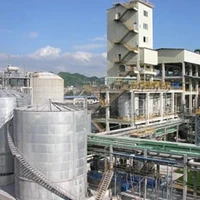
The production line of sodium phosphate is generally produced by the neutralization reaction of phosphoric acid and soda ash to generate disodium hydrogen phosphate, which is then neutralized with caustic soda and refined. It can also be obtained by the neutralization reaction of thermal phosphoric acid and caustic soda, followed by cooling, crystallization, separation and drying. The sodium phosphate production line needs to control reaction temperature, time, concentration and other conditions to ensure product quality and stability. Sodium phosphate production lines also need to pay attention to preventing dust pollution and wastewater discharge to reduce the impact on the environment.
Sodium phosphate has a wide range of uses, mainly in the following aspects:
In food processing, sodium phosphate can be used as a quality improver, which can improve the complex metal ions, pH value, ionic strength, etc. of food, thereby improving the binding force and water holding capacity of food. Our country stipulates that it can be used in cheese, with a maximum usage of 5g/kg; in Western-style ham, meat, fish, shrimp and crab, the maximum usage is 3.0g/kg; in cans, juices, beverages and dairy products, the maximum usage is 0.5g /kg.
In the textile, printing and dyeing, papermaking, power generation, chemical and other industries, sodium phosphate is commonly used as a water softener and boiler cleaner, as well as a metal rust remover, a sugar juice purifier and a coagulant for rubber latex.
In the medical field, sodium phosphate can be used as a radioactive drug to treat polycythemia vera, essential thrombocythemia, chronic myelogenous leukemia, chronic lymphocytic leukemia, etc., as well as to identify the nature of superficial masses. It is also used in neurological diseases. Application treatment for chronic dermatitis, chronic eczema, capillary tumors, keloids, pterygium, corneal neovascularization, plasmacytoma, etc.
In the daily chemical industry, sodium phosphate can be used as a toothpaste additive. It can form a colloid with calcium hydrogen phosphate and play a stabilizing role. It can also be used to synthesize detergents and produce shampoo and other products.
The environmental protection of sodium phosphate mainly depends on whether it will cause problems such as eutrophication of water bodies, acidification of soil, and accumulation of organisms during its use. Sodium phosphate itself is a non-toxic substance, but if it is excessively discharged into the water body, it will increase the phosphorus content in the water, thereby promoting the growth of algae, causing algae blooms, hypoxia, deterioration of water quality, etc., affecting the aquatic ecosystem. balance. Therefore, the use and discharge of sodium phosphate should be strictly controlled and monitored to prevent the occurrence of eutrophication of water bodies. The impact of sodium phosphate on soil mainly depends on its decomposition and transformation in the soil. Generally speaking, sodium phosphate will be consumed by adsorption, precipitation, hydrolysis, absorption and other processes in the soil. It will not cause the problem of soil acidification. On the contrary, it will It will provide a certain phosphate fertilizer effect and promote plant growth. However, if the amount of sodium phosphate applied is too large, the phosphorus content in the soil will exceed the needs of plants, causing waste and loss of phosphorus, and may even adversely affect the activity and diversity of soil microorganisms. The impact of sodium phosphate on living organisms mainly depends on its metabolism and excretion in the living body. Generally speaking, sodium phosphate will be hydrolyzed into phosphoric acid and sodium ions in the living body. Phosphoric acid is an important component of the living body and participates in energy metabolism. , enzyme activity, signal transduction and other life activities, sodium ions are necessary elements to maintain the osmotic pressure, nerve impulse, muscle contraction and other functions of the organism. Therefore, an appropriate amount of sodium phosphate is beneficial to the organism. However, if the intake of sodium phosphate is too large, it will cause the imbalance of phosphorus and sodium in the organism, causing hyperphosphatemia, hypernatremia, calcium and phosphorus deposition, renal function damage, hypertension and other problems, affecting the organism. body health.
In summary, sodium phosphate is a widely used inorganic compound with a variety of uses and functions, but it is also necessary to pay attention to its potential impact on the environment and organisms, and reasonably control its use and emissions to realize the use of sodium phosphate. Sustainable use.