

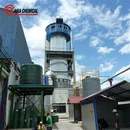
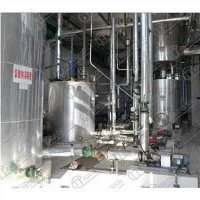


- Hangzhou ASIA Chemical Engineering Co., Ltd unveils its innovative Na2CO3 Plant Profession, which aims to revolutionize the production of sodium carbonate by using cutting-edge technology, optimizing process efficiency, and integrating sustainability practices. The company claims that its Na2CO3 Plant Profession can produce high-quality sodium carbonate with reduced resource consumption, waste generation, and environmental impact. The company also offers other chemical products such as detergent powder, phosphoric acid, and caustic soda.
- The global sodium carbonate market is projected to surpass $13.5 billion by 2027, according to a report by Global Market Insights Inc. The report attributes the market growth to the increasing demand for sodium carbonate as a vital raw material for flat glass, which is widely used in the construction, automotive, and solar energy sectors. The report also analyzes the market trends, drivers, opportunities, and challenges for different segments and regions.
- ASIA Chemical Engineering Co.,Ltd redefines sodium carbonate production with its innovative Na2CO3 Plant Profession, which sets new standards of efficiency, sustainability, and product quality. The company states that its Na2CO3 Plant Profession leverages advanced technology to optimize every facet of the production process, from raw material sourcing to product packaging. The company also emphasizes its commitment to green manufacturing practices and responsible waste management.
- A new study by researchers from the University of Cambridge and the University of Oxford reveals the potential of sodium carbonate as a carbon capture and storage (CCS) agent. The study shows that sodium carbonate can react with carbon dioxide in flue gas streams and form stable solid carbonates that can be safely stored underground. The study also suggests that sodium carbonate can be recovered from the solid carbonates and reused for CCS, making it a cost-effective and environmentally friendly option.
- A team of scientists from the National Institute of Standards and Technology (NIST) and the University of Maryland has developed a novel method to measure the purity of sodium carbonate using laser-induced breakdown spectroscopy (LIBS). The method involves using a high-powered laser to vaporize a small amount of sodium carbonate and analyze the resulting plasma emission spectra. The method can accurately determine the concentration of impurities such as calcium, magnesium, iron, and silicon in sodium carbonate samples.


