



Laundry powder is a widely used cleaning agent that can effectively remove stains and odors from clothing. Laundry powder manufacturing plants typically use two main technologies: spray drying and dry blending12. Both methods have their own advantages and disadvantages, but both require a series of equipment and operations to ensure the quality and performance of the laundry detergent.
Spray drying is a technology that converts liquid raw materials into solid particles. It uses high-temperature and high-pressure air to spray the raw materials into fine droplets, which are then contacted with hot air in a drying tower to quickly evaporate the water and form hollow particles. 34 . This method can produce uniform laundry detergent, but it also requires higher energy consumption and investment.
The main steps of the spray drying method are as follows:
Raw material preparation: Mix alkaline raw materials (such as sodium carbonate), surfactants (such as acidic oils), fillers (such as sodium silicate) and other additives (such as enzymes, spices, etc.) in a certain proportion to form a uniform liquid state raw material.
Raw material spray: The liquid raw material is sent into the nozzle through a high-pressure pump to form fine droplets, and then sprayed into the drying tower.
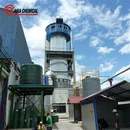
Drying tower: The drying tower is a vertical cylinder with multiple nozzles and hot air inlets inside. The nozzle sprays the droplets into the upper part of the drying tower, where they meet the hot air (about 150-200°C) entering from the lower part, and the water quickly evaporates to form hollow particles. The particles gradually decrease in temperature as the air flows, and are finally exited from the bottom of the drying tower.
Particle collection: The particles coming out of the drying tower are separated by a cyclone separator and a bag dust collector to remove excess air and dust, and then sent to a storage bin or packaging machine through a conveyor belt or bucket elevator.
Dry blending is a technology that directly mixes dry raw materials. It does not require the addition of water or the use of a drying tower, thus saving energy and costs12. This method can flexibly adjust the formula of washing powder according to customer needs, but it may also lead to unevenness and agglomeration of washing powder.
The main steps of the dry mixing method are as follows:
Raw material transfer: The process of transferring dry raw materials (such as sodium carbonate, acid oil, sodium silicate, etc.) from the storage bin to the next step through pipeline conveyors and bucket elevators.
Mixing: Feed the dry raw materials into a belt mixer or other types of mixers in a certain proportion for uniform mixing. During the mixing process, a small amount of liquid raw materials (such as enzymes, spices, etc.) can also be added and sprayed into the wall of the mixer through the nozzle to combine with the dry raw materials.
Grinding: Feed the mixed raw materials into a cage grinder or other types of grinders to adjust the particle size. The temperature of the raw materials coming out of the grinder decreases, and some trace amounts of raw materials (such as enzymes, spices, etc.) can be added.
Screening: Feed the ground raw materials into a vibrating screen or other types of screening machines for screening to remove impurities or oversized particles to ensure the quality and performance of the washing powder.
Packaging: The screened washing powder is sent to the packaging machine through a conveyor belt or bucket elevator for automatic or semi-automatic packaging to form the final product.


