

Modern detergent powder production lines integrate advanced engineering, automation, and process optimization. By combining efficient material handling, precise metering, high-performance mixing, and intelligent packaging, these systems help manufacturers achieve consistent product quality while reducing labor intensity and operating costs.

1.Overview of Detergent Powder Production Line
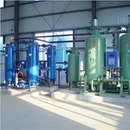
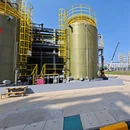
A detergent powder production line is a fully integrated system designed to handle raw material processing, liquid dosing, uniform mixing, and automatic packaging within a single workflow. It is widely used in the household chemical industry for large-scale manufacturing. The system typically includes a bag dumping station, vacuum conveying system, horizontal ploughshare mixer, air compressor, finished product storage silo, and automatic packaging machine, along with a dust collection system.
1.1.Flexible and Scalable Production Design
In addition to its core structure, a modern detergent powder production line is designed with high flexibility to accommodate various formulations and production capacities. Whether producing standard washing powder, concentrated detergent, or specialty cleaning products, the system can be customized to handle different raw material properties, including fine powders, granules, and liquid additives. Modular design allows manufacturers to easily scale production or upgrade specific units, ensuring long-term adaptability to changing market demands.
1.2.Precision Control and Consistent Product Quality
Another key advantage lies in process precision and consistency. Advanced dosing and feeding systems ensure accurate proportioning of both powder and liquid ingredients, minimizing human error and batch variation. The integration of high-efficiency mixing technology guarantees uniform distribution of active substances, enzymes, and fragrances throughout the product. This level of consistency is critical for maintaining brand quality, improving product performance, and meeting strict industry standards.
1.3.Enhanced Safety and Operational Efficiency
Furthermore, the production line emphasizes safety and operational efficiency. Automated control systems reduce the need for manual intervention, lowering labor intensity and minimizing exposure to dust and chemicals. Safety features such as pressure monitoring, overload protection, and emergency stop functions are incorporated to ensure stable and secure operation. Combined with energy-efficient components and optimized process flow, the system helps manufacturers reduce operational costs while maintaining high productivity.
2.Process Flow: Efficient Powder and Liquid Integration
In a typical detergent powder manufacturing process, powder materials such as soda ash, enzymes, and color speckles are first fed through a bag dumping station and conveyed via a vacuum feeder into the mixing system. Liquid ingredients, including LABSA, surfactants, and fragrances, are accurately metered and pumped into the mixer.
Inside the horizontal ploughshare mixer, plough-shaped blades create a strong convective motion, while high-speed choppers break agglomerates, ensuring thorough mixing and reaction between powder and liquid components. The finished mixture is then discharged into a storage silo and transferred to an automatic packaging machine for weighing, filling, sealing, and bagging, forming a closed-loop production process.
3.Key Equipment Configuration
The performance of a detergent production line heavily depends on its core equipment. The horizontal ploughshare mixer is essential for achieving fast and uniform mixing, especially for multi-component formulations.
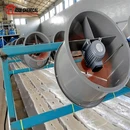
The vacuum conveying system ensures enclosed and dust-free material transfer, while the automatic packaging machine provides high-speed and precise filling operations. Additionally, the air compressor supplies stable pneumatic power to support the entire automation system, ensuring reliable and continuous production.
4.Material Selection and Structural Design
4.1.Hygienic Design and Material Safety
Beyond corrosion resistance, SS316L stainless steel also provides excellent hygienic properties, making it ideal for detergent and chemical processing applications. Its smooth surface finish minimizes material adhesion and residue buildup, which simplifies cleaning and reduces the risk of cross-contamination between different production batches. This is particularly important for manufacturers producing multiple formulations, as it helps maintain strict quality control standards and reduces downtime during cleaning and changeover processes.
4.2.Structural Strength and Long-Term Durability
In addition to its chemical resistance, SS316L offers high mechanical strength and durability under continuous industrial operation. The equipment can withstand prolonged exposure to abrasive powders, reactive chemicals, and varying temperatures without deformation or degradation. This ensures a longer service life for key components such as mixers, pipelines, and storage vessels, ultimately lowering maintenance frequency and reducing overall operational costs for manufacturers.
4.3.Advanced Thermal Control for Process Optimization
The double-layer mixer design with heating jacket or coil system not only enables precise temperature control but also supports a wide range of process requirements. For example, certain detergent formulations require controlled heating to improve liquid absorption, accelerate chemical reactions, or enhance the dispersion of active ingredients. The integrated thermal system ensures uniform heat distribution throughout the mixing chamber, preventing localized overheating or uneven mixing, which could otherwise affect product performance.
4.4.Energy Efficiency and Process Stability
Furthermore, the optimized thermal system contributes to improved energy efficiency. By maintaining stable and controlled temperatures, the process reduces unnecessary energy consumption and shortens mixing cycles. This leads to higher production efficiency while ensuring consistent product quality. Stable thermal conditions also help prevent issues such as material caking, moisture imbalance, or ingredient degradation, ensuring that each batch meets the desired specifications.
5.Automation and Environmental Protection
The production line is equipped with a PLC-based control system and a user-friendly HMI (Human-Machine Interface), enabling real-time monitoring, parameter adjustment, and recipe management. Multiple formulations can be stored and easily switched, enhancing operational flexibility.
For environmental protection, a high-efficiency dust collection system is integrated to capture and filter dust generated during feeding and mixing processes. Combined with enclosed conveying systems, this design minimizes material loss, improves workplace conditions, and complies with modern environmental standards.
6.Industry Advantages and Future Trends
Modern detergent powder production lines are evolving towards higher efficiency, automation, and sustainability. Key advantages include:
High mixing uniformity ensuring consistent product quality
Fully automated operation improving production capacity
Enclosed systems reducing dust pollution and material waste
Energy-efficient design lowering operational costs
Customizable configurations to meet diverse production needs
About Us: Asia Chemical Equipment Corporation, Hangzhou China
Asia Chemical Equipment Corporation, Hangzhou China is a professional engineering company specializing in advanced technology and equipment for the chemical and household product industries. We provide complete turnkey solutions for detergent powder production lines, including process design, equipment manufacturing, installation, and commissioning.
With extensive industry experience and a strong focus on innovation, we are committed to delivering efficient, energy-saving, and environmentally friendly solutions tailored to each customer's specific requirements. Our goal is to help clients enhance productivity, improve product quality, and achieve long-term sustainable growth.


