Driven by population growth, accelerated urbanization, and increased hygiene awareness, global demand for high-quality detergent powder continues to grow.

The Evolution of Detergent Powder Production
Detergent powder manufacturing is a multi-stage, precision-dependent process that transforms raw chemical ingredients into a consistent, free-flowing, high-performance product.
Raw Material Handling: This begins with the receipt, storage, and conveying of bulk raw materials such as sodium sulfate, soda ash, linear alkylbenzene sulfonic acid (LABSA), and various builders. In manual operations, material handling is labor-intensive, prone to contamination, and often results in inconsistent stockpile management.
Dosing: Accurate dosing is the foundation of formulation integrity. Detergent recipes may contain over 15–20 ingredients, including minor components like optical brighteners, anti-redeposition agents, and enzymes. In semi-automated setups, volumetric dosing or manual weighing introduces significant variability. Even a 1% deviation in active ingredient dosing can compromise cleaning performance or lead to non-compliance with customer specifications.
Mixing & Agglomeration: This stage determines the physical structure of the powder. Whether using a batch mixer or a continuous agglomerator, achieving uniform distribution of liquid binders and solid particles is essential. Manual control over mixing time, speed, and liquid addition often results in uneven granule formation, leading to dustiness, caking, or poor flowability.
Drying: Spray drying towers or fluid bed dryers remove excess moisture to stabilize the powder. Inconsistent temperature or airflow control can result in under-drying (leading to bacterial growth or caking) or over-drying (causing powder degradation and increased dust).
Sieving: Oversized or undersized particles must be removed to meet customer specifications. Without automated sieving and recycle loops, production lines suffer from higher reject rates and material loss.
Post-Dosing of Heat-Sensitive Ingredients: Enzymes, perfumes, and bleaches are sensitive to heat and mechanical stress. These must be added after the drying stage via dedicated dosing systems. In manual lines, poor timing or uneven distribution can deactivate enzymes or result in uneven fragrance profiles-common sources of consumer complaints.
Packaging: The final stage is also one of the most labor-intensive in non-automated plants. Manual weighing, filling, and sealing lead to weight variations, seal integrity issues, and high packaging material waste.
Key Benefits of Automation for Detergent Powder Factories
1. Consistent Product Quality
One of the most compelling reasons to invest in automated detergent production lines is the ability to deliver consistent, high-quality output. Automated systems precisely control:
Ingredient dosing accuracy to within 0.1%, eliminating human error.
Mixing time and intensity for uniform powder structure.
Spray drying parameters (temperature, airflow) to maintain moisture content and bulk density.
For B2B buyers supplying to major retailers or contract manufacturing clients, batch-to-batch consistency is non-negotiable. Automation ensures every pallet meets the same specifications, strengthening brand reputation and customer trust.
2. Increased Production Capacity & Throughput
Automation enables high-volume detergent manufacturing with minimal downtime. Continuous production processes replace batch-based manual operations, allowing factories to:
Operate 24/7 with automated shift scheduling.
Reduce changeover time between product formulations (e.g., switching between powder types or fragrances).
Scale capacity without linear increases in labor costs.
For a mid-sized plant, upgrading to an automated detergent powder plant can increase annual output by 30–50% while maintaining or even reducing operational headcount.
3. Reduced Operational Costs
While the initial capital investment in automation is substantial, the total cost of ownership (TCO) often proves significantly lower than manual operations:
Labor cost reduction: Automated material handling, mixing, and packaging require fewer operators.
Material savings: Precision dosing reduces raw material waste by 2–5%-a significant margin in high-volume production.
Energy efficiency: Modern automated systems optimize energy use in drying, conveying, and HVAC systems.
For manufacturers operating on thin margins, these savings directly improve profitability and provide a competitive edge in bidding for large-scale supply contracts.
4. Enhanced Workplace Safety & Environmental Compliance
Detergent powder production involves exposure to fine dust, high temperatures, and potentially hazardous chemicals (e.g., enzymes, optical brighteners). Manual handling increases risks of respiratory issues, skin irritation, and dust explosion hazards.
Automated bulk handling systems:
Enclose raw material transfer in sealed pneumatic or mechanical conveyors, minimizing dust exposure.
Integrate explosion-proof equipment and gas detection systems.
Reduce manual lifting and repetitive strain injuries.
Furthermore, automated systems generate comprehensive environmental data-emissions, wastewater, energy consumption-simplifying compliance with increasingly stringent local and international regulations.
5. Traceability & Data-Driven Optimization
In today's industrial landscape, traceability is no longer optional-it is a competitive requirement. Modern automated detergent manufacturing systems provide:
Full batch traceability from raw material receipt to finished pallet.
Real-time production dashboards for monitoring OEE (Overall Equipment Effectiveness).
Predictive maintenance alerts that prevent unplanned downtime.
This data enables continuous improvement: identifying bottlenecks, optimizing formulations, and supporting quality audits for ISO 9001, GMP, or customer-specific requirements.
6. Flexibility for Multiple Formulations
Leading detergent brands often require multiple SKUs-different fragrances, enzyme levels, or packaging sizes. Automated lines are designed for rapid changeover, allowing manufacturers to:
Switch between powder formulations in minutes.
Accommodate varying packaging formats (bags, boxes, pouches) with automated filling and sealing stations.
Launch new products quickly without major line modifications.
Key Technologies Driving Automation
A fully automated detergent powder factory integrates several core technologies:
| Technology | Function |
|---|---|
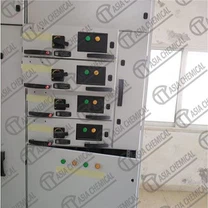
| PLC & SCADA Systems | Centralized control, real-time monitoring, alarm management |
| Automated Dosing Systems | Gravimetric or volumetric feeders for powders, liquids, and micro-ingredients |
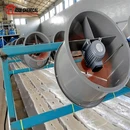
| Pneumatic & Mechanical Conveying | Dust-free transfer of raw materials to mixers and storage silos |
| Continuous Mixing & Agglomeration | High-efficiency blending for uniform granule formation |
| Automated Packaging Lines | Vertical form-fill-seal (VFFS) machines, robotic palletizing, stretch wrapping |
| MES (Manufacturing Execution System) | Production scheduling, batch traceability, quality data integration |
Considerations Before Automation
While the benefits are clear, successful automation requires careful planning:
Upfront capital investment: Automation demands significant engineering and equipment costs. However, ROI is typically realized within 2–4 years through labor and material savings.
Skilled workforce: Automated plants require operators and maintenance staff trained in PLC programming, instrumentation, and process control.
Phased implementation: For existing factories, a phased automation approach-starting with packaging or raw material handling-can minimize disruption while delivering incremental gains.
Partnering with an experienced industrial chemical engineering firm ensures that automation is tailored to your specific production goals, product portfolio, and site constraints.
Why Partner with Asia Chemical Engineering Co., Ltd.?
At Asia Chemical Engineering Co., Ltd. , headquartered in Hangzhou, China, we are more than equipment suppliers-we are your strategic partner in industrial production excellence. Our company is dedicated to the development of new technologies and advanced equipment across household chemicals, basic chemicals, and petroleum & gas sectors.
We provide complete turnkey solutions tailored to your specific requirements, covering the entire project lifecycle:
Technical consultation to define your production goals.
Engineering design for optimal process flow and equipment layout.
Equipment fabrication & procurement with strict quality control.
Electrical power & instrumentation design for seamless automation integration.
Plant installation & supervision by experienced engineers.
Plant commissioning & operator training to ensure smooth ramp-up.
Optimization of product formulations for market competitiveness.
After-sales services to support long-term operational success.