

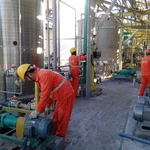
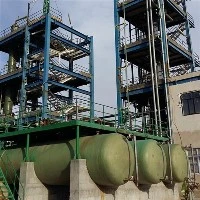

Asia Chemical Engineering Co., Ltd. is one of the most reliable manufacturers and suppliers of caustic soda plant for soap and detergent in China. Please rest assured to wholesale cost-efficient caustic soda plant for soap and detergent from our factory. Good service and reasonable price are available.
Saponification is the alkaline hydrolysis of fats and oils (triglycerides) in the presence of a sodium hydroxide (caustic soda) solution, yielding sodium fatty acid salts-the active cleansing agents in soap-and glycerol. The primary reaction is as follows:
Triglyceride + 3NaOH → 3 Sodium Fatty Acid Salts (Soap Base) + Glycerol
- Raw materials (fats/oils): Palm oil, palm kernel oil, coconut oil, tallow (beef/mutton fat), etc.
- Two mainstream saponification processes:
1. Batch Saponification (Boiling Process): Conducted at 90–105°C with mechanical stirring. A precise amount of caustic solution-with a slight excess to ensure complete conversion of the fats-is added. This is followed by "salting out," separation of the soap curds, and recovery of glycerol. This is the standard method for producing laundry soaps and soap bases for toilet soaps.
2. Continuous Saponification: Caustic solution and fats/oils are metered and proportioned based on their saponification value (SAP value) using continuous dosing pumps. The reaction takes place rapidly within a tubular reactor. This process offers high production capacity but demands extremely high stability in the concentration of the caustic soda.
3. Cold-Process Saponification: Fats/oils are mixed with a caustic solution at low temperatures, with the reaction driven by the heat generated during the process itself. This method requires the highest standards for caustic soda purity and concentration precision; the level of residual (free) alkali directly determines the potential skin irritation of the finished product.
Synthetic detergents, such as laundry powders and liquid detergents, do not rely on saponification to produce surfactants; however, they still require significant quantities of caustic soda (sodium hydroxide) for the following purposes:
1. Neutralizing linear alkylbenzene (LAB) to produce linear alkylbenzene sulfonate (LAS)-an anionic surfactant that serves as a core raw material for laundry powders.
2. Adjusting the pH of detergent slurries and stabilizing the system to prevent surfactant hydrolysis and phase separation.
3. Pre-treating raw fats and oils-including the removal of impurities and free fatty acids, as well as decolorization and refining.
4. Performing Clean-in-Place (CIP) alkaline washes on production lines to remove oily residues from pipelines and reactors.
Product Quality Control Specifications (for Detergent/Soap Manufacturing)
- Liquid caustic soda: 32% or 50% NaOH; solid caustic soda (flakes): ≥98% NaOH.
- Strict limits on sodium chloride, sodium carbonate, iron ions, and heavy metals; low-impurity formulation, suitable for use in toilet soaps, beauty soaps, and high-transparency soap products.
- Concentration control tolerance of ±0.2%, compatible with automated alkali-dosing systems and SAP-value-based raw material feeding systems in soap manufacturing plants.
- Auxiliary equipment: Alkali transport systems, buffer tanks, and precision metering systems, designed for integration with saponification kettles or continuous saponification production lines.
Standard caustic soda units often exhibit significant fluctuations, which can lead to inconsistent soap base batches, failure to meet TFM (Total Fatty Matter) standards, and excessive levels of free alkali. In contrast, this specialized caustic soda unit-designed specifically for detergent and soap manufacturing-delivers a stable output of high-quality alkali solution. It ensures consistent saponification conversion rates, foaming properties, color, and mildness, while reducing the rate of defective products. Furthermore, it results in fewer impurities and higher purity for the glycerin recovered during the production process.


Why Work with us?
Selecting a manufacturer involves more than comparing equipment prices. Buyers need to understand the proposed process, the equipment supply boundaries, the expected operating conditions, and the responsibilities of each project participant.
Our project approach can be structured around the following requirements, subject to the agreed contract scope:
The exact services and deliverables should be confirmed for each project rather than assumed to be included in every supply package.
Frequently Asked Questions About NaOH Plants
What is the difference between soap-grade caustic soda and industrial general caustic soda?
Soap grade has stricter limit on iron, heavy metal and salt content, to avoid yellowing, off-odor and unstable foam after saponification.
Can this caustic soda be used for liquid detergent & powder detergent?
Yes. It is widely used for LAS neutralization, pH adjustment and oil pretreatment in synthetic detergent production.
Hot Tags: caustic soda plant for soap and detergent, China, manufacturers, suppliers, factory, wholesale, price, profession, cost, Caustic Soda Plant, membrane caustic soda plant, production line for sodium hydroxide, sodium hydroxide equipment, sodium hydroxide production line factory, Sodium Hydroxide Solutions


