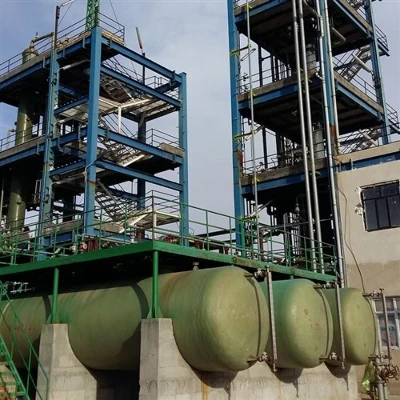
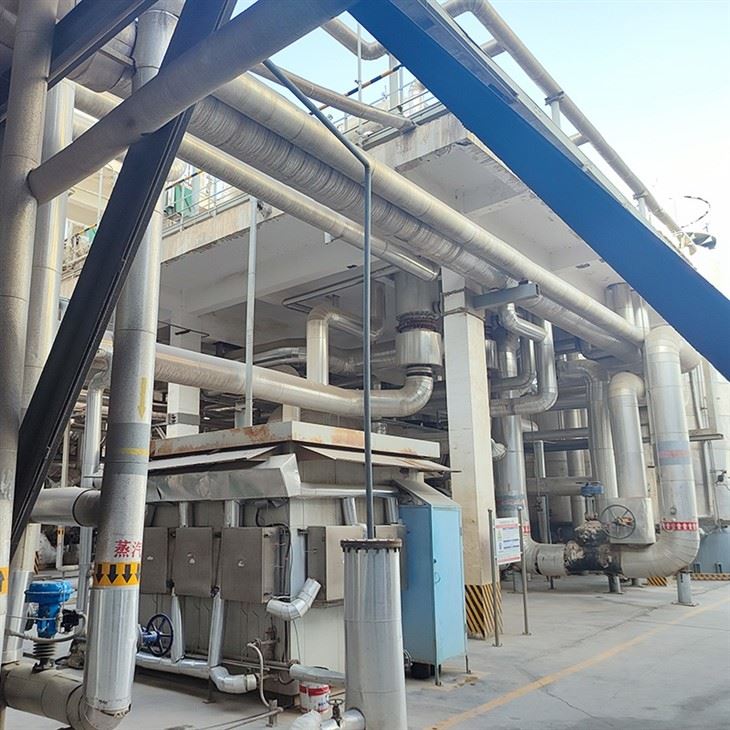
Asia Chemical Engineering Co., Ltd. is one of the most reliable manufacturers and suppliers of caustic soda flakes production plant in China. Please rest assured to wholesale cost-efficient caustic soda flakes production plant from our factory. Good service and reasonable price are available.
1. Liquid Caustic Soda Feeding
The production process begins with liquid caustic soda, generally supplied from a membrane cell chlor-alkali plant or an existing liquid caustic soda storage system.
The raw material concentration is typically 32% or 50% NaOH. The feed system transfers the caustic soda solution into the concentration section at a controlled flow rate to maintain stable operating conditions.
2. Pre-Concentration and Evaporation
The liquid caustic soda enters the evaporation system, where water is progressively removed to increase the NaOH concentration.
Depending on the feed concentration and plant capacity, falling film evaporators, multi-effect evaporation systems, or other suitable concentration technologies can be selected.
The evaporation section is designed to control heat transfer, evaporation efficiency, and caustic soda circulation while reducing unnecessary energy consumption.
3. Final Concentration
After pre-concentration, the caustic soda solution enters the final concentration section to remove the remaining water and produce high-concentration molten sodium hydroxide.
The target concentration is commonly around 98.5%–99%, depending on the required finished product specification and process design.
This stage requires carefully controlled heating, temperature, and material handling conditions to maintain stable molten caustic soda flow.
4. Caustic Soda Flaking
The molten sodium hydroxide is distributed evenly onto the surface of a rotating, internally cooled flaking drum.
As the drum rotates, the molten caustic soda forms a thin layer that cools and solidifies. A scraper then removes the solidified material from the drum, producing caustic soda flakes.
The flaking system controls the material feeding rate, cooling conditions, and flake formation process to achieve the required product characteristics.
5. Weighing and Packaging
The finished caustic soda flakes are transferred to the downstream collection, weighing, and packaging system.
Depending on customer requirements, the plant can be configured with automatic weighing, bag filling, sealing, and conveying equipment.
Common packaging options include 25 kg bags and customized bulk packaging systems.
Technical Data
|
Parameter |
Description |
|---|---|
|
Raw Material |
Liquid Sodium Hydroxide (NaOH) |
|
Feed Concentration |
32% / 50% |
|
Finished Product |
Caustic Soda Flakes |
|
NaOH Concentration |
98.5%–99% |
|
Production Process |
Evaporation, Concentration & Flaking |
|
Evaporation Technology |
Falling Film / Multi-Effect (Project Dependent) |
|
Heating System |
Steam / Molten Salt / Thermal Oil (Design Dependent) |
|
Control System |
PLC / DCS |
|
Packaging |
25 kg Bags / Customized |
|
Plant Capacity |
Customized According to Requirements |
Industrial Applications
1. Chemical Manufacturing
Caustic soda flakes are used as an alkaline raw material in chemical synthesis, pH adjustment, neutralization, and the production of various sodium-based chemical compounds.
2. Soap and Detergent Production
Sodium hydroxide is an essential raw material in soap manufacturing, where it reacts with fats and oils through the saponification process.
3. Textile Processing
Caustic soda flakes are used in textile pretreatment, cotton mercerization, scouring, and other alkaline treatment processes to improve fabric processing performance.
4. Pulp and Paper Industry
Caustic soda is used in pulping, chemical recovery, and other alkaline processing operations in paper manufacturing.
5. Alumina Production
Caustic soda is used in the Bayer process to dissolve alumina-bearing minerals and separate aluminum-containing compounds during alumina production.
6. Water Treatment and Industrial Cleaning
Caustic soda is used for pH adjustment, neutralization, and industrial cleaning applications.

Why Choose Our Caustic Soda Production Plant?
Customized Plant Design
We provide customized caustic soda flakes production plant configurations based on raw material concentration, target production capacity, finished product specifications, and available utilities.
Integrated Process Configuration
The production system integrates caustic soda feeding, pre-concentration, final evaporation, molten caustic distribution, flaking, and finished product packaging.
Energy Consumption Optimization
The evaporation system can be configured according to the available steam and heating conditions. Multi-effect evaporation and heat recovery arrangements can be evaluated to improve thermal efficiency and reduce operating costs.
Automated Production Control
PLC or DCS control systems can be incorporated to monitor key operating parameters, including feed flow, temperature, concentration, and equipment operating status.
Engineering and Equipment Integration
We coordinate process equipment, material transfer systems, heating systems, electrical controls, and packaging units to establish a complete production line according to project requirements.
FAQ:
1. What is a Caustic Soda Flakes Production Plant?
It is an industrial processing facility that converts liquid sodium hydroxide into solid flakes. It mainly consists of evaporation, concentration, molten caustic handling, flaking, and packaging systems.
2. What Raw Materials Are Required for Caustic Soda Flakes Production?
The main raw material is liquid caustic soda, typically with an NaOH concentration of 32% or 50%. The solution is further concentrated through evaporation to produce molten sodium hydroxide for flaking.
3. How Are Caustic Soda Flakes Manufactured?
Caustic soda flakes are produced by concentrating liquid NaOH solution to approximately 98.5%–99%, forming molten caustic soda, and cooling it on a rotating flaking drum. A scraper removes the solidified material to produce flakes.
4. What Is the Difference Between a 32% and 50% Caustic Soda Flakes Production Process?
The main difference is the initial concentration of the feedstock. A 32% NaOH solution requires more water evaporation before reaching the final concentration, while 50% liquid caustic soda requires less preliminary evaporation. The evaporation configuration and energy requirements are therefore different.
5. Can the Production Plant Produce Both Liquid and Solid Caustic Soda?
Yes. Depending on the process configuration, a plant can be designed to produce 50% liquid caustic soda as well as solid caustic soda flakes. This requires appropriate intermediate storage, concentration, and product routing arrangements.
Hot Tags: caustic soda flakes production plant, China, manufacturers, suppliers, factory, wholesale, price, profession, cost