

As a supplier of Na₂SiO₄, also known as sodium metasilicate, I often encounter inquiries about its chemical reactions, especially with oxidizing agents. Understanding how Na₂SiO₄ reacts with oxidizing agents is crucial for various industrial applications, from water treatment to the production of detergents and ceramics. In this blog post, I'll delve into the science behind these reactions, their practical implications, and how our high - quality Na₂SiO₄ can be a valuable asset in your operations.
Chemical Properties of Na₂SiO₄
Before we explore the reactions with oxidizing agents, let's briefly review the basic properties of Na₂SiO₄. Sodium metasilicate is an inorganic compound composed of sodium cations (Na⁺) and metasilicate anions (SiO₃²⁻). It exists in both anhydrous and hydrated forms, with the hydrated forms being more common in industrial applications due to their better solubility in water.
Na₂SiO₄ is a white, crystalline solid that is highly soluble in water, forming an alkaline solution. The alkaline nature of Na₂SiO₄ solutions is due to the hydrolysis of the metasilicate anions, which can react with water to produce hydroxide ions (OH⁻). This property makes it useful in applications where a basic environment is required, such as in cleaning agents and pH adjustment in water treatment.
Reactions with Oxidizing Agents
Oxidizing agents are substances that have the ability to accept electrons from other substances, causing oxidation. When Na₂SiO₄ reacts with oxidizing agents, the nature of the reaction depends on several factors, including the type of oxidizing agent, the reaction conditions (such as temperature, pH, and concentration), and the presence of other substances.
Reaction with Hydrogen Peroxide (H₂O₂)
Hydrogen peroxide is a common oxidizing agent used in many industrial processes. When Na₂SiO₄ reacts with H₂O₂ in an aqueous solution, the reaction can be complex. In general, the alkaline environment provided by the Na₂SiO₄ can catalyze the decomposition of H₂O₂ into water and oxygen gas.
The reaction can be represented by the following equations:
[2H_{2}O_{2}\xrightarrow{Na_{2}SiO_{4}}2H_{2}O + O_{2}\uparrow]
The metasilicate anions in Na₂SiO₄ can act as a base, facilitating the deprotonation of H₂O₂ and promoting its decomposition. This reaction is often used in applications such as bleaching and disinfection, where the release of oxygen gas can help to remove stains and kill microorganisms.
Reaction with Hypochlorite (ClO⁻)
Hypochlorite, commonly found in bleach solutions, is another powerful oxidizing agent. When Na₂SiO₄ reacts with hypochlorite in an aqueous solution, the reaction can involve the oxidation of the metasilicate anions or the interaction between the sodium cations and the hypochlorite ions.
In some cases, the hypochlorite can react with the hydroxide ions produced by the hydrolysis of Na₂SiO₄, forming chloride ions and oxygen gas:
[2ClO^{-}+2OH^{-}\xrightarrow{Na_{2}SiO_{4}}2Cl^{-}+O_{2}\uparrow + H_{2}O]
This reaction can be used in water treatment to disinfect water and remove impurities. The presence of Na₂SiO₄ can help to stabilize the hypochlorite solution and enhance its disinfecting efficiency.
Reaction with Potassium Permanganate (KMnO₄)
Potassium permanganate is a strong oxidizing agent with a characteristic purple color. When Na₂SiO₄ reacts with KMnO₄ in an aqueous solution, the reaction can result in the reduction of the permanganate ions (MnO₄⁻) to manganese dioxide (MnO₂) or other lower - oxidation - state manganese compounds.
The reaction conditions, such as the pH of the solution, play a crucial role in determining the final products. In an alkaline solution provided by Na₂SiO₄, the reaction can be represented by the following equation:
[2KMnO_{4}+3Na_{2}SiO_{4}+H_{2}O = 2MnO_{2}\downarrow+3Na_{2}SiO_{4}\cdot H_{2}O + 2KOH]
The formation of manganese dioxide precipitate can be used in applications such as water purification, where the precipitate can adsorb and remove impurities from the water.
Industrial Applications
The reactions of Na₂SiO₄ with oxidizing agents have numerous industrial applications. Here are some examples:
Water Treatment
In water treatment, the combination of Na₂SiO₄ and oxidizing agents can be used for disinfection, pH adjustment, and the removal of impurities. For example, the reaction of Na₂SiO₄ with hydrogen peroxide or hypochlorite can help to kill bacteria and viruses in water, while the alkaline nature of Na₂SiO₄ can adjust the pH of the water to a suitable range for further treatment.
Detergent Manufacturing
In detergent manufacturing, Na₂SiO₄ is often used as a builder, which helps to enhance the cleaning power of the detergent. When combined with oxidizing agents such as hydrogen peroxide, Na₂SiO₄ can help to break down stains and remove dirt from fabrics. The alkaline environment provided by Na₂SiO₄ can also help to prevent the redeposition of dirt on the fabrics.
Ceramics Production
In ceramics production, the reaction of Na₂SiO₄ with oxidizing agents can be used to control the firing process and improve the properties of the ceramics. For example, the reaction with potassium permanganate can help to introduce manganese compounds into the ceramics, which can affect their color and mechanical properties.
Our Na₂SiO₄ Products
As a leading supplier of Na₂SiO₄, we offer high - quality products that are suitable for a wide range of applications. Our Na₂SiO₄ is produced using advanced manufacturing processes, ensuring its purity and consistency.
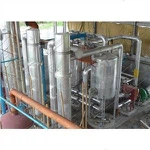
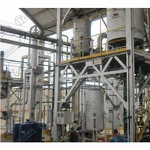
We have a Sodium Silicate (Water Glass) Plant and a Solid Sodium Silicate Plant that are equipped with state - of - the - art technology. Our products are widely recognized by Sodium Silicate Manufacturers for their excellent quality and performance.


Whether you need Na₂SiO₄ for water treatment, detergent manufacturing, ceramics production, or other applications, we can provide you with the right product to meet your needs. Our technical team is also available to provide you with professional advice on the use of Na₂SiO₄ and its reactions with oxidizing agents.
Contact Us for Procurement
If you are interested in purchasing our Na₂SiO₄ products or have any questions about its reactions with oxidizing agents, please feel free to contact us. We are committed to providing you with the best products and services, and we look forward to establishing a long - term business relationship with you.
References
- Atkins, P. W., & de Paula, J. (2014). Physical Chemistry. Oxford University Press.
- Housecroft, C. E., & Sharpe, A. G. (2012). Inorganic Chemistry. Pearson.
- Vogel, A. I. (1978). Vogel's Textbook of Quantitative Inorganic Analysis. Longman.