

As a supplier of Na₂SiO₄, also known as sodium metasilicate, I often encounter inquiries regarding its chemical behavior, especially its reactions with bases. In this blog post, I'll delve into the scientific aspects of how Na₂SiO₄ reacts with bases, the underlying mechanisms, and the implications of these reactions in various industrial applications.
Understanding Na₂SiO₄
Sodium metasilicate (Na₂SiO₄) is an inorganic compound composed of sodium cations (Na⁺) and metasilicate anions (SiO₄²⁻). It exists in both anhydrous and hydrated forms, with the hydrated forms being more common in industrial applications. Sodium metasilicate is a white, crystalline solid that is highly soluble in water, forming an alkaline solution.
Reaction Mechanisms with Bases
When Na₂SiO₄ reacts with bases, the reaction typically involves the interaction between the metasilicate anions (SiO₄²⁻) and the hydroxide ions (OH⁻) from the base. The general reaction can be represented as follows:
Na₂SiO₄ + 2OH⁻ → Na₂SiO₃ + H₂O + O²⁻
In this reaction, the metasilicate anion (SiO₄²⁻) reacts with hydroxide ions (OH⁻) to form sodium silicate (Na₂SiO₃), water (H₂O), and oxide ions (O²⁻). The reaction is driven by the tendency of the metasilicate anion to donate oxygen atoms to the hydroxide ions, resulting in the formation of water and a more stable silicate species.
Factors Affecting the Reaction
Several factors can influence the rate and extent of the reaction between Na₂SiO₄ and bases. These factors include:


- Concentration of Reactants: The concentration of Na₂SiO₄ and the base can significantly affect the reaction rate. Higher concentrations of reactants generally lead to faster reaction rates due to the increased frequency of collisions between the reactant molecules.
- Temperature: Temperature plays a crucial role in the reaction kinetics. Increasing the temperature generally increases the reaction rate by providing more energy to the reactant molecules, allowing them to overcome the activation energy barrier more easily.
- pH: The pH of the solution can also influence the reaction. The reaction between Na₂SiO₄ and bases is favored in alkaline conditions, as the hydroxide ions are more abundant in basic solutions.
- Presence of Catalysts: Catalysts can accelerate the reaction rate by providing an alternative reaction pathway with a lower activation energy. However, the use of catalysts in the reaction between Na₂SiO₄ and bases is relatively rare.
Industrial Applications
The reaction between Na₂SiO₄ and bases has several important industrial applications, including:
- Detergent Industry: Sodium metasilicate is commonly used in the detergent industry as a builder and a source of alkalinity. When combined with bases, such as sodium hydroxide, it helps to remove dirt and stains from fabrics by breaking down the chemical bonds between the dirt and the fabric fibers.
- Water Treatment: Sodium metasilicate can be used in water treatment processes to remove heavy metals and other contaminants from water. When reacted with bases, it forms insoluble metal silicates, which can be easily removed from the water by filtration or sedimentation.
- Ceramics Industry: In the ceramics industry, sodium metasilicate is used as a binder and a flux. When combined with bases, it helps to lower the melting point of the ceramic materials, making them easier to shape and form.
- Adhesive Industry: Sodium metasilicate can be used in the adhesive industry as a binder and a hardener. When reacted with bases, it forms a strong and durable adhesive bond between different materials.
Custom Sodium Silicate Production Line
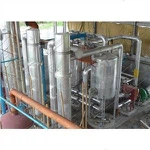
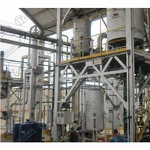
At our company, we offer a Custom Sodium Silicate Production Line that is designed to meet the specific needs of our customers. Our production line is equipped with state-of-the-art technology and equipment, allowing us to produce high-quality sodium silicate products with consistent quality and performance.
High Purity Sodium Silicate Plants
We also have High Purity Sodium Silicate Plants that are capable of producing sodium silicate products with a high degree of purity. Our high purity sodium silicate products are used in a variety of applications, including electronics, pharmaceuticals, and food processing.
Liquid Sodium Silicate Production Line
In addition to our custom and high purity sodium silicate production lines, we also offer a Liquid Sodium Silicate Production Line. Our liquid sodium silicate products are widely used in the paper, textile, and construction industries, among others.
Conclusion
In conclusion, the reaction between Na₂SiO₄ and bases is a complex chemical process that is influenced by several factors, including concentration, temperature, pH, and the presence of catalysts. Understanding the reaction mechanisms and the factors affecting the reaction is essential for optimizing the performance of sodium metasilicate in various industrial applications.
As a leading supplier of Na₂SiO₄, we are committed to providing our customers with high-quality products and excellent customer service. If you are interested in learning more about our sodium silicate products or have any questions about the reaction between Na₂SiO₄ and bases, please do not hesitate to contact us for further information and to discuss your specific requirements. We look forward to the opportunity to work with you and to help you meet your sodium silicate needs.
References
- Atkins, P. W., & de Paula, J. (2014). Physical Chemistry for the Life Sciences. Oxford University Press.
- Chang, R. (2010). Chemistry. McGraw-Hill.
- Housecroft, C. E., & Sharpe, A. G. (2012). Inorganic Chemistry. Pearson.