

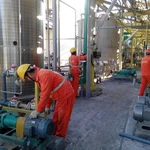
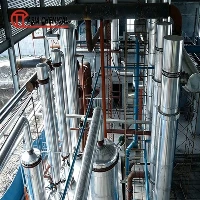

Asia Chemical Engineering Co., Ltd. is one of the most reliable manufacturers and suppliers of bleach production in China. Please rest assured to wholesale cost-efficient bleach production from our factory. Good service and reasonable price are available.
1. Raw Material Preparation
The primary raw materials for bleach production are sodium chloride (salt), water, and electricity. In some cases, sodium hydroxide is also utilized. These raw materials are carefully sourced to ensure high purity levels, which are critical for producing quality bleach. The process begins with preparing these materials in precise quantities, ensuring the correct ratio is maintained throughout production.
2. Chlorine Generation
The next step involves generating chlorine gas through the electrolysis of saltwater (brine solution). In this step, the brine is passed through an electrolytic cell where an electric current is applied. The process separates sodium ions from chloride ions, producing chlorine gas, hydrogen gas, and sodium hydroxide solution. This chlorine gas is one of the key ingredients in bleach production.
3. Sodium Hypochlorite Formation
The core of bleach production is the reaction between chlorine gas and sodium hydroxide. These two react to form sodium hypochlorite, the active ingredient in household bleach. The reaction takes place in a controlled environment to ensure the proper concentration and stability of the bleach. Our production line is equipped with advanced reactors that maintain ideal temperature and pressure conditions to facilitate efficient chemical reactions.
4. Dilution and Stabilization
Once sodium hypochlorite is formed, the product is diluted to the desired concentration. Typically, household bleach contains 5% to 6% sodium hypochlorite, while industrial-grade bleach can have higher concentrations. The diluted bleach is then stabilized by adding appropriate chemicals, preventing degradation over time and extending its shelf life. Our production line uses automated dosing systems to ensure precise stabilization, enhancing product consistency and reliability.
5. Quality Control and Filtration
Quality control is a critical aspect of our bleach production line. Each batch undergoes rigorous testing for pH, concentration, and impurities to ensure it meets quality standards. After passing these checks, the bleach is filtered to remove any residual impurities, ensuring the final product is clear, free from particulates, and ready for use. Our advanced filtration systems guarantee a high level of purity and compliance with regulatory requirements.
6. Packaging and Distribution
The final step in the production process is packaging the bleach in a variety of containers based on customer needs. Our production line is capable of filling bottles, drums, and large industrial containers efficiently. The packaging system is fully automated, minimizing human intervention and ensuring fast, accurate filling. The packaged bleach is then labeled, sealed, and prepared for distribution. We offer customized packaging solutions to meet the specific requirements of our clients, including different container sizes, shapes, and labeling options.
7. Safety and Environmental Considerations
Safety is a top priority in bleach production. Our production line is equipped with advanced safety features, including gas detectors, pressure release valves, and automated shutdown systems in case of emergencies. Chlorine gas, a hazardous material, is carefully handled in a closed system to prevent leaks and ensure worker safety. Additionally, we have implemented eco-friendly measures such as waste recycling and energy-efficient technologies to reduce the environmental impact of the production process.
8. Automation and Efficiency
Our bleach production line is highly automated, incorporating the latest technologies to enhance efficiency and reduce operational costs. From raw material handling to packaging, the entire process is managed by programmable logic controllers (PLCs) that ensure precise control of each stage. This level of automation not only increases production capacity but also minimizes errors and ensures consistent product quality. The result is a production line that operates smoothly with minimal downtime, delivering high yields and quick turnaround times.
9. Customization and Scalability
One of the key strengths of our bleach production line is its flexibility. The system can be customized to produce different grades and concentrations of bleach depending on the application. Whether our clients require household bleach for cleaning purposes or industrial-grade bleach for disinfecting large facilities, the production line can easily be adjusted to meet these needs. Furthermore, the scalable design allows for easy expansion, enabling us to increase production capacity as demand grows.

service
It offers tailored process solutions based on the client's requirements and raw materials. We effectively utilize waste chlorine from the chlor-alkali industry to increase product variety and value. Additionally, we provide comprehensive overseas engineering services, including installation guidance, commissioning, operator training, and turnkey project delivery, ensuring smooth operation and successful project completion. This holistic approach guarantees optimal performance, environmental sustainability, and enhanced economic returns for our clients.
one-stop solution
professional team
high
quality
1. What are the primary raw materials used in bleach production?
The primary raw materials for bleach production include sodium chloride (salt), water, and electricity. In some cases, sodium hydroxide is also used. These raw materials are selected for their high purity, ensuring the final product meets industry standards for quality and performance.
2. How is chlorine gas generated during the production of bleach?
Chlorine gas is generated through the electrolysis of saltwater (brine solution). In this process, an electric current is applied to the brine, separating sodium ions from chloride ions, which results in the production of chlorine gas, hydrogen gas, and sodium hydroxide solution. The chlorine gas is a key component in forming sodium hypochlorite.
3. What role does sodium hypochlorite play in bleach production?
Sodium hypochlorite is the active ingredient in bleach, produced by reacting chlorine gas with sodium hydroxide. This reaction occurs in a controlled environment to maintain proper concentration and stability. Sodium hypochlorite is what gives bleach its cleaning and disinfecting properties.
4. How does the production line ensure the stability and concentration of bleach?
After the formation of sodium hypochlorite, the product is diluted to the desired concentration, typically 5-6% for household bleach. Stabilization chemicals are added to prevent degradation over time. The production line uses automated dosing systems to ensure precise and consistent stabilization, improving product reliability and extending shelf life.
5. What quality control measures are in place for bleach production?
Each batch of bleach undergoes stringent quality control testing for pH, concentration, and impurities. After passing these tests, the bleach is filtered to remove any residual particulates, ensuring the final product is pure, consistent, and compliant with industry standards. Advanced filtration systems further enhance the quality.
6. How does automation enhance the efficiency of the bleach production line?
Our bleach production line is fully automated, managed by programmable logic controllers (PLCs) that ensure precise control at each stage. Automation increases production capacity, reduces human error, and guarantees consistent quality, leading to higher efficiency and minimized downtime.
7. Can the bleach production line be customized for different applications?
Yes, the production line is highly flexible and can be customized to produce various concentrations and grades of bleach, depending on the application. It can handle both household bleach for cleaning and industrial-grade bleach for large-scale disinfection. The scalable design also allows for easy capacity expansion to meet growing demand.
Hot Tags: bleach production, China, manufacturers, suppliers, factory, wholesale, price, profession, cost, Set Up Sodium Hypochlorite Production Plant, Bleach Production Plant, Sodium Hypochlorite Manufacturing Process, Sodium Hypochlorite Production Plant


