

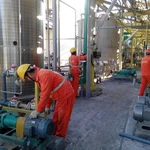


Asia Chemical Engineering Co., Ltd. is one of the most reliable manufacturers and suppliers of a phosphoric acid plant in China. Please rest assured to wholesale cost-efficient a phosphoric acid plant from our factory. Good service and reasonable price are available.
Products Description
Fast Curing Time
One of the standout features of UV LED ink is its fast curing time. The ink immediately hardens when exposed to UV LED light, which increases the speed of the printing process and reduces production time. This makes it ideal for high-volume printing applications.
Energy Efficiency
UV LED inks require less energy to cure compared to traditional UV curing systems, making them more energy-efficient. The lower heat emission of LED lights also reduces the need for cooling systems in the printing process, resulting in significant cost savings.
Vibrant Colors and High Durability
UV LED ink produces bright, vivid colors with excellent opacity and sharpness. The cured ink is highly resistant to fading, scratching, and wear, which ensures that the printed designs stay vibrant and intact over time.


FAQ
1.What is the primary use of phosphoric acid produced in the plant?
The primary use of phosphoric acid is in the production of phosphate fertilizers. It is also used in the food industry, metal treatment, and water treatment processes. Its versatility makes it essential in various industrial applications.
2.How is environmental impact managed in a phosphoric acid plant?
Environmental impact is managed through the use of advanced emission control systems, including scrubbers and dust collectors. Gypsum by-products are handled responsibly, either through disposal or reuse in construction and agriculture. Plants also comply with strict environmental regulations to minimize their footprint.
3.What types of raw materials are required for a phosphoric acid plant?
The primary raw materials are phosphate rock and sulfuric acid. Phosphate rock is mined and transported to the plant, where it is reacted with sulfuric acid to produce phosphoric acid and gypsum. Water and energy are also critical inputs for the production process.
4.Can phosphoric acid plants produce different grades of acid?
Yes, phosphoric acid plants can produce various grades of acid, including technical, food, and pharmaceutical grades. The production process can be adjusted to meet specific purity and concentration requirements based on the intended application.
5.What safety measures are implemented in a phosphoric acid plant?
Safety measures include automated monitoring and control systems, emergency shutdown protocols, and equipment designed to handle corrosive materials. Employees undergo regular training, and the plant operates in compliance with safety regulations to protect workers and the environment.
6.What happens to the gypsum by-product in the plant?
Gypsum, a by-product of phosphoric acid production, can be used in various industries, including construction (as a material for drywall) and agriculture (as a soil conditioner). If not reused, it is disposed of in an environmentally responsible manner.
7.How does automation improve plant operations?
Automation enhances operational efficiency by monitoring and controlling the entire production process in real time. It ensures consistent product quality, minimizes waste, and improves safety by reducing human intervention in hazardous areas.
Hot Tags: a phosphoric acid plant, China, manufacturers, suppliers, factory, wholesale, price, profession, cost, Production Line Hot Selling Washing Powder Production Equipment, wet process phosphoric acid production line factory, wet process phosphoric acid equipment price, Wet Phosphoric Acid Production Line H3PO4 Plant, thermal process phosphoric acid equipment factory, Phosphoric Acid Line


