

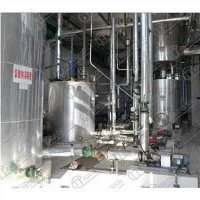


How to customize a detergent powder plant and the layout of core equipment selection?
- How to customize a washing powder production line
- Washing powder production line equipment configuration
- Washing powder production line technical requirements
- What are the safety standards for detergent powder production plants?
1. How to customize a washing powder production line
Production Scale:
Determine whether you need a small - scale, medium - scale, or large - scale production line. Small - scale production might be suitable for local or niche markets, while large - scale is for broader distribution. For example, a small - scale line could produce a few tons per day, while a large - scale one can handle dozens of tons.
Consider your budget for equipment, labor, and raw materials. This will influence the level of automation and the capacity of the line.
Product Positioning and Formulation:
Decide on the features of your washing powder, such as high - foam or low - foam, different cleaning strengths, and special functions like stain - removal or color - protection.
Choose the right ingredients and their proportions according to your target market. For instance, if targeting an environmentally - conscious market, use biodegradable surfactants.
2. Select the Right Technology and Equipment
Key Equipment:
Mixing Equipment: High - quality mixers are essential to ensure uniform blending of raw materials. Options include horizontal mixers and vertical mixers, each with different mixing efficiencies and capacities.
Drying Equipment: Spray dryers are commonly used to convert the liquid or slurry mixture into powder form. You need to select a dryer with appropriate drying capacity and temperature control.
Screening Equipment: Screens are used to separate the powder into different particle sizes and remove any oversized or undersized particles, ensuring product consistency.
Packaging Equipment: Choose automatic or semi - automatic packaging machines based on your production volume. They should be able to handle different packaging sizes and types, such as bags or boxes.
Equipment Compatibility: Ensure that all the equipment you select is compatible with each other in terms of production capacity, operating parameters, and connection interfaces.
3. Design the Factory Layout
Process Optimization: Arrange the equipment in a logical sequence to minimize the movement of materials during production. A typical layout might start with a raw material storage area, followed by mixing, drying, screening, and finally packaging.
Safety and Comfort: Provide sufficient space for workers to move around safely and install proper ventilation and lighting systems. Consider noise - reduction measures for noisy equipment.
4. Develop a Detailed Production Process
Standard Operating Procedures (SOPs): Create clear SOPs for each step of the production process, from raw material handling to final product packaging. This helps ensure consistent product quality and worker safety.
Quality Control Points: Identify key quality control points in the production process, such as ingredient purity, mixing uniformity, powder particle size, and packaging integrity. Set up corresponding testing methods and standards.
5. Consider Environmental and Safety Requirements
Environmental Protection: Install waste - treatment systems to handle wastewater, waste gas, and solid waste generated during production. Ensure compliance with local environmental regulations.
Safety Measures: Implement safety measures such as fire - prevention systems, explosion - proof equipment, and safety guards for moving parts. Provide workers with proper safety training.
6. Seek Professional Consultation and Support
Engineering Firms: Engage professional engineering firms with experience in washing powder production line design and construction. They can provide expertise in equipment selection, layout design, and process optimization.
Equipment Suppliers: Work closely with reliable equipment suppliers. They can offer technical support, installation, and after - sales service for the equipment.


2.Washing powder production line equipment configuration
The chemicals involved in detergent production lines have specific physical and chemical properties that are critical to the efficiency of the production process and the quality of the product. For example, the melting point, boiling point, toxicity, specific gravity, density, etc. of certain chemicals will affect how they are used in the production line1.
Physical properties
Melting point: affects the change of state of a substance when heated.
Boiling point: determines the temperature at which a substance changes from liquid to gas.
Toxicity: requires special attention during the production process to ensure the safety of operators.
Specific gravity: affects the floating and sinking of a substance, thereby affecting the mixing uniformity during the production process.
Chemical properties
Molecular formula and molecular weight: determine the molecular structure of a substance, which in turn affects its physical and chemical properties.
Toxicity tariff code: used for customs declaration and management.
Structural composition of the production line
Detergent production lines usually include multiple key components, each with its specific functions and roles.
Upstream equipment
Upstream equipment is mainly responsible for the preparation and processing of raw materials to ensure the quality and purity of raw materials. This may include steps such as storage, weighing, and mixing of raw materials.
Midstream equipment
Midstream equipment is the main part of the production line, responsible for converting the processed raw materials upstream into the final product. This usually includes reactors, mixers, dryers, etc.
Downstream equipment
Downstream equipment is mainly responsible for the packaging and testing of products to ensure the quality and safety of products. This may include packaging machines, checkweighers, labeling machines, etc.
Specific equipment configuration examples
Concentrated detergent production line
Structural image: shows the overall layout of the production line and the connection between equipment.
Attributes: including chemical properties, uses and production methods, etc.2.
Daily chemical detergent production line
Product description: Provide detailed equipment configuration information, including the high quality and versatility of components such as motors, gears, engines, etc.
Production capacity: For example, 2-3 tons/hour production capacity is suitable for large-scale production3.
OEM detergent production line
Main products: including detergents, washing powder, etc., providing OEM services.
Product features: emphasize the environmental protection characteristics of the product, one-time use and strong decontamination ability4.
Production line design and manufacturing
Professional detergent production line design and manufacturing companies, such as Anhui Mingzhi, provide one-stop services from design, manufacturing to installation and commissioning. These companies have rich industry experience and advanced technology, and are able to customize production lines according to customer needs5.
Design and manufacturing process
Demand analysis: Understand the specific needs and production capacity of customers.
Scheme formulation: Develop a detailed design plan based on the needs.
Equipment manufacturing: Manufacture equipment at each stage according to the design plan.
Installation and commissioning: Install and debug the equipment on site to ensure the normal operation of the production line.
Precautions
When selecting a detergent production line, factors such as the characteristics of the raw materials, production scale, and environmental protection requirements should be considered.
The maintenance and care of the production line is also very important to ensure the long-term stable operation and production efficiency of the equipment.
3.Washing powder production line technical requirements
I. Technical requirements for core equipment
Spray drying tower system
Adopting automatic spray tower technology (high tower granulation), it is required to have temperature control accuracy of ±2℃ and pressure stability of ≤0.5% fluctuation. The material must be SUS304 stainless steel to ensure corrosion resistance and hygiene standards.
Mixing and stirring equipment
The mixing uniformity must reach more than 98%, supporting the full reaction of raw materials such as LAS (sodium linear alkylbenzene sulfonate) and STPP (sodium tripolyphosphate).
Packaging and sealing equipment
Filling accuracy error ≤±1g, and the sealing strength must pass the sealing test (such as air pressure detection).
II. Production process requirements
Raw material ratio control
Typical formula: LAS (5%~30%), flavor (0.2%~0.4%), optical brightener (0.01%~0.03%), moisture (≤2%). The formula of high-density and low-density products needs to be adjusted, such as the high-density powder needs to increase the proportion of inorganic salt.
Granulation and drying parameters
The outlet temperature of the spray drying tower is controlled at 80~100℃ to prevent the enzyme preparation from being inactivated. Particle size distribution requirements: 80% of the particles are in the range of 0.3~1.2mm to ensure the balance between solubility and fluidity.
Post-processing process
A cooling system is required to reduce the particle temperature to below 40℃ before packaging to avoid agglomeration.
III. Quality control standards
Physical index detection
Bulk density: 0.3~0.5g/cm³ for low-density type and 0.6~0.8g/cm³ for high-density type. pH range: 9~11 (in accordance with GB/T 13171 standard).
Chemical performance test
The detergency must pass the standard dirty cloth test (such as JB-01, JB-02, JB-03), and the decontamination ratio must be ≥1.0. The enzyme activity retention rate must be ≥90% (after 6 months of storage).
4. Safety and environmental protection requirements
Dust control
The production line must be equipped with a negative pressure dust removal system, and the dust concentration in the working area must be ≤5mg/m³.
Wastewater treatment
Wastewater from cleaning must be discharged after neutralization treatment (pH 6~9), and the phosphate content must be lower than the local environmental protection limit.
Biodegradability
The raw materials must meet a biodegradability rate of ≥90%.
5. Automation and energy efficiency requirements
Automation degree
It is recommended to use a PLC control system to realize the automation of the entire process of batching, granulation, and packaging, and reduce manual intervention.
Energy efficiency
The thermal energy utilization rate of the spray tower must be ≥75%, and the comprehensive energy consumption per unit product must be ≤0.8 tons of standard coal/ton of product.
4. What are the safety standards for detergent powder production plants?
Equipment safety
Mechanical protection: All rotating and transmission parts (such as pulleys, chains, gears, etc.) should be equipped with protective devices to prevent mechanical injuries caused by human contact. For example, a guardrail should be set around the mixing paddle of a mixer to prevent operators from accidentally getting involved.
Electrical safety: Electrical equipment should be well grounded to prevent electric shock accidents caused by leakage. Wires and cables must comply with relevant standards and have no damage or aging. Distribution boxes and control cabinets must have a protection level to prevent dust and water vapor from entering and causing short circuits. At the same time, leakage protection devices should be installed to quickly cut off the power supply in the event of leakage.
Pressure vessel safety: Equipment that may involve pressure, such as spray drying towers, should be regularly pressure tested and safety inspected. Safety accessories such as safety valves and pressure gauges should be installed on the equipment to ensure that the pressure is within the safe range. Safety valves need to be calibrated regularly to ensure their reliability.
Fire safety
Firefighting facilities: The factory should be equipped with a sufficient number of fire extinguishers, fire hydrants, automatic sprinkler systems and other firefighting facilities in accordance with regulations. Fire extinguishers should be inspected and maintained regularly to ensure that they are in effective condition. Fire hydrants should ensure sufficient water supply and unobstructed pipelines.
Fire partitions: Reasonably divide fire partitions and set up fire walls, fire doors and other separation facilities to prevent the spread of fire. A certain fire distance should be maintained between different functional areas (such as raw material warehouses, production workshops, finished product warehouses, etc.).
Flammable material management: Flammable raw materials (such as organic solvents, spices, etc.) used in the production process should be properly stored and managed. The storage area should be away from fire and heat sources, set up obvious fire prevention signs, and be equipped with corresponding fire extinguishing equipment.
Dust explosion safety
Dust control: The production line needs to be equipped with an effective negative pressure dust removal system to control the dust concentration in the working area within a safe range. The dust concentration in the general working area should be ≤5mg/m³. Clean and maintain the dust removal system regularly to prevent dust accumulation from causing explosions.
Explosion-proof electrical equipment: In areas where dust is prone to accumulate, explosion-proof electrical equipment, including motors, lamps, switches, etc., should be used to prevent electrical sparks from causing dust explosions.
Ventilation and cleaning: Keep the workshop well ventilated to reduce dust concentration. At the same time, the workshop should be cleaned regularly to remove dust on the surface of the equipment and the ground in time.
Chemical safety
Storage safety: Chemicals (such as sulfonic acid, sodium silicate, etc.) should be stored in categories, and chemicals of different properties should be stored separately and clearly marked. Leakage prevention facilities such as cofferdams and collection pools should be set up in the storage area to prevent environmental pollution and personal injury caused by chemical leakage.
Use protection: When using chemicals, operators should wear appropriate personal protective equipment, such as protective gloves, goggles, gas masks, etc. At the same time, they should strictly follow the operating procedures to avoid chemicals from contacting the skin, eyes or inhaling into the body.
Emergency treatment: The factory should formulate an emergency plan for chemical leaks and be equipped with corresponding emergency treatment equipment and materials, such as neutralizers, absorbent materials, etc. Once a chemical leak occurs, effective emergency measures can be taken quickly to deal with it.
Personnel safety
Training and education: All employees should receive safety training, including equipment operating procedures, fire safety knowledge, chemical safety knowledge, etc. New employees must undergo level 3 safety education and training upon joining the company, and can only take up their posts after passing the assessment.
Personal protective equipment: Employees are equipped with appropriate personal protective equipment, such as safety helmets, safety shoes, work clothes, etc., and are required to wear and use them correctly.
Emergency rescue: Develop emergency plans, organize emergency drills regularly, and improve employees' ability to respond to emergencies. Factories should be equipped with first aid kits and necessary first aid equipment. If conditions permit, a medical room can be set up or a special person can be assigned to be responsible for first aid.
Environmental protection and safety
Wastewater treatment: Cleaning wastewater must be neutralized and discharged after the pH value reaches 6-9. At the same time, it is necessary to ensure that the content of pollutants such as phosphates is lower than the local environmental protection limit.
Waste gas emissions: Waste gas generated during the production process must be treated and discharged after meeting the standards to reduce pollution to the atmospheric environment.
Solid waste treatment: Solid waste (such as waste residues, waste packaging materials, etc.) generated during the production process must be collected, stored and treated by classification. Recyclable waste must be recycled, and non-recyclable waste must be disposed of in accordance with environmental protection requirements.


