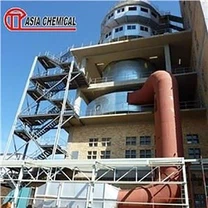
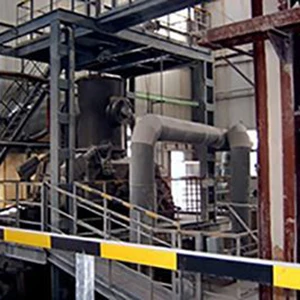
Whether it's high-purity thermal processing, large-scale wet processing, or thermal phosphoric acid technology, each of our methods meets specific needs and industrial applications. For companies seeking a reliable engineering partner, we offer comprehensive technical solutions to ensure safe, efficient, and sustainable phosphate production.
in one-stop Phosphate Production Solution

Thermal Electric Furnace Production Process
Expanded Version with Fewer Connectors
The thermal electric furnace process remains a core technology in the phosphate industry. The reaction takes place under extremely high temperatures, and the products show stable purity and predictable performance. Yellow phosphorus from this process has uniform quality and low impurity levels, suitable for fine chemical production, flame retardants, organophosphorus compounds, agrochemicals, and surfactant intermediates.
Modern electric furnace systems offer high controllability. Automated feeding, electrode regulation, and power-management systems maintain steady reaction conditions. Energy use becomes more efficient with upgraded furnace design, optimized insulation, and improved electrode materials. Production lines achieve higher output, lower maintenance frequency, and better long-term stability.
The process generates by-products such as furnace slag and calcium silicate materials. These materials can be reused in building materials, road foundations, or certain metallurgical applications. The overall system supports cleaner production and creates additional commercial value.
Ore adaptability is another advantage. The thermal electric furnace process accepts a wider range of phosphate rock qualities. High-grade ore is not always required, and producers gain more flexibility in sourcing. This reduces raw material constraints and keeps production stable, even when phosphate ore quality varies across regions.
Thermal-process phosphoric acid shows high purity and low metal ion content, matching the requirements of semiconductor manufacturing, photovoltaic cell processing, and precision chemical production. Electronic-grade acid from electric furnace plants is widely used in wafer etching, wet cleaning steps, and display panel manufacturing. Consistency in acid purity gives manufacturers better control over chemical baths and surface treatment quality.
Food-grade phosphoric acid produced by this method also meets strict safety demands from beverage, dairy, and food processing companies. The acid remains stable during storage and blending, and its impurity content stays within international food standards.
The economic value of this process lies in its product position. High-purity acid sells at a premium, and yellow phosphorus is an essential upstream raw material for many high-value chemicals. Energy consumption is higher than wet processes, but the market value compensates for the operational cost. Regions with competitive electricity prices gain clear advantages when adopting electric furnace technology.
For producers targeting high-end markets-electronics, food additives, pharmaceuticals, specialty chemicals-the thermal electric furnace route remains a reliable and commercially sound choice. The technology offers purity, stable operation, flexible raw material selection, and strong downstream compatibility.
Wet-Process Phosphoric Acid Production
The wet-process method dominates global phosphate production. Plants using this route focus on stable operation, high output, and predictable product quality. The reaction system is simple, and equipment configurations are standardized across most regions. This gives producers a clear advantage in capacity expansion, maintenance, and spare parts supply. Many large fertilizer complexes operate multiple wet-process lines in parallel for continuous year-round production.
In the sulfuric acid route, the gypsum formed during the reaction has commercial value. Many plants sell gypsum for wallboard manufacturing, cement additives, soil conditioning, or road base materials. This reduces waste storage pressure and supports clean production goals. Some facilities operate gypsum washing and filtration units to improve gypsum purity, creating additional revenue.
The hydrochloric acid route offers better ore dissolution. Plants using this method can handle low-grade phosphate or complex mineral compositions. This flexibility helps producers located in regions with limited access to high-quality ore. Higher recovery rates mean more phosphoric acid per ton of ore, improving overall economics. The process also produces calcium chloride solutions, which can be used in oilfield operations, de-icing products, or industrial brines.
Wet-process phosphoric acid is widely used in downstream chemical industries. Many manufacturers convert it into phosphate salts such as monoammonium phosphate, diammonium phosphate, trisodium phosphate, and zinc or manganese phosphates. These salts are used in detergents, rust inhibitors, metal surface treatment, and boiler water conditioning. The demand for these products grows with the expansion of industrial cleaning, metal finishing, and municipal water treatment.
Feed-grade phosphates remain another major market. Products like DCP (dicalcium phosphate) and MCP (monocalcium phosphate) are essential minerals for livestock, poultry, and aquaculture. Wet-process acid provides a stable and consistent raw material for these feed additives. Producers focus on removing impurities such as fluorine and heavy metals to meet feed safety standards.
Large NPK fertilizer plants also rely on wet-process acid. The acid is reacted with ammonia, potassium salts, and other nutrients to create balanced fertilizer formulas for crops. Many agricultural regions depend on MAP and DAP as primary nutrient sources. The wet-process route ensures steady supply for these essential fertilizers.
Plant operation follows clear procedures. Phosphate rock grinding, acidulation, slurry filtration, acid concentration, and by-product handling all follow established technology packages. Engineering companies supply modular systems to reduce on-site construction time. Automation upgrades, better filtration units, and improved corrosion-resistant materials increase reliability and lower downtime.
Although wet-process acid has lower purity than thermal acid, the quality is fully suitable for industrial, agricultural, and feed applications. Most customers in these sectors prioritize cost, production stability, and logistics over ultra-high purity. The wet process meets these needs and supports large-scale national fertilizer programs.
The overall economics of the wet-process method remain strong. Raw material consumption is predictable, equipment investment per ton of output is lower than the thermal method, and labor requirements are moderate. Plants located near phosphate mines gain even greater cost advantages. Many global fertilizer producers depend on this method as the backbone of their production systems.
New Thermal Phosphoric Acid Technology
As the demand for phosphoric acid grows and high-grade phosphate ore becomes more limited, new technologies are emerging to improve resource utilization. One of the most important innovations is the new thermal phosphoric acid process, which allows the use of phosphate rock containing less than 20% P₂O₅.
Traditional methods are often restricted by ore quality. However, this new technology optimizes reaction conditions, energy efficiency, and separation processes to enable stable and economical production even with lower-grade resources. This is particularly valuable for regions where ore supply is limited, or where mining costs are increasing.
- Allows the use of low‑grade ore, reducing raw material costs.
- Improves flexibility in ore sourcing, ideal for global supply stability.
- Produces phosphoric acid with stable quality suitable for various industrial applications.
- Reduces environmental pressure through improved efficiency and lower waste generation.
The adaptability of this new process makes it a promising technology for the future of the phosphate industry. It helps solve the long-term challenge of ore scarcity while supporting sustainable development targets.
Why Choose Hangzhou ASIA Chemical Engineering Co., Ltd
With decades of experience in phosphate engineering, Hangzhou ASIA Chemical Engineering Co., Ltd provides complete process design, equipment supply, EPC solutions, and technical consulting for all three major phosphate production technologies. Our engineering teams deliver customized layouts, energy‑saving solutions, and long‑term operational support for clients worldwide.
- Professional design for thermal, wet, and new thermal phosphoric acid plants.
- Turnkey project execution and commissioning services.
- Advanced automation and environmental protection systems.
- Support for raw material testing, process optimization, and operator training.