

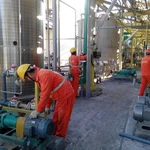
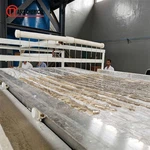

Asia Chemical Engineering Co., Ltd. is one of the most reliable manufacturers and suppliers of on-site hypochlorite sodium generation in China. Please rest assured to wholesale cost-efficient on-site hypochlorite sodium generation from our factory. Good service and reasonable price are available.
Description of dosage selection:
1. The sodium hypochlorite generator can be used for electrolysis of salt water in municipal water plants, sewage treatment plants,
hospital sewage, swimming pool water, thermal power plant circulation systems, etc
Its available chlorine demand (g/h)=design value of water volume (t/d) × Total chlorine demand concentration (mg/L) ÷ 24h
2. At present, there is no specific standard for the selection of specific chlorine dosage for disinfection treatment of various water bodies, which needs to be determined through experiments. The following experience suggests designing chlorine dosage (for reference only):
① Tap water: According to GB5749-2022, the range of free chlorine in the factory water when using sodium hypochlorite solution for disinfection in municipal tap water plants is required to be between 0.3 and 2mg/L.
A. Small water supply station
The water source is surface water, with a designed chlorine dosage of 1-2 mg/L
The water source is groundwater with a designed chlorine dosage of 0.5-1mg/L
B. Large and medium-sized water plants need to design pre chlorination, post chlorination, and adding chlorination
The designed dosage of pre chlorination is 1-1.5mg/L (mainly used for oxidation of incoming water and removal of algae), and the designed dosage of post chlorination is 2-2.5mg/L (used for disinfection and disinfection treatment at the front end of the disinfection pool, with a disinfection time requirement of ≥ 30min). The designed dosage of adding chlorination is 0.5-1mg/L (used for water supply chlorination, mainly to ensure the residual chlorine value of the factory water supply)
② Domestic sewage: The recommended values in relevant literature are as follows:
A. 20~30mg/L of sewage after primary treatment
B. Sewage of incomplete manual Secondary treatment 10-15mg/L
C. Sewage 5-10mg/L after fully manual Secondary treatment
③ Swimming pool water: According to GB37488-2019 "Hygienic Indicators and Restriction Requirements for Public Places", when using free chlorine agents for disinfection, the range of free residual chlorine in swimming pool water is required to be within 0.3-1.0mg/L, according to experience, the disinfection effect can be achieved when the dosage of swimming pool water is 2mg/L, but the chlorine dosage needs to be adjusted according to changes in the pool's pedestrian flow.

① The high-efficiency salt feeding machine designed by HCZHUN Patent is made of PVC and 304 stainless steel, with higher corrosion resistance and negative pressure feeding, which is more efficient and safe;
② The corrosion-resistant automatic water replenishment valve independently designed by HCZHUN has a mechanical structure that does not require electrical control and has high stability;
③ The patented salt filtration device designed by HCZHUN is located at the bottom of the salt dissolving tank to ensure the concentration of concentrated salt water;
④ The concentrated brine metering pump provides independent supply and stabilizes the flow of concentrated brine;
⑤ The constant pressure control of the dilution water pump effectively reduces the impact of changes in water supply pressure on flow.
Environmental and safety features
1. Sustainability advantages
Zero transportation risk:
On-site generation avoids the risk of leakage during transportation of liquid chlorine or high-concentration sodium hypochlorite. For example, the 0.8% solution of the Microclor system is not a hazardous chemical and does not require a special transportation permit.
Low carbon emissions:
One ton of salt can replace four tons of commercial sodium hypochlorite, reducing transportation carbon emissions by about 6.5 tons of CO₂/year (taking De Nora ClorTec® as an example).
Resource circulation:
The electrolysis process only consumes salt, water, and electricity, and the generated solution is 100% utilized, without chemical waste, which is in line with the concept of circular economy.
2. Safety design
Hydrogen management:
The vertical electrolyzer design (such as Microclor) directly discharges hydrogen to avoid accumulation in the storage tank; JESCO is equipped with a hydrogen detector as standard, which automatically shuts down when the concentration exceeds the standard.
Corrosion protection:
Key components of the system (such as electrolytic cells and pipelines) are made of titanium alloy or fiberglass, which can withstand long-term corrosion from sodium hypochlorite solution and have a service life of more than 10 years.
Safe operation:
Fully automatic operation reduces manual contact with chemicals; for example, the JESCO system controls the dilution of brine through PLC to avoid the risk of splashing of high-concentration solutions.
3. Regulatory compliance
Water quality standards:
The generated solution complies with the "Sodium Hypochlorite Solution" (GB19106-2013), and the effective chlorine content and stability are tested by a third party.
Environmental certification:
Some systems have passed the ISO 14001 environmental management system certification, and there is no VOC emission during the electrolysis process, which meets the requirements of the EU CLP regulations for chemical classification.
Hot Tags: on-site hypochlorite sodium generation, China, manufacturers, suppliers, factory, wholesale, price, profession, cost


