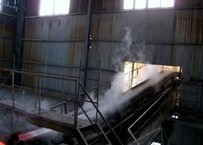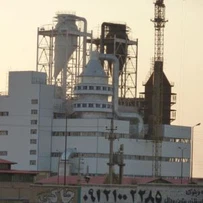
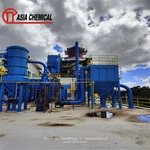

Our objective is to drive the development of the industry and provide consumers with a wider choice of different types of sulphonation equipment suppliers, thermal process phosphoric acid equipment, sodium hydroxide equipment. Our products meet the relevant technical standards, and customer satisfaction has always been our pursuit. Our goal is to contribute to the realization of sustainable development and the company's own goals through corporate social responsibility measures.
Apply range of Soap Production Plant:
to produce various toilet soap, laundry soap, soap noodles with different shapes and formulation.
1.Soap noodles production line plant machinery
The feed material is oil, fat and caustic soda through neutralization reaction into active matter of sodium fatty acid, it can be dried into formed into soap chips, grain/noodles.
Apply range: Main Raw material to produce various formula soap
2.Soap finishing line
The feed material is soap noodle. The noodles are mixed, milled, refined and comes out from vacuum plodder in form of continuous soap bar, which will be stamped into shaped toilet soap. The capacity is 0.2t/h to 4 t/h. the operation mode can be manual or automatic.
Apply range from soap noodles to produce Translucent soap, laundry soap and toilet soap, beauty soap.

A soap production plant offers numerous advantages, including:
Customization: Plants can tailor soap formulations to meet specific market demands, accommodating variations in fragrance, ingredients, and packaging.
Efficiency: Automated processes streamline production, optimizing resource utilization and minimizing waste, resulting in cost savings and increased productivity.
Quality Control: Plants implement stringent quality control measures at every stage of production, ensuring consistency, purity, and compliance with regulatory standards.
Scalability: With scalable production capacities, plants can accommodate fluctuations in demand and scale operations according to market trends and growth opportunities.
Innovation: Continuous research and development enable plants to innovate, introducing new formulations, technologies, and packaging solutions to stay competitive in the market.
high
quality
Advanced
Equipment
Professional
Team
One-Stop
Solution
FAQ:
How is soap made in a factory?
Soap production in factories typically involves a process called saponification, where fats or oils are combined with a strong alkali, such as sodium hydroxide (lye), in large vats. This chemical reaction results in the formation of soap and glycerin. The mixture is then poured into molds, cooled, and cut into bars. Additional steps may include mixing in fragrances, colors, and other additives before packaging.
Is soap production profitable?
Soap production can be profitable, especially when operating at scale and targeting niche markets. Factors influencing profitability include efficient production processes, effective marketing strategies, product differentiation, and cost management.
Who is the largest producer of soap in the world?
Procter & Gamble (P&G) is one of the largest producers of soap in the world, with popular brands like Ivory, Dove, and Olay under its umbrella. Other major players include Unilever, Colgate-Palmolive, and Johnson & Johnson.
How do I start a soap production business?
To start a soap production business, you'll need to research and plan your venture thoroughly. This involves determining your target market, sourcing raw materials, acquiring necessary equipment, complying with regulations, developing recipes, establishing distribution channels, and implementing marketing strategies. Consider seeking guidance from industry experts or attending workshops to gain insights into the soap-making process and business management.
How much do soap makers earn?
Earnings for soap makers vary widely depending on factors such as the scale of production, market demand, pricing strategies, and overhead costs. Some soap makers operate as small-scale artisans, earning a modest income, while others running larger operations can generate substantial profits.
How much does it cost to start a soap-making business?
The cost of starting a soap-making business can vary significantly depending on factors such as the scale of production, equipment needed, raw material costs, marketing expenses, and regulatory compliance fees. Small-scale operations may require a few thousand dollars to get started, while larger-scale ventures could require tens of thousands or more in initial investment. It's essential to conduct thorough research and develop a comprehensive business plan to estimate startup costs accurately.
We uphold the attitude of integrity and responsibility, and the concept of growing together with customers, to provide high-quality solutions for Industrial Small Scale Toilet Body Soap Manufacturing Plant. To provide customers with high quality service is the direction of our work and the yardstick of value evaluation. We insist on technological innovation, continue to satisfy customers, and constantly practice arduous entrepreneurship.
Hot Tags: soap production plant, China, manufacturers, suppliers, factory, wholesale, price, profession, cost, solid sodium silicate equipment suppliers, active detergent powder, sodium hydroxide equipment, Neutral Synthetic Detergent Washing Powder, wholesale sodium hydroxide production line, Bucket Machine Wash Detergent Powder manufacturers
[[ProKeywords]]