

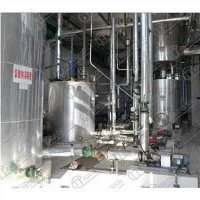


There are two methods of industrial production of caustic soda, causticization method and electrolysis method. Causticization method is divided into soda causticization method and trona causticization method according to different raw materials; electrolysis method can be divided into diaphragm electrolysis method and ion exchange membrane method.
The causticization method is divided into soda causticization method and trona causticization method according to different raw materials; electrolysis method can be divided into diaphragm electrolysis method and ion exchange membrane method. Soda causticization method: Soda ash and lime are respectively made into soda ash solution and ash to make lime milk. The causticization reaction is carried out at 99~101℃. caustic soda. The concentrated solution is further boiled and solidified to obtain a solid caustic soda product.
The causticized mud is washed with water, and the washing water is used for alkalization. Its Na2CO3+Ca(OH)2→2NaOH+CaCO3 trona causticization method trona is crushed, dissolved (or alkali brine), clarified, and then added to lime milk for causticization at 95-100 °C, and the causticized liquid is clarified, Evaporate and concentrate to about 46% NaOH concentration, cool the clear liquid, and further boil it after precipitating salt. The solid caustic soda product is obtained. The causticized mud is washed with water, which is used to dissolve the trona.
Its Na2CO3+Ca(OH)2→2NaOH+CaCO3↓NaHCO3+Ca(OH)2→NaOH+CaCO3↓+H2O diaphragm electric boat method adds soda ash, caustic soda, barium chloride refined preparation to remove calcium and magnesium , sulfate ions and other impurities, then add sodium polyacrylate or causticized bran to the clarification tank to accelerate the precipitation, add hydrochloric acid after sand filtration to neutralize, the brine is preheated and then sent to electrolysis, and the electrolyte is preheated, evaporated, Desalination and cooling to obtain liquid caustic soda, which is further concentrated to obtain solid caustic soda products.
Salt mud washing water is used to dissolve salt. Its 2NaCl+2H2O [electrolysis] → 2NaOH+Cl2↑+H2↑ ion exchange membrane method, after the original salt is salted, the brine is purified according to the traditional method, and the primary brine is filtered through a microporous sintered carbon tubular filter. The secondary purification is carried out through the chelating ion exchange resin tower to reduce the calcium and magnesium content in the brine to less than 0.002%. The secondary purified brine is electrolyzed to generate chlorine in the anode chamber, and Na+ in the brine in the anode chamber enters the cathode through the ionic membrane. The OH in the chamber and the cathode chamber generates sodium hydroxide, and H+ is directly discharged on the cathode to generate hydrogen.
During the electrolysis process, an appropriate amount of high-purity hydrochloric acid is added to the anode chamber to neutralize the returning OH-, and the required pure water should be added to the cathode chamber. The concentration of high-purity caustic soda generated in the cathode chamber is 30% to 32% (mass), which can be directly used as a liquid caustic soda product, or can be further boiled to obtain a finished caustic soda product. Its 2NaCl+2H2O→2NaOH+H2↑+Cl2↑.


