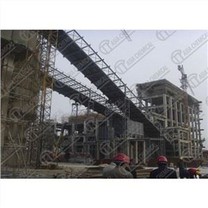
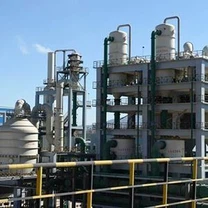
- Bleaching powder (calcium hypochlorite-based compound) is an industrial chemical produced through a controlled chlorination reaction between lime-based materials and chlorine gas. It is widely used in water disinfection, wastewater treatment, sanitation systems, and chemical oxidation processes.
- The production process is not a single machine operation, but a complete system involving raw material preparation, chlorine generation, gas-solid reaction, drying, grinding, gas treatment, and packaging. Each equipment section directly affects reaction efficiency, available chlorine content, and production safety.
Raw Material Preparation System
- The first stage of bleaching powder production is raw material preparation, mainly involving quicklime (CaO) and its conversion into hydrated lime (Ca(OH)₂).
- A lime slaking system is used to control this conversion process. It typically includes lime crushers, slaking tanks, hydration reactors, and agitation systems.
- During this process, quicklime reacts with water to form a fine hydrated lime slurry or dry powder, depending on production method. Particle size distribution is controlled because uniform lime particles improve chlorination efficiency in later stages.
- Moisture content control is also critical. Excess water can reduce chlorine absorption efficiency, while overly dry material may reduce reaction uniformity.
Chlorine Gas Production and Delivery System
Chlorine gas is a key reactant in bleaching powder production. In industrial systems, chlorine is usually generated through electrolysis of sodium chloride solution in a chlor-alkali plant.
The chlorine production system includes:
- Electrolytic cells for chlorine generation
- Gas-liquid separation units
- Chlorine drying towers
- Compression and storage systems
- Flow control and metering devices
Because chlorine is highly corrosive and toxic, all pipelines and valves must be made from corrosion-resistant materials such as PVC, FRP, or rubber-lined steel.
Stable chlorine flow is essential because fluctuations directly affect reaction stability and product quality.

Chlorination Reactor System
The chlorination reactor is the core equipment in bleaching powder production. This is where dry slaked lime reacts with chlorine gas to form calcium hypochlorite compounds.
There are several reactor designs used in industrial systems:
- Rotary drum reactors
- Fixed bed chlorination chambers
- Continuous flow reaction towers
Inside the reactor, chlorine gas is introduced and evenly distributed through the lime material layer. Mechanical rotation or internal mixing ensures full contact between gas and solid particles.
Reaction conditions such as temperature, gas concentration, and residence time must be carefully controlled. Excess heat can reduce chlorine utilization efficiency and affect final product stability.
Gas Distribution and Flow Control System
Uniform distribution of chlorine gas is essential for stable reaction performance.
The gas distribution system includes:
- Flow meters
- Pressure regulators
- Distribution manifolds
- Gas injection nozzles
These components ensure that chlorine gas is evenly introduced into the reactor, avoiding localized overreaction or underreaction zones.
Accurate flow control also reduces chlorine waste and improves conversion efficiency.
Chlorine Absorption and Tail Gas Treatment System
- Not all chlorine is consumed during the reaction process. Residual chlorine must be treated to prevent environmental emission and improve system efficiency.
- A tail gas treatment system is installed, which typically includes alkaline scrubbers or absorption towers.
- In these systems, residual chlorine reacts with alkaline solutions, converting harmful gas into stable salts. This step helps control emission levels and improves workplace safety conditions.
- Gas monitoring instruments are also used to detect chlorine concentration in exhaust streams.
Drying System for Product Stabilization
After chlorination, the intermediate product contains moisture and must be dried to achieve stable chemical properties.
Drying equipment includes:
- Rotary dryers
- Fluidized bed dryers
- Hot air drying systems
Drying temperature must be carefully controlled because excessive heat can cause decomposition of active chlorine compounds.
Proper drying ensures stable available chlorine content and improves storage performance of the final product.
Grinding and Particle Size Control System
After drying, the product may form aggregates that need to be broken down into uniform particles.
Grinding equipment such as pulverizers and milling systems is used to achieve controlled particle size distribution.
Particle size affects:
- Dissolution rate
- Reactivity in water treatment applications
- Storage stability
Uniform particle distribution ensures consistent product performance during application.
Dust Collection and Environmental Control System
Bleaching powder production generates fine dust particles and trace chlorine emissions, requiring effective environmental control systems.
Dust collection equipment includes:
- Bag filter systems
- Cyclone separators
- Enclosed conveying systems
These systems prevent powder dispersion during grinding, conveying, and packaging stages.
In addition, air purification systems are installed to control residual chlorine in working environments, ensuring safe operating conditions.
Storage and Packaging System
Finished bleaching powder must be protected from moisture and air exposure because it is chemically sensitive.
Storage systems typically include sealed silos or corrosion-resistant containers with moisture control design.
Packaging equipment includes:
- Automatic weighing systems
- Filling machines
- Heat-sealed or laminated bag packaging units
Packaging must ensure airtight sealing to prevent decomposition and maintain available chlorine content during transportation and storage.
Material Selection for Equipment Systems
Because chlorine and bleaching powder are highly corrosive, equipment material selection is a key engineering consideration.
Common materials include:
- FRP (fiber reinforced plastic)
- PVC and CPVC piping systems
- Rubber-lined steel vessels
- Titanium or alloy components in high corrosion zones
Material selection directly affects equipment service life, maintenance frequency, and operational safety.
Safety Monitoring and Automation Control System
Bleaching powder production involves toxic gas handling and exothermic reactions, making safety control systems essential.
These systems include:
- Chlorine gas leakage detectors
- Emergency ventilation systems
- Pressure relief devices
- Temperature monitoring sensors
- Automated process control systems (PLC/DCS)
Automation control ensures stable operation by regulating gas flow, reactor temperature, and system pressure in real time.