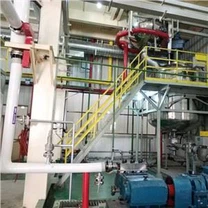
Sodium silicate, also known as water glass, is widely used across industries such as detergents, adhesives, construction, and water treatment. Setting up a sodium silicate production line requires significant investment in equipment, infrastructure, and operational resources.

Capital Investment Considerations
Capital Investment Overview
The initial capital investment represents a significant portion of the total cost when establishing a sodium silicate production line. This investment is not limited to the purchase of core equipment but also includes ancillary systems, installation costs, and infrastructure development such as piping, electrical systems, and control rooms. Each piece of equipment-from reaction tanks to homogenizers-needs to be carefully selected to match the desired production capacity and chemical process requirements. Investing in reliable and high-quality equipment may appear costly at the outset, but it provides long-term benefits by ensuring consistent product quality and reducing the likelihood of equipment failure. A thoughtful approach to capital investment helps manufacturers balance production efficiency, safety, and operational longevity.
Core Equipment and Process Efficiency
Reaction tanks, dissolving kettles, and homogenizers are the heart of the production line, and their design and specifications greatly impact overall process efficiency. Reaction tanks must withstand high temperatures and corrosive conditions while providing uniform mixing and temperature control to facilitate complete chemical reactions. Dissolving kettles ensure that all raw materials are properly integrated, while homogenizers guarantee a consistent solution with the desired viscosity and concentration. Selecting equipment that can operate efficiently at the intended production scale reduces energy consumption and minimizes downtime caused by uneven reactions or product inconsistencies. By prioritizing process reliability, manufacturers can improve throughput and maintain stable production quality over time.
Filtration, Storage, and Automation Systems
Supporting equipment such as filtration systems, heat exchangers, storage tanks, and automation controls also forms an essential component of the capital investment. Filtration and clarification systems remove impurities, ensuring high product clarity and stability, while heat exchangers optimize energy use by recovering and maintaining required temperatures throughout the process. Storage tanks must be designed to hold the sodium silicate solution safely, often with agitation systems to prevent settling or concentration variations. Incorporating automation systems allows for real-time monitoring of key parameters like temperature, pH, and concentration, improving operational control and reducing human error. Investments in these areas, though part of the upfront capital expenditure, contribute significantly to long-term efficiency, product quality, and operational safety.
Long-Term Benefits of Quality Equipment
While high-quality equipment may require a larger initial investment, it frequently results in lower maintenance requirements, reduced energy consumption, and fewer operational interruptions over the lifespan of the plant. Reliable equipment can withstand harsh operating conditions and chemical exposure, minimizing the risk of breakdowns and costly repairs. Additionally, advanced equipment often supports process optimization and scalability, allowing manufacturers to increase production capacity or adapt to new product formulations without major upgrades. By viewing capital investment from a long-term perspective, manufacturers can achieve better return on investment, improved production stability, and enhanced product consistency, all of which are critical for competing effectively in the industrial market.
Raw Material Costs
Significance of Raw Material Quality
Raw materials, particularly soda ash and silica sand, play a critical role in determining both the efficiency of production and the quality of the final sodium silicate product. High-purity soda ash ensures consistent alkalinity, which is essential for achieving complete chemical reactions in the reaction tank. Similarly, the fineness and purity of silica sand directly influence solubility, clarity, and the viscosity of the final solution. Impurities or irregular particle sizes can lead to incomplete reactions, sediment formation, and uneven product properties, which may compromise performance in downstream applications such as adhesives, detergents, or water treatment. Therefore, sourcing raw materials with reliable quality and performing preliminary quality inspections is essential for maintaining high production standards and reducing operational risks.
Impact of Sourcing and Pre-Treatment
Costs associated with raw materials are not solely dependent on the purchase price but also on sourcing, transportation, and pre-treatment requirements. Silica sand and soda ash often require cleaning, drying, and sizing to meet plant specifications. Cleaning removes dust and impurities that could interfere with chemical reactions, while drying ensures accurate chemical ratios by reducing moisture content. Sizing or milling promotes uniform solubility and prevents sedimentation in the solution. Efficient pre-treatment and handling reduce waste, prevent equipment wear, and improve process consistency. Plants that implement automated feeding and pre-treatment systems can maintain precise raw material ratios, enhancing production efficiency and ensuring that every batch of sodium silicate meets the required standards.
Raw Material Management and Operational Efficiency
Effective management of raw materials is essential for minimizing waste, reducing production inefficiencies, and controlling operational costs. Automated feeding systems allow for precise measurement and delivery of soda ash and silica sand into the reaction tank, which helps maintain consistent chemical ratios and solution quality. Monitoring and controlling the flow of raw materials also prevent overuse or spillage, which can result in unnecessary costs and downtime. Proper storage conditions, such as temperature- and humidity-controlled environments, prevent degradation or contamination of raw materials before use. By combining quality sourcing, pre-treatment, and automated management, manufacturers can achieve higher productivity, consistent product performance, and cost-effective operations in sodium silicate production.
Energy Consumption
Energy costs are another important factor in sodium silicate production. High-temperature reaction tanks, dissolving systems, and heat exchangers require substantial thermal and electrical energy to maintain optimal reaction conditions and solution consistency. Plants that utilize energy-efficient equipment, heat recovery systems, or process automation can significantly reduce energy consumption and operational costs. Continuous monitoring and optimization of energy usage is critical for maintaining cost-effective production in 2025.
Labor and Operational Costs
Labor Requirements and Roles
Labor and operational expenses form a significant portion of a sodium silicate production line's overall operational costs. The workforce is responsible for various critical functions, including the monitoring of chemical reactions, handling of raw materials, and maintenance of equipment such as reaction tanks, homogenizers, and filtration systems. Operators must ensure that the process remains within specified parameters for temperature, pH, viscosity, and concentration to maintain consistent product quality. In addition, personnel are responsible for documentation and reporting, which helps track production efficiency, identify anomalies, and support compliance with safety and environmental regulations. Skilled labor not only contributes to smooth daily operations but also plays a pivotal role in preventing operational disruptions and safeguarding both personnel and equipment.
Automation and Workforce Optimization
Automation has become an increasingly important factor in modern sodium silicate plants, helping to reduce reliance on manual labor while improving both process consistency and safety. Automated feeding, mixing, and monitoring systems allow for real-time control over critical parameters, reducing the potential for human error and minimizing the risk of over- or under-processing. Despite these advancements, human oversight remains essential, as trained operators are required to interpret data, adjust process conditions, and respond to unexpected events or emergencies. Integrating automation with human expertise ensures a balanced approach where efficiency, safety, and reliability are optimized simultaneously, allowing plants to operate at high capacity while maintaining product quality.
Workforce Training and Operational Efficiency
Effective workforce management and comprehensive training programs are key to enhancing productivity and reducing operational risks. Operators must be trained not only in routine plant operations but also in safety protocols, emergency procedures, and equipment troubleshooting. A well-trained team can quickly identify deviations in production parameters, perform preventive maintenance, and implement corrective actions without significant downtime. Moreover, cross-training staff to handle multiple functions increases flexibility, allowing plants to adapt to production fluctuations and unforeseen events. By investing in workforce development, manufacturers can achieve higher efficiency, safer working conditions, and consistent output, ultimately contributing to long-term operational sustainability and profitability.
Maintenance and Safety Considerations
Importance of Regular Maintenance
Regular maintenance is a cornerstone of efficient sodium silicate production. Key equipment, including reaction tanks, mixers, homogenizers, and filtration systems, must undergo periodic inspection to ensure they operate at optimal performance. Preventive maintenance involves tasks such as cleaning, lubrication, calibration, and replacement of worn components. Neglecting maintenance can lead to equipment failure, inconsistent product quality, or unplanned downtime, all of which directly affect operational efficiency and production costs. A structured maintenance schedule also allows operators to identify potential issues before they escalate, extending the lifespan of equipment and safeguarding the investment in high-capacity reactors and support systems.
Safety Protocols and Risk Management
Safety protocols are equally critical in maintaining a productive and hazard-free production environment. Sodium silicate production involves high-temperature reactions and caustic substances, which pose risks to personnel and equipment. Proper ventilation systems, temperature controls, emergency shutoffs, and protective gear are essential to mitigate accidents and exposure hazards. Implementing robust safety measures not only protects the workforce but also ensures compliance with environmental and industrial safety standards. Regular safety audits and training programs equip staff with the knowledge to respond effectively to emergencies, reducing potential losses and maintaining uninterrupted production flow.
Long-Term Benefits of Maintenance and Safety Investment
While maintenance and safety measures contribute to operational costs, they are essential for achieving long-term operational stability and efficiency. Well-maintained equipment consumes less energy, operates more reliably, and reduces the likelihood of costly repairs or replacements. Similarly, a safe production environment minimizes the risk of accidents that could lead to production stoppages, legal liabilities, or damage to facilities. By prioritizing both preventive maintenance and stringent safety protocols, sodium silicate plants can achieve sustained high-quality output, enhanced equipment longevity, and overall cost-effectiveness, making these practices a vital component of responsible and profitable industrial operations.