- Raw Material Handling and Preparation System
- High-Temperature Reaction System
- Hydrogen Chloride Gas Generation and Recovery System
- Cooling and Solid Discharge System
- Crushing and Size Reduction System
- Crystallization Based Production System (Alternative Route)
- Solid-Liquid Separation System
- Drying System
- Screening and Classification System
- Storage and Packaging System
- Waste Gas and Environmental Treatment System
- Material Selection for Equipment
- Automation and Process Control System
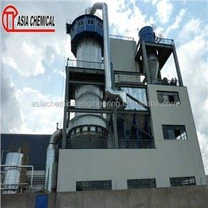
- A Potassium Sulfate (K₂SO₄) manufacturing plant is an integrated chemical production system designed to produce sulfate-based potassium fertilizer through high-temperature reaction or solution crystallization processes. The product is used in agricultural systems where chloride-free potassium supply is required, especially for chloride-sensitive crops and soil conditions.
- The production system is not based on a single machine, but a complete industrial process covering raw material handling, chemical reaction, gas treatment, solid-liquid separation, drying, classification, storage, and environmental control.
Raw Material Handling and Preparation System
The production process starts with controlled preparation of raw materials, typically potassium chloride (KCl) and sulfuric acid (H₂SO₄) in the Mannheim process route.
Main equipment includes:
- Raw material storage silos
- Acid-resistant storage tanks
- Screw conveyors and belt feeding systems
- Dosing and metering units
- Crushing and pre-mixing systems
Accurate feeding control is required to maintain stable reaction stoichiometry. Any deviation in raw material ratio directly affects conversion efficiency and final product purity.
Sulfuric acid handling systems require corrosion-resistant design due to strong acidic properties.
High-Temperature Reaction System

The core of potassium sulfate production is the chemical reaction between potassium chloride and sulfuric acid under high-temperature conditions.
Core equipment includes:
- Mannheim furnace (multi-chamber or rotary type)
- High-temperature reaction chamber
- Acid spray or injection system
- Rotary feeding and mixing devices
- Furnace heating system (coal, gas, or oil-fired)
Inside the furnace, potassium chloride reacts with sulfuric acid at approximately 500–600°C, producing potassium sulfate (K₂SO₄) and hydrogen chloride gas (HCl).
Temperature uniformity is a critical parameter, as uneven heating can cause incomplete reaction or side reactions affecting product quality.
Hydrogen Chloride Gas Generation and Recovery System
During the reaction process, hydrogen chloride gas is continuously generated as a by-product and must be collected and treated.
Equipment includes:
- Gas collection hoods
- Absorption towers
- Cooling condensers
- Scrubbing systems
- Acid recovery units
The HCl gas is typically absorbed in water to produce hydrochloric acid, which can be reused in chemical processes or sold as an industrial by-product.
Efficient gas recovery improves material utilization and reduces environmental emissions.
Cooling and Solid Discharge System
After the reaction, the solid potassium sulfate material exits the furnace at high temperature and must be cooled before further processing.
Equipment includes:
- Rotary cooling drums
- Air cooling systems
- Heat exchange units
- Cyclone separators
- Dust collection systems
Cooling stabilizes the chemical structure and prepares the material for grinding and classification. Dust collection systems prevent fine particle emissions during discharge and conveying.
Crushing and Size Reduction System
The cooled potassium sulfate may form agglomerates that require mechanical size reduction.
Equipment includes:
- Hammer mills
- Jaw crushers
- Grinding mills
- Air classifiers
- Vibrating feeders
Particle size control is important for downstream applications such as fertilizer blending and soil application. Uniform particle distribution ensures stable dissolution behavior and handling performance.
Oversized particles are returned to the grinding system for reprocessing.
Crystallization Based Production System (Alternative Route)
In solution-based production systems, potassium sulfate is generated through controlled crystallization.
Main equipment includes:
- Reaction tanks
- Evaporation units
- Cooling crystallizers
- Centrifugal separators
- Mother liquor circulation tanks
In this process, potassium and sulfate ions react in liquid phase and form crystalline potassium sulfate under controlled temperature and concentration conditions.
Centrifuges are used to separate solid crystals from liquid phase, followed by washing and purification steps to remove impurities.
Solid-Liquid Separation System
After crystallization or cooling, solid potassium sulfate must be separated from residual liquids.
Equipment includes:
- Centrifuges
- Vacuum belt filters
- Plate and frame filters
- Sedimentation tanks
This system controls moisture content and improves drying efficiency. Effective separation reduces energy consumption in the subsequent drying stage.
Drying System
Drying is used to remove residual moisture from potassium sulfate crystals or powder.
Equipment includes:
- Rotary dryers
- Fluidized bed dryers
- Hot air generators
- Temperature control systems
Drying temperature must be carefully controlled to avoid product degradation or caking. Proper drying improves storage stability and handling performance.
Screening and Classification System
After drying, the product is classified into required particle size grades.
Equipment includes:
- Vibrating screens
- Rotary sifters
- Air classification systems
- Dust recovery units
Oversized particles are recycled back to the grinding section, while fine particles are collected for specific fertilizer formulations.
Particle classification ensures consistent product grading for different agricultural applications.
Storage and Packaging System
Finished potassium sulfate is transferred to storage and packaging units for distribution.
Equipment includes:
- Bulk storage silos
- Automatic weighing systems
- Packaging machines
- Bulk loading stations
- Moisture-proof sealing systems
Packaging systems are designed to prevent moisture absorption and maintain chemical stability during storage and transportation.
Bulk handling systems are used for large-scale fertilizer supply chains.
Waste Gas and Environmental Treatment System
Potassium sulfate production generates acidic gases and dust that must be treated before discharge.
Equipment includes:
- Wet scrubbers
- Alkali neutralization towers
- Bag filter dust collectors
- Exhaust gas fans
- Emission monitoring instruments
These systems neutralize acidic gases and capture particulate emissions to ensure controlled environmental discharge.
Material Selection for Equipment
Due to high temperature and corrosive chemical conditions, equipment material selection plays a key role in system reliability.
Common materials include:
- Acid-resistant brick lining for furnace sections
- FRP pipelines for acid handling systems
- Carbon steel with protective coatings
- Stainless steel (304/316L) for auxiliary equipment
- Ceramic-lined ducts in high corrosion zones
Proper material selection extends equipment service life and reduces maintenance frequency.
Automation and Process Control System
Modern potassium sulfate plants rely on centralized control systems for stable operation.
Control components include:
- PLC/DCS control systems
- Temperature and pressure sensors
- Flow meters and analyzers
- Furnace control modules
- Safety interlock systems
Automation ensures stable reaction conditions, accurate dosing control, and safe operation across high-temperature and corrosive process sections
.