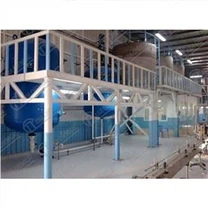
Selecting a high purity caustic soda production line requires balancing technical precision, cost efficiency, and sustainability-factors that define success in industries ranging from new energy to electronics.
in one-stop service

Prioritize Advanced Technology: The Case for Ion-Exchange Membrane (IEM) Systems
The foundation of high purity caustic soda production lies in the ion-exchange membrane (IEM) method, which outperforms outdated diaphragm or mercury-based processes in purity, energy efficiency, and environmental safety. Leading IEM systems achieve 99.99% purity by selectively separating sodium ions from chloride ions, eliminating contaminants like iron (Fe²⁺ ≤ 0.1ppm) and silica (SiO₃²⁻ ≤ 0.5ppm)-critical for sensitive applications.
Key advantages include:
Energy Savings: Fourth-generation low-voltage IEM technology reduces electrolysis energy consumption by 20% compared to traditional methods, with a grid-to-alkali efficiency of 3.2kWh/kg NaOH.
Modular Scalability: Modern plants (2,000–1,000,000 tons/year capacity) allow phased investments, minimizing upfront costs while accommodating future demand spikes-ideal for growing sectors like green hydrogen.
Waste Reduction: Closed-loop brine recycling cuts freshwater usage by 60% and eliminates hazardous waste discharge, aligning with strict regulations such as EU REACH and U.S. EPA standards.
For applications in EV batteries or alkaline electrolyzers, IEM systems ensure compliance with tight thresholds for carbonates (<0.5%) and heavy metals (<0.01ppm), preventing performance degradation in end products.
Core Equipment Selection: Optimizing Performance and Longevity
Automation and AI Integration: Enhancing Control and Predictability
For energy-intensive operations like aluminum refining, these tools ensure stable output while keeping operational costs in check.
The deployment of IoT sensors in high-purity caustic soda lines is far more than a simple data-gathering exercise-it's a networked system designed to turn raw metrics into immediate action. These sensors are strategically placed across critical equipment: electrolytic cells (to track current density and membrane voltage), brine storage tanks (for conductivity and pH), and evaporation units (to monitor temperature and pressure). Each sensor transmits data every 1–5 seconds via industrial Ethernet or 5G networks to a centralized SCADA (Supervisory Control and Data Acquisition) system, which acts as the "nerve center" of the production line.
What sets this system apart is its ability to correlate seemingly unrelated parameters. For example, a 3% drop in brine conductivity paired with a 2°C rise in cell temperature might signal a partial blockage in the brine inlet pipe-a problem that, left unaddressed, could reduce output by 10% within hours. The SCADA system flags this correlation, triggers an automated alert to maintenance teams, and even adjusts the cell's power input temporarily to prevent overheating. At a 300,000-ton/year facility in Southeast Asia, this level of integration has cut the time to resolve minor anomalies from 4 hours (with manual checks) to 15 minutes, directly contributing to the 30% reduction in unplanned outages.
Energy costs account for 30–40% of total production expenses in caustic soda manufacturing, making dynamic energy management a high-impact application of Industry 4.0. AI algorithms here act as "energy strategists," analyzing real-time grid prices, production schedules, and even weather forecasts (for facilities with on-site solar/wind) to optimize power usage.
In regions with time-of-use pricing-such as California, where electricity costs spike by 50% during peak hours (4–9 PM)-the system automatically shifts non-critical processes (like brine preheating) to off-peak periods. For facilities with on-site renewables, it balances solar-generated power with grid electricity: on sunny days, it ramps up electrolysis during midday (when solar output peaks) and reduces grid draw, while relying more on the grid during cloudy periods. A 150,000-ton/year plant in Australia, which integrated 5MW of solar panels with this AI system, cut annual energy bills by $800,000-equating to the 12–15% cost reduction cited earlier.
This flexibility is especially valuable in energy-volatile regions. During the 2022 European energy crisis, a German caustic soda producer used its dynamic energy system to reduce power consumption by 18% during peak price periods, avoiding $2.3 million in additional costs while maintaining 95% of its planned output.
The true power of Industry 4.0 in caustic soda production lies in how these technologies-real-time monitoring, predictive maintenance, and dynamic energy management-work in tandem. For example, the predictive maintenance system might flag an upcoming membrane replacement in two weeks; the dynamic energy manager can then schedule this maintenance during a period of high electricity prices, minimizing the impact on energy costs. Meanwhile, real-time sensors ensure that production ramps back up smoothly post-maintenance by validating that all parameters (conductivity, temperature, voltage) return to optimal ranges.
This synergy is particularly critical for energy-intensive industries like aluminum refining, which relies on a steady supply of high-purity caustic soda. A large aluminum smelter in the Middle East, which sources 40% of its caustic soda from a 500,000-ton/year plant with integrated Industry 4.0 systems, reports that the consistent output and reduced downtime have stabilized its own production lines-cutting its own operational disruptions by 25%. In this way, the benefits of smart caustic soda production ripple through the entire supply chain, creating value far beyond the walls of the chemical plant.
Quality Assurance: Meeting Global Standards and Custom Requirements
High purity caustic soda demands meticulous quality control to meet diverse industry needs.
Multi-Stage Filtration: A combination of reverse osmosis (RO) membranes, activated carbon adsorption, and UV sterilization ensures particle impurities (≥0.1μm) are ≤1 particle/ml-essential for semiconductor and pharmaceutical applications.
Advanced Testing: On-site laboratories equipped with ICP-MS (inductively coupled plasma mass spectrometry) detect trace metals at sub-ppb levels, critical for lithium-ion battery electrolyte production where even minor contaminants degrade performance.
Customized Formulations: Production lines can be tailored to deliver 32% liquid alkali, 99.9% solid flakes, or other specifications, with adjustments to concentration, purity, and packaging to align with client workflows.
Compliance with global standards-including ISO 9001, EU REACH, and U.S. ASTM D1168-ensures seamless integration into international supply chains.
Sustainability and Regulatory Compliance
A production line's value extends beyond equipment-it depends on robust support systems to maintain performance over decades.
Turnkey Solutions: Comprehensive services, from initial design and commissioning to operator training, streamline setup and ensure plants meet performance targets from day one.
Global Technical Networks: 24/7 support teams, paired with regional warehouses for spare parts, resolve issues within 72 hours-critical for minimizing downtime in time-sensitive industries like food processing.
Lifecycle Upgrades: Retrofit services integrate new technologies (e.g., enhanced AI controls or low-energy membranes) into existing lines, keeping operations aligned with evolving industry standards and efficiency goals.
For example, a European chemical producer reduced maintenance costs by 22% after upgrading its electrolyzers with predictive analytics, demonstrating the value of ongoing support.