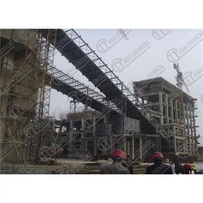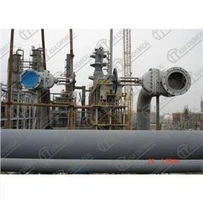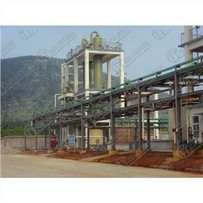

Asia Chemical Engineering Co., Ltd. is one of the most reliable manufacturers and suppliers of chlor alkali plant process in China. Please rest assured to wholesale cost-efficient chlor alkali plant process from our factory. Good service and reasonable price are available.
Products Description
Core Process Overview
The process begins with brine preparation, where raw salt is dissolved in water and purified to remove impurities like calcium, magnesium, and sulfates. High-purity brine (315–320 g/L NaCl) is essential for efficient electrolysis . The electrolysis stage uses advanced ion-exchange membrane technology (the industry standard since the 1970s) to separate the anode and cathode chambers. At the anode, chloride ions (Cl⁻) oxidize to form chlorine gas (Cl₂), while at the cathode, water reduction generates hydrogen gas (H₂) and hydroxide ions (OH⁻). Sodium ions (Na⁺) migrate through the membrane to combine with OH⁻, producing caustic soda (NaOH) .
2. Key Components & Innovations
Ion-Exchange Membranes
Function: These selective membranes allow only Na⁺ ions to pass, preventing Cl₂ and H₂ from mixing-a safety critical feature.
Advantages: Higher energy efficiency (reducing power consumption by 30% compared to older methods) and superior product purity (32–50% NaOH) .
Market Trends: Companies like Ineos-Inovyn and NUBERG are driving innovation in bipolar membrane technology, enhancing durability and reducing environmental impact .
Production equipment
Environmental Sustainability
Waste Management
Wastewater Treatment: Chlor-alkali plants employ advanced systems like vacuum dechlorination and biochemical oxidation to treat process water. For example, PVC centrifugal mother liquor is recycled using ozone disinfection and activated carbon filtration, achieving COD reduction rates >85% .
Byproduct Utilization: Salt sludge from brine purification is repurposed for cement production, while hydrogen is captured for energy generation .
Energy Efficiency
Renewable Integration: Solar and wind power are increasingly used to offset electricity demands, aligning with global decarbonization goals .
Heat Recovery: Waste heat from electrolysis is recycled for brine preheating, reducing overall energy consumption

FAQ
1. What are the main products produced by the chlor-alkali plant process? What are the core uses of these products?
The chlor-alkali plant process mainly produces three core products through the electrolysis of brine (sodium chloride solution):
Caustic soda (NaOH): widely used in textiles (cotton fiber processing), papermaking (delignification), water treatment (pH adjustment and heavy metal removal), food processing (food-grade caustic soda is used for fruit and vegetable peeling) and petrochemicals (catalyst production).
Chlorine (Cl₂): It is a key raw material for the production of PVC plastics, and is also used for water disinfection (such as tap water treatment), bleaching agent manufacturing (such as household bleaching liquid) and pharmaceutical intermediate synthesis.
Hydrogen (H₂): It is used as a clean fuel for hydrogen-powered vehicles, and is also an important raw material for synthetic ammonia (fertilizer raw material) and methanol. It can also be used as a reducing agent in metallurgy.
Hot Tags: chlor alkali plant process, China, manufacturers, suppliers, factory, wholesale, price, profession, cost, sodium hydroxide plant, wholesale thermal process phosphoric acid equipment, low Density Detergent Powder, laundry soap equipment factory, whole set potassium sulfate plant, Hand Laundry Powder