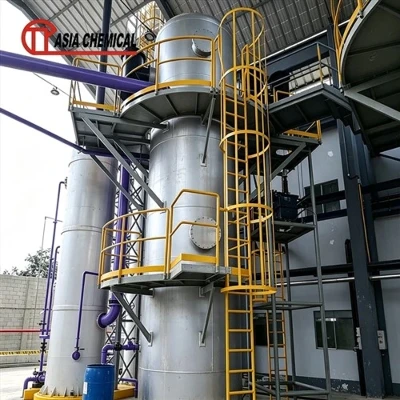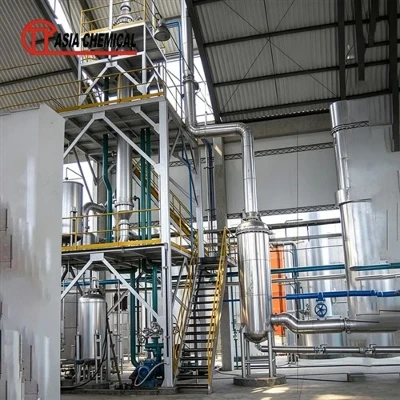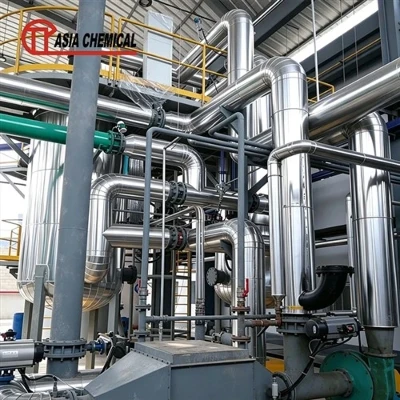
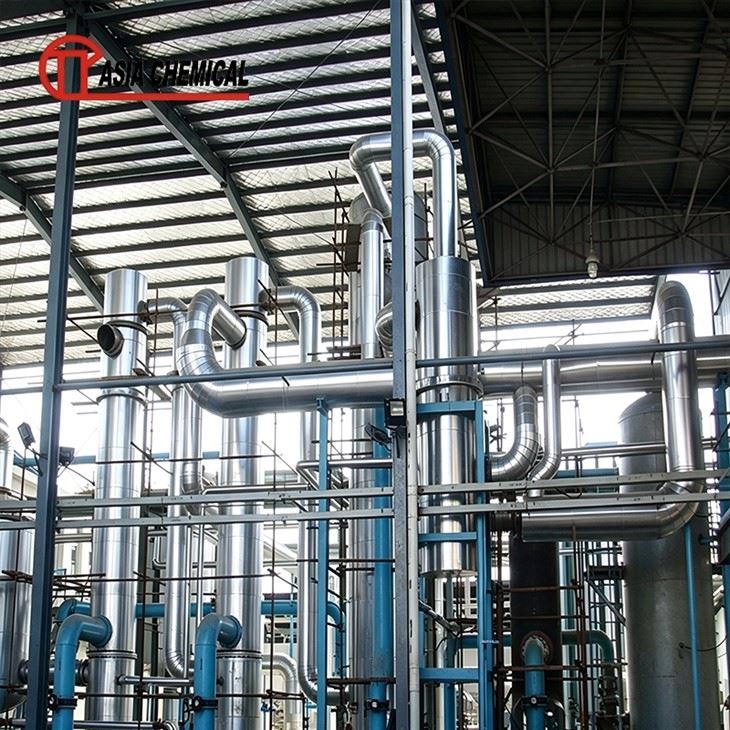
Asia Chemical Engineering Co., Ltd. is one of the most reliable manufacturers and suppliers of sulfuric acid manufacturing plant in China. Please rest assured to wholesale cost-efficient sulfuric acid manufacturing plant from our factory. Good service and reasonable price are available.
Sulfuric Acid Manufacturing Plant Capacity
Plant capacity should be established according to market demand, raw material availability, required product output, utility resources, and the intended operating schedule. It is commonly expressed in metric tons per day (TPD) or metric tons per year (TPA).
The following information is required to size the main process equipment:
Required sulfuric acid production capacity.
Raw material type, purity, and composition.
Target product concentration and quality.
Selected process configuration and conversion requirements.
Available steam, cooling water, and electricity.
Required emission limits and applicable regulations.
Available installation area and site conditions.
Furnace dimensions, converter configuration, absorption tower diameter, heat-transfer area, pump capacity, and storage volume must be calculated from the project design basis rather than selected from production capacity alone.
Materials and Corrosion Protection
Sulfuric acid concentration, temperature, fluid velocity, and impurities all affect equipment corrosion. Material selection should therefore be based on the actual operating conditions of each process section.
Potential material options include:
Carbon steel: Suitable for selected sulfuric acid services when concentration, temperature, and operating conditions fall within an established corrosion-control envelope.
Stainless steel: Used in selected equipment and process conditions after grade-specific corrosion assessment.
High-silicon cast iron: Applied in certain acid-handling and heat-transfer services.
Fluoropolymer-lined components: Considered for selected corrosive services, subject to pressure, temperature, and mechanical limitations.
Acid-resistant brick and refractory linings: Used where chemical resistance or high-temperature protection is required.
The final specification should consider corrosion data, equipment design, inspection requirements, and expected operating life.
Energy Efficiency and Waste Heat Recovery
Heat recovery is an important consideration in sulfuric acid plant design. Combustion and catalytic conversion release thermal energy that may be recovered through waste heat boilers and gas heat exchangers.
A properly integrated heat recovery system can:
Recover thermal energy for steam generation.
Reduce external utility demand where operating conditions permit.
Improve the overall plant heat balance.
Support the operation of suitable auxiliary equipment.
Provide opportunities for energy integration with adjacent production facilities.
Actual steam generation and energy savings depend on feedstock, production capacity, operating conditions, and the plant's heat integration design. Performance should be established through engineering calculations.
Main Equipment in a Sulfuric Acid Production Line
| Equipment | Main Function | Key Selection Considerations |
|---|---|---|
| Sulfur melting tank | Melts solid sulfur for processing | Heating capacity, temperature control, sulfur quality |
| Sulfur filtration system | Removes solid impurities | Filtration rating, flow rate, maintenance |
| Sulfur combustion furnace | Generates SO₂ from sulfur | Feed rate, combustion performance, refractory lining |
| Waste heat boiler | Recovers heat from hot process gas | Heat duty, steam pressure, gas conditions |
| Gas drying tower | Removes moisture from process air or gas | Gas flow, acid circulation, moisture removal |
| Catalytic converter | Converts SO₂ into SO₃ | Catalyst volume, bed arrangement, operating temperature |
| Gas heat exchangers | Controls process gas temperature | Heat-transfer duty, pressure drop, materials |
| Absorption towers | Absorbs SO₃ into circulating acid | Gas loading, acid concentration, tower internals |
| Acid circulation pumps | Transfers acid through process circuits | Flow rate, head, seal design, corrosion resistance |
| Acid coolers | Controls circulating acid temperature | Cooling duty, acid conditions, heat-transfer materials |
| Storage tanks | Stores finished sulfuric acid | Capacity, concentration, tank material, containment |
| Tail gas treatment system | Controls residual emissions | Gas composition, emission limits, treatment capacity |
| DCS and instrumentation | Monitors and controls plant operation | Control philosophy, instrument range, system integration |
The final equipment list depends on whether the project uses elemental sulfur, metallurgical off-gas, or another sulfur-bearing feedstock. Gas cleaning and pretreatment requirements can differ substantially between these process routes.


Automation and Process Control
A distributed control system (DCS) can coordinate monitoring and control across the sulfur handling, combustion, conversion, absorption, and storage sections.
Typical instrumentation includes temperature sensors, pressure transmitters, flowmeters, acid concentration measurements, and relevant gas monitoring instruments. Alarm management, shutdown interlocks, and emergency isolation arrangements should be designed according to the plant's process safety requirements.
The control system should also support routine operating checks, fault diagnosis, maintenance planning, and process performance monitoring.
Environmental and Safety Considerations
Sulfuric acid manufacturing involves high-temperature gas, corrosive liquids, and potentially harmful sulfur oxide emissions. Plant design must address equipment integrity, leakage prevention, acid containment, worker protection, and emergency response.
Important considerations include:
Tail gas treatment based on applicable SO₂ and acid mist emission limits.
Corrosion monitoring and inspection of critical equipment.
Appropriate containment for acid storage and transfer areas.
Temperature and pressure monitoring at critical process points.
Safety interlocks and emergency shutdown arrangements.
Compliance with local environmental permits and applicable equipment standards.
Environmental performance depends on the complete process configuration, operating conditions, maintenance practices, and the requirements of the installation jurisdiction.
FAQ:
What production capacity can you provide for a sulfuric acid plant?
Sulfuric acid plant capacity should be determined according to the customer's production target, feedstock availability, utility conditions, and required operating schedule. Capacity is commonly expressed in metric tons per day (TPD) or metric tons per year (TPA).
Please share your required daily or annual output so that the equipment configuration and process requirements can be evaluated. Available capacity ranges should be confirmed against the manufacturer's actual engineering and supply capabilities.
Can you customize a sulfuric acid plant according to our raw materials and site conditions?
Yes, a plant configuration can be developed around the specified feedstock, product concentration, production capacity, utility availability, site layout, and applicable regulations.
Elemental sulfur and sulfur dioxide-containing industrial gases require different pretreatment and gas handling arrangements. Providing your raw material composition, site conditions, and product specifications helps establish the appropriate process route and equipment requirements.
What is included in your sulfuric acid plant supply scope?
The supply scope depends on the project requirements and the manufacturer's capabilities. It may include sulfur preparation equipment, combustion furnaces, waste heat boilers, catalytic converters, absorption towers, acid coolers, circulation pumps, storage tanks, instrumentation, and emission control equipment.
Hot Tags: sulfuric acid manufacturing plant, China, manufacturers, suppliers, factory, wholesale, price, profession, cost